Key takeaways
- Sound leaks out. People nearby can hear your game. If you share a room, a sealed headset is kinder to them.
- Outside noise leaks in. A fan, a street or a keyboard will be audible. Open-back headphones suit quiet rooms.
- Bass is lighter. Without a sealed chamber, bass tends to roll off earlier, although well-designed open-backs still sound full.
- Microphones are rare. Most open-back models are headphones without a mic, so budget for a separate one.
- Chat is open too. A microphone near the ear cups can pick up the sound leaking from them. A boom or desk microphone placed a few inches from your mouth, with moderate headphone volume, limits this.
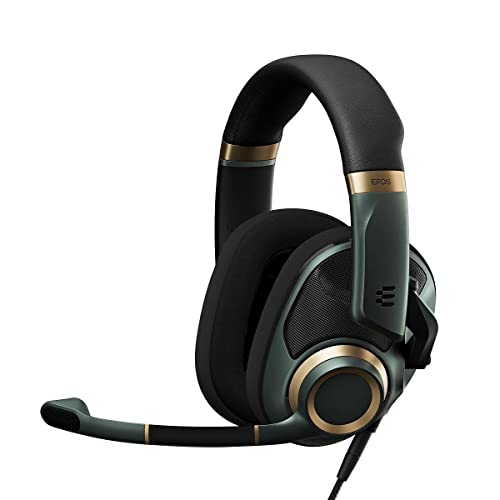
Under $100, true open-back gaming headsets with a built-in microphone are scarce, so the practical answer is either an open-back headset such as the Drop + EPOS PC38X if you can find it near your budget, or a pair of open-back headphones plus a separate microphone. This guide covers three current models, what the makers and reviewers state about them, and how to add a microphone. Most of the open-back headphones below sit at or above the cap, and the budget route usually means trimming the microphone side first.
Our top picks


As an Amazon Associate we earn from qualifying purchases at no extra cost to you.
What open-back means for gaming
An open-back design has perforated or mesh ear cups that let sound pass in and out. The listener hears a wider, airier presentation, often described as a larger soundstage, and the ear cups do not trap heat or pressure the way sealed cups can. Many players like open-back headphones for single-player games, exploration titles and long sessions for those reasons.
The trade-offs are practical and unavoidable:
- Sound leaks out. People nearby can hear your game. If you share a room, a sealed headset is kinder to them.
- Outside noise leaks in. A fan, a street or a keyboard will be audible. Open-back headphones suit quiet rooms.
- Bass is lighter. Without a sealed chamber, bass tends to roll off earlier, although well-designed open-backs still sound full.
- Microphones are rare. Most open-back models are headphones without a mic, so budget for a separate one.
- Chat is open too. A microphone near the ear cups can pick up the sound leaking from them. A boom or desk microphone placed a few inches from your mouth, with moderate headphone volume, limits this.
At a glance
| Model | Design | Key stated specs | Best for | Limits |
|---|---|---|---|---|
| Drop + EPOS PC38X | Open-back over-ear headset with microphone | Listings give 28 ohm impedance, 10Hz to 30kHz, a noise-cancelling boom microphone with flip-up mute, two cables (PC split and console), mesh and velour pads | One-box open-back gaming and chat | Availability and pricing vary, the microphone is attached, frequency figures differ between regional listings |
| Sennheiser HD 560S | Open-back studio headphones | 120 ohm, 6 to 38,000Hz, 38mm drivers, about 240g without cable | Detailed, accurate sound for PC play | No microphone, usually above the cap, benefits from a DAC or amp |
| Beyerdynamic DT 990 Pro | Open-back studio headphones | 80 ohm or 250 ohm versions, 5 to 35,000Hz, 250g without cable, coiled cable | Bright, detailed treble | Usually above the cap, no microphone, needs an amp at 250 ohm |
Drop + EPOS PC38X: the headset option
The PC38X is the closest thing to an open-back gaming headset with a microphone that fits the budget conversation. Listings and the Drop manual describe dynamic open transducers at 28 ohms, a response of 10Hz to 30kHz, a bi-directional noise-cancelling boom microphone with a flip-up mute, and two cables: a split cable for PC and a single-plug cable for consoles and mobile devices. Both knit mesh and velour ear pads are reported in the box. Regional listings give slightly different frequency figures, so use the maker’s own page for your market.
Because the headset is open, the microphone can pick up leaking sound, so keep the volume moderate and the boom close to your mouth. Stock and pricing change, and some sellers list it above the cap, so confirm the product page before buying.
Sennheiser HD 560S: the headphone pick
Sennheiser’s listing and retailers describe the HD 560S as an open-back, over-ear dynamic headphone with angled 38mm drivers, 120 ohm impedance, a response of 6 to 38,000Hz and a weight of about 240g without the cable. Reviewers commonly recommend it for positional accuracy in shooters. Cable details differ between listings, so check the box contents. It has no microphone and generally sits above the cap, so it suits buyers who can stretch.
Beyerdynamic DT 990 Pro: the bright option
Beyerdynamic describes the DT 990 Pro as open-back studio headphones with circumaural ear pads and a flexible spring steel headband. The specs listed are 80 ohms (Universal Studio version) or 250 ohms (Professional Devices version), a frequency response of 5 to 35,000Hz, a coiled cable with a straight 3.5mm plug and a quarter-inch adapter, and a weight of 250g without cable. The 80 ohm version suits PCs and many DACs, while the 250 ohm version is meant for amplifiers with enough output. Reviewers often describe the treble as bright, which some enjoy for footsteps and others find tiring over long sessions.
Getting a microphone
Because open-back models rarely include one, think of the microphone as a second purchase and a second decision:
- USB desk microphone: Easiest and sounds better than a clip-on mic. See the USB and streaming microphone guides in this series.
- Dynamic microphone on a boom arm: Best for rejecting room noise and for keeping the microphone away from the leaking sound of the open cups.
- Clip-on or boom-style add-on: Small microphones that attach to the headphone cable or headband exist, and compatibility depends on a detachable cable and connector. Confirm the connector type before buying.
- A separate headset for chat: Some players keep a wired headset for party chat and use open-back headphones for solo play.
Amps, DACs and fit
- Impedance: Low-impedance headphones are easy to drive. Higher-impedance models like the 250 ohm DT 990 Pro need a headphone amp with enough output, such as a desktop DAC and amp.
- Consoles: Open-back headphones plug into a controller’s 3.5mm jack, but you will need a separate chat microphone and may find volume low on high-impedance models.
- Comfort: Clamp force and pad material matter. Perforated pads let air through and suit warm rooms. Pads wear with time and are often replaceable on studio models.
- Cable: A detachable cable is repairable and lets you swap in microphone cables. A fixed cable is not.
- Care: Keep open-back grilles free of dust and avoid pushing on the drivers. Store them away from direct sunlight.
Pick X if you need Y
| If you… | Pick | Why |
|---|---|---|
| Want open-back sound and a microphone in one product | Drop + EPOS PC38X | Open design with attached boom mic, 28 ohm per listings |
| Play single-player games in a quiet room | Any of the three | Open design suits quiet rooms |
| Want detailed, accurate positional sound | Sennheiser HD 560S | 120 ohm open-back with a reputation for imaging |
| Own a desktop DAC or amp | Beyerdynamic DT 990 Pro | 80 and 250 ohm versions listed |
| Need guaranteed isolation | A sealed gaming headset | Open-backs leak sound both ways |
| Share your room | A closed-back headset | Open-backs leak sound |
Budget tiers
At the budget tier you are looking at the PC38X where it is offered near the cap, or a lower-cost open-back headphone plus a modest microphone. Mid-range and premium tiers bring studio models such as the HD 560S and DT 990 Pro, with replaceable parts and more refined sound. Within a tight budget, spending a little less on headphones to afford a decent microphone is usually the better split, since voice clarity matters as much as the soundstage once you are in a party.
Listening habits that suit open-backs
Open-back headphones reward a quiet, planned setup. Keep volume at a level where you can still hear a teammate or a doorbell, since the open design does not isolate you and loud playback only adds leakage. Raise the in-game dialogue and effects mix rather than the master volume when a scene feels thin. Spend a few evenings with the equalizer flat before adjusting anything, because open designs often sound different from sealed headsets you are used to. Take regular breaks, and see a hearing professional if you notice ringing or discomfort after listening.
Alternatives
- HiFiMan HE400se: An entry planar-magnetic open-back that reviewers often mention in budget lists; sources disagree on whether it is 25 or 32 ohms, so confirm on the maker page.
- Closed-back wired gaming headset: Includes a microphone and isolates sound for roommates.
- A semi-open model: Offers some of the airy sound with less leakage; reviewers disagree on how much.
Frequently Asked Questions
Are open-back headphones good for competitive games?
Many players like the wide, airy presentation for locating sounds, but it depends on the game and the tuning. Open-backs do not block surrounding noise, so a quiet room matters. Preference plays a large part.
Why are open-back headsets with microphones uncommon?
The open design leaks sound that a microphone close to the ear cups can pick up, so most makers pair microphones with closed-back designs. Players who want open-back sound usually add a separate microphone.
Can people hear my game through open-back headphones?
Yes, at moderate to high volumes. If you share a room or record voice chat, keep the volume lower or use a sealed headset.
Do I need an amplifier?
Not for low-impedance models like the PC38X, which a PC or phone can drive. The 120 ohm HD 560S is often paired with a DAC or amp, and the 250 ohm DT 990 Pro is intended for amplifiers. Check the impedance printed on the model you buy.
Is there an open-back headset with a microphone?
The Drop + EPOS PC38X is the commonly cited example, with an attached boom microphone. Availability and pricing vary by seller, so confirm the listing before relying on it.
What is a good microphone to pair with open-back headphones?
A dynamic USB or XLR microphone on a boom arm works well because it rejects room noise and sits away from the headphones. A condenser in a quiet room is another good option.