We independently review everything we recommend. When you buy through our links, we may earn a commission. As an Amazon Associate we earn from qualifying purchases.
5 Best Sports Sunglasses for Running (November 2026)
Compare the best sports sunglasses for running. Find lightweight polarized shades with secure grips that stay put through every run, ride and workout.
Compare the best sports sunglasses for running. Find lightweight polarized shades with secure grips that stay put through every run, ride and workout.
A good run can fall apart over something as small as a pair of sunglasses that will not stay put. Sweat loosens the grip, the frame slides down the nose with every stride, and the runner ends up pushing the glasses back up instead of watching the road. Glare makes it worse: bright sun off pavement, low light under trees. The right pair solves all three problems at once. It holds steady through sweat, cuts glare without dimming the road, and stays light enough to forget. The five pairs below come from names and details on their Amazon pages, each suiting a different kind of runner.
This guide is for road runners logging daily miles, trail runners moving between sun and shade, and athletes who train outdoors in all weather. Riders and triathletes who want one pair across disciplines are covered too. The lineup spans premium optics, featherweight shields, and a budget pair that refuses to bounce, so the choice comes down to face size, light conditions, and coverage.
Quick Picks
As an Amazon Associate we earn from qualifying purchases
Product
Best for
Key spec from title
Oakley Flak 2.0 XL
Maximum coverage and premium optics
Prizm Ruby lens, 59 mm
Smith Guide’s Choice
Glass optics with a leash
ChromaPop polarized glass lens
Tifosi Navar FC
Full coverage at 25 grams
Enliven Golf lens, vented half-frame
Tifosi Vogel XC
Featherweight shield for small to medium faces
24 grams, rimless shield
goodr A Unicorn’s Calamity
Bounce-free daily miles
Polarized UV400 lens, 21 grams
How to Choose
Fit and grip when you sweat
Fit decides whether a pair works for running long before optics matter. A frame that fits the width of your face sits level, and hydrophilic pads on the nose and temples grip harder as sweat builds, which is the opposite of what plain plastic does. Look for a stated fit size, such as small-medium or large-XL, and compare it with frames you already own. Adjustable nosepads help when the bridge of your nose is narrow, while a wraparound curve keeps the frame from shifting sideways. If a pair slides during a short jog around the block, it will slide far worse at mile eight.
Lens tint and glare control
Lens tint shapes what you see, and the darkest lens is not always the right one. Polarized lenses cut glare bouncing off wet roads, car roofs, and puddles, which helps on bright days and near water. Contrast-boosting tints such as Prizm Ruby, ChromaPop, and Enliven make edges and changes in the road surface easier to read. A smoke or grey tint keeps colors neutral, while a mirror coating adds glare protection in harsh light. Think about the light you run in most: open sun, tree cover, dawn, or dusk, and match the tint to that, not to the look of the frame.
Coverage and airflow
Coverage decides how much sun, wind, and dust reaches your eyes from the sides and below. A shield lens wraps around the face and blocks light from more angles, which suits open roads and windy days. A semi-rimless frame leaves the lower edge open, which can feel lighter and lets heat escape. Vents in the lens or gaps at the frame edge cut fogging when effort rises and sweat steams up the lens. Runners who overheat easily should favor vented designs, while runners on exposed routes should favor wider coverage even if the frame feels larger at first.
Weight and durability
Weight matters because every gram sits on the nose and ears for the whole run. Pairs in this guide range from 21 to 45 grams, and the difference is easy to feel after an hour. Polycarbonate lenses are light and shatter-resistant, which suits runners who drop gear in a gym bag. Glass lenses give sharper optics and resist scratches, but they add weight and can feel heavy on long efforts. Frame material matters too: Grilamid TR-90 and O-Matter flex without snapping, while a hard case in the box protects the lens between runs.
The 5 Best Options
Oakley Flak 2.0 XL
Top Pick
Oakley Flak 2.0 XL
Best for: Runners who want maximum coverage and premium optics.
Runners who want maximum coverage and premium optics.
Watch out for
Prizm Ruby is a contrast lens, not a dark neutral tint; the XL lens suits medium to large faces and may feel wide on smaller faces; check the frame and lens combo before ordering, since OO9188 comes in many variants.
The Flak 2.0 XL is the pair for runners who want the widest coverage and the most refined optics in this lineup. Its semi-rimless rectangular shape extends the lens outward for extra peripheral cover, and the Prizm Ruby lens sharpens contrast so cracks, curbs, and changes in pavement stand out. Unobtainium pads on the nose and ears grip more firmly as sweat builds, and the Three-Point Fit spreads pressure evenly so the frame stays aligned through a hard effort. It suits medium to large faces, and the soft vault in the box keeps the lens safe between runs.
Smith Guide’s Choice
Runner-Up
Smith Guide’s Choice
Best for: Trail and road runners who want glass optics and a leash.
Trail and road runners who want glass optics and a leash.
Watch out for
Glass lenses weigh more than polycarbonate, so the pair feels heavier on long efforts; the wraparound 8-base curve may not suit narrow faces; the blue mirror tint is aimed at bright light rather than dawn or dusk.
The Guide’s Choice brings glass optics to the run, and the difference shows in clarity and scratch resistance. Its ChromaPop polarized glass lens cuts glare and lifts contrast, while the 8-base wraparound frame blocks light from the sides. Megol pads on the nose and temples hold the frame steady, Italian spring hinges flex to fit a wider range of head shapes, and the integrated leash means the pair cannot fall to the pavement mid-stride. The hard case and microfiber bag in the box make it easy to carry the glasses to the trailhead without worrying about the lens.
Tifosi Navar FC
Tifosi Navar FC
Best for: Runners who want full coverage at 25 grams.
The Enliven Golf lens in this variant is not polarized, so glare off wet roads stays stronger than with a polarized lens; the Large-XL fit may feel loose on smaller faces; Enliven Golf is a greenish smoke tint, not a neutral grey.
The Navar FC is a full-coverage half-frame that weighs only 25 grams, which makes it an easy pair to wear for a whole morning. Its vented lenses move air across the inside of the lens, so fog stays away when effort rises. The Grilamid TR-90 frame flexes without snapping, and hydrophilic nose and ear pads grip harder as sweat builds, while Tifosi Glide lets the frame slide on smoothly and settle into an anti-bounce fit. The Iron frame with the Enliven Golf lens suits runners who want a bright, high-contrast view, and the Large-XL fit gives broader faces room to breathe.
Tifosi Vogel XC
The Vogel XC is the lightest shield in this guide at 24 grams, and it is built for runners with small to medium faces who find oversized shields too wide. Its compact rimless shield wraps close to the face for full coverage without bulk, and built-in vents keep air moving so the lens stays clear. The Grilamid TR-90 frame and Comfort Grip ear pads hold the pair in place through strides and turns, while hydrophilic nose pads grip harder as sweat builds. The Matte Black frame with the Violet Mirror lens gives a bold look, and the microfiber cleaning bag in the box covers storage between runs.
Specs
Frame color: Matte Black
Lens: Violet Mirror
Style number: TI1890400185
Design: Rimless shield, rectangular shape
Frame material: Grilamid TR-90
Lens material: Shatterproof polycarbonate
UV protection: Full UVA and UVB protection
Polarization: Non-polarized
Weight: 24 grams
Fit: Small-Medium
Lens width: 127.5 mm
Included: Microfiber cleaning bag
Best for: Runners with small to medium faces who want a featherweight shield.
Watch out for: This lens is non-polarized, so glare control is weaker than the polarized pairs here; no hard case is included, only a microfiber bag; the mirrored coating needs gentle handling to avoid scratches.
ASIN: B0DQXF8XZ7
goodr A Unicorn’s Calamity
goodr A Unicorn’s Calamity
Best for: Runners who want a bounce-free pair for daily miles.
Runners who want a bounce-free pair for daily miles.
Watch out for
The full-frame wayfarer shape gives less side coverage than a shield; the plastic frame is light but offers less adjustment than wire-core designs; the black non-reflective lens is a neutral dark tint, not a contrast-boosting tint.
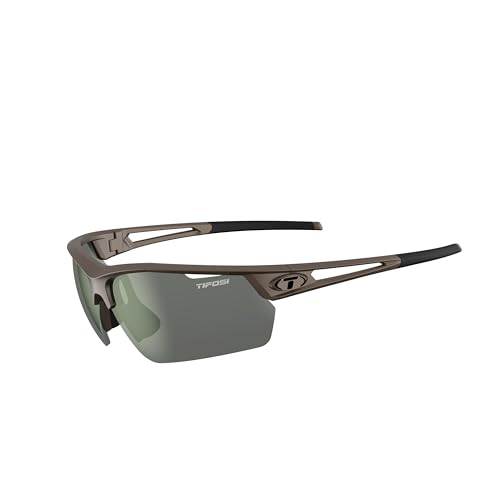
The goodr OG in A Unicorn’s Calamity is the budget pick that refuses to bounce, and it earns its place on pure running performance rather than looks. Its grip-coated frame and silicone nose inserts hold the pair steady through sweat, while the snug, lightweight frame stops the bounce that ruins cheaper sunglasses. Polarized lenses with UV400 protection cut glare and block harmful rays, and the classic wayfarer shape suits runners who dislike the shield look. At 21 grams it disappears on the face, which is exactly what a daily-miles pair should do.
Which One Fits Your Situation
Daily road miles in bright sun
For daily miles on open roads, the Oakley Flak 2.0 XL and the Smith Guide’s Choice lead the way. Both cut glare hard and hold steady through sweat, and their wraparound shapes block sun from the sides as well as the front. The Oakley suits runners who want the sharpest contrast, while the Smith suits runners who prefer glass optics and a leash. Either pair handles a long, bright run without sliding.
Trail runs and changing light
Trail runners move between sun and shade, so a lens that reads terrain matters more than pure darkness. The Tifosi Navar FC and the Tifosi Vogel XC both use contrast-friendly tints and vented lenses that resist fogging on climbs. The Navar FC fits larger faces, while the Vogel XC fits small to medium faces. Carry the goodr pair as a spare for short loops when the trail is dry and the light is steady.
Small or narrow faces
Runners with small or narrow faces should try the Tifosi Vogel XC first. Its compact shield and Small-Medium fit sit close to the face without swallowing it, and at 24 grams it will not drag down. The goodr OG in Medium is the other safe choice, since its snug frame and grip coating hold well on narrower heads. Avoid XL frames here, since a frame that is too wide bounces no matter how good the grip pads are.
Racing and tempo days
On race day, weight and stability matter most. The Tifosi Vogel XC at 24 grams and the goodr OG at 21 grams are the lightest pairs here, and both stay put through fast strides. The Vogel XC covers more on an open course, while the goodr OG suits runners who want a simple pair that vanishes on the face. Whichever you choose, wear it for one hard session first so the fit is proven before the gun goes off.
Common Mistakes
Buying fashion sunglasses for running: a frame with no grip pads slides the moment sweat appears, no matter how good it looks.
Choosing the darkest lens without checking the tint: a dark lens that is not polarized still lets glare through, and a contrast tint can beat a darker neutral tint on the road.
Ignoring the stated fit size: an XL frame on a small face bounces, and a small shield on a large face pinches at the temples.
Picking a shield with no vents for humid runs: trapped heat fogs the lens on climbs, and wiping mid-run only smears the moisture.
Ordering the wrong color variant: the same model comes in many frame and lens combos, so check the model code and lens name before ordering.
Frequently Asked Questions
Do running sunglasses need to be polarized?
Polarized lenses help on bright days by cutting glare off wet roads, car roofs, and puddles. They suit road runners and anyone near water. On shaded trails they matter less, where a contrast-boosting tint that reads terrain can matter more. Two pairs here are non-polarized and still work well in the right light, so match the lens to your usual routes rather than assuming polarized is always better.
How do I keep sunglasses from sliding when I sweat?
Grip comes from the contact points, not from tightening the frame. Look for hydrophilic nose and ear pads that grip harder when wet, a wraparound curve that keeps the frame centered, and a fit size that matches your face width. A leash adds security on trails. If a pair still slides on a short jog, the fit is wrong, and no amount of pushing it back up will fix it.
Are glass lenses better than polycarbonate for running?
Glass lenses give sharper optics and resist scratches better than polycarbonate, which is why the Smith Guide’s Choice stands out here. The trade is weight: glass adds grams that you feel on long efforts, and it needs a case for protection. Polycarbonate is lighter and shatter-resistant, which suits runners who toss gear in a bag. Choose glass for clarity on long bright runs and polycarbonate for light weight and toughness.
What size frame should I choose for running?
Match the stated fit size to your face, not to the look of the frame. Small-Medium suits narrow faces and most women, Large-XL suits broader faces, and a medium fit covers the middle ground. Check lens width and temple length against a pair you already own. A frame that is too wide bounces with every stride, while one that is too narrow pinches and slides forward when you sweat.
A
admin
We compare specs, materials and verified owner reviews before a product earns a spot. Rankings are never paid.
Affiliate disclosure. As an Amazon Associate we earn from qualifying purchases at no extra cost to you. Prices accurate as of the date shown.
Compare five pickleball ball machines for practice, with ball capacity, speed, spin, feed rate and portability to help you drill alone and improve fast.


 goodr A Unicorn’s Calamity