Key takeaways
- Compare five climbing quickdraws for sport routes, with gate action, weight, sling length and durability to help you clip fast and climb with confidence.
Sport climbing lives and dies on the clip. A good quickdraw hangs straight on the bolt, opens cleanly under one hand, and lets the rope snap in without a fight. A poor one twists, snags, and turns a smooth sequence into a wrestling match at the crux. The five draws below cover the range most sport climbers actually need: solid-gate workhorses, a light hybrid set, a longer sling for rope drag, a premium smooth-clipping classic, and a budget-friendly six-pack that still clips well.


Every pick here is a true quickdraw — two carabiners joined by a sewn sling — built for bolted single-pitch routes. None of them is a standalone carabiner or a rope, and none needs a rack of trad gear to make sense. We compared gate action, weight, sling length, and build quality across the five, so you can match a draw to the way you climb instead of buying a full rack of one model and hoping for the best.
Quick Picks
As an Amazon Associate we earn from qualifying purchases
| Product | Best for | Key spec |
|---|---|---|
| Black Diamond HotForge Quickdraw 12 cm | Everyday sport cragging | 103 g, keylock solid gates |
| Black Diamond HotForge Hybrid Quickdraw 6-Pack 12 cm | Building a full rack | 100 g per draw, six-pack |
| Black Diamond HotForge Quickdraw 16 cm | Long reaches and rope drag | 16 cm sling, 103 g |
| Petzl Spirit Express Quickdraw 12 cm | Smooth, fast clipping | 25 mm nylon sling, keylock |
| Mad Rock Concorde Quickdraw Set | Value and light weight | 85 g per draw, Dyneema sling |
How to Choose
Gate Type and Clipping Feel
Solid gates feel positive in the hand and resist accidental opening, which is why many climbers trust them on the bolt end. Wiregates are lighter and shed ice and dirt more easily, and they clip with a snappier feel that suits fast clipping on steep ground. Keylock noses — the smooth, hook-free nose on a solid-gate carabiner — slide off bolt hangers without catching, so unclipping at the anchor is less of a struggle. Try to handle a draw before you commit to a full rack: the gate should open with thumb pressure and snap shut with a click, and the rope-end carabiner should be easy to find by touch when you are pumped and looking up, not down.
Sling Length and Rope Drag
Twelve centimetres is the standard sport length: short enough to keep the rope close to the wall, long enough to clip without a stretch. Sixteen-centimetre draws earn their place on wandering routes, overhangs, and anywhere the rope would otherwise zigzag between bolts and drag. Longer slings also help on the first bolt, where a short draw can pull the rope sideways and make the opening moves feel harder than they are. A mixed rack — mostly 12 cm draws with three or four 16 cm draws — covers nearly every single-pitch crag without adding much weight or bulk to your harness.
Weight and Rack Size
A single quickdraw weighs roughly as much as a small apple, but a rack of twelve adds up fast. Shaving ten grams per draw saves more than a hundred grams across a full rack, which you will notice on a long approach or a multi-pitch day. That said, the lightest draws use thin Dyneema slings that are harder to grab when you need to pull through a hard section, and their small carabiners can be fiddly with cold hands or gloves. Balance weight against handling: a draw you can grab and clip confidently is worth a few extra grams over one that fights you at the crux.
Durability and Build Quality
Quickdraws live a hard life: they get dropped on rock, dragged through dirt, and left hanging in the sun between sessions. Look for hot-forged carabiners with smooth gate action and no play in the hinge, plus bar-tacked slings with a rubber keeper that holds the lower carabiner in place. Polyester slings are thicker and easier to grab; Dyneema slings are lighter and pack smaller but feel thinner in the hand. Check the sling for fraying and the carabiner for grooves worn by the rope, and retire any draw that shows deep wear, a sticky gate, or a sling that has gone soft and fuzzy.
The 5 Best Options
Black Diamond HotForge Quickdraw 12 cm
The HotForge is the draw most sport climbers reach for first, and the 12 cm version is the default length for bolted routes. Two hot-forged solid-gate carabiners give it a reassuring heft and a keylock nose that slides off hangers without snagging, while the 18 mm polyester dogbone is wide enough to grab when you need to pull through a move. At 103 grams it is no featherweight, but the solid gates and smooth clipping action make it a dependable choice for everyday cragging, and the straight-gate top carabiner seats cleanly on the bolt every time.
Specs
- 12 cm sling length
- 103 g
- Hot-forged solid-gate carabiners with keylock noses
- 18 mm polyester dogbone with Straitjacket insert
- Model BD38111
Best for: Everyday sport cragging and climbers who like solid gates.
Watch out for: Heavier than wiregate draws, so a full rack adds noticeable weight.
Black Diamond HotForge Hybrid Quickdraw 6-Pack 12 cm
The Hybrid takes the HotForge top carabiner and pairs it with a lightweight HotWire wiregate on the rope end, giving you keylock smoothness at the bolt and easy rope clipping below. Buying six at once is the sensible way to build a rack: the draws match, the colours are consistent, and you save the faff of piecing a set together one draw at a time. Each draw weighs 100 grams, and the 18 mm polyester dogbone is the same grab-friendly sling as the full HotForge, so the pair feels familiar if you already own the solid-gate version.
Specs
- Six-pack of 12 cm quickdraws
- 100 g per draw
- Keylock straight-gate top carabiner and HotWire wiregate bottom carabiner
- 18 mm polyester dogbone with Straitjacket insert
- 24 kN major-axis strength with the gate closed
Best for: Building a matching sport rack in one purchase.
Watch out for: The wiregate bottom carabiner can snag on some bolt hangers when unclipping.
Black Diamond HotForge Quickdraw 16 cm

The 16 cm HotForge is the same draw as the 12 cm version with a longer sling, and that extra length solves real problems: rope drag on wandering lines, awkward clips above a roof, and the first bolt on a route that traverses away from the belayer. The solid gates and keylock noses are identical, so it clips and unclips exactly like its shorter sibling, and the 18 mm dogbone still gives you something solid to grab. Carry three or four of these alongside a set of 12 cm draws and most single-pitch crags are covered.
Specs
- 16 cm sling length
- 103 g
- Hot-forged solid-gate carabiners with keylock noses
- 18 mm polyester dogbone with Straitjacket insert
- Model BDI_11108
Best for: Wandering routes, overhangs, and reducing rope drag.
Watch out for: A longer sling lets the rope sit further from the wall, which can add swing on a fall.
Petzl Spirit Express Quickdraw 12 cm
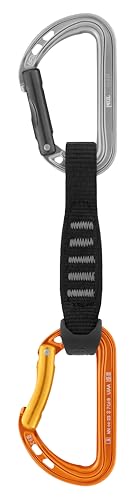
The Spirit Express is the benchmark sport draw for a reason: the SPIRIT carabiners are large, smooth, and easy to clip even when your forearms are screaming, and the wide 25 mm nylon sling is the easiest dogbone in this group to grab. A STRING rubber keeper holds the lower carabiner in the right position, so the rope-end biner is always where your hand expects it. It costs more than the budget options here, but climbers who clip a lot of bolts tend to notice the difference on every single clip.
Specs
- 12 cm sling length
- SPIRIT carabiners with keylock system
- 25 mm nylon sling, wider at the bottom for grabbing
- STRING rubber keeper holds the lower carabiner in position
- 23 kN major-axis strength with the gate closed
Best for: Climbers who want the smoothest clipping action available.
Watch out for: The wider sling and larger carabiners add bulk on a crowded gear loop.
Mad Rock Concorde Quickdraw Set

The Concorde is the value pick that refuses to feel cheap. Double wiregate carabiners keep the weight down to 85 grams per draw, and the 10 mm Dyneema sling packs small on the harness while still holding its shape for clipping. The bent-gate rope-end carabiner makes clipping the rope a one-handed job, and the set format means you can kit out a rack without hunting down six matching singles. It is the lightest draw in this group by a clear margin, which makes it a smart choice for long approaches and big days out.
Specs
- Set of six quickdraws
- 10 cm Dyneema sling
- 85 g per draw
- Double wiregate carabiners with bent-gate rope end
- Hot-forged construction
Best for: Lightweight racks and climbers watching their budget.
Watch out for: The thin Dyneema sling is harder to grab than a wide polyester dogbone.
Which One Fits Your Situation
Building Your First Sport Rack
Buy a six-pack of one model and add singles as you learn what you like. The HotForge Hybrid six-pack is the easy answer here: consistent clipping, a sensible weight, and enough draws for most single-pitch routes. Add two or three 16 cm draws for rope drag, and you have a complete rack without a drawer full of mismatched singles.
Climbing Steep or Overhanging Routes
On steep ground the rope hangs away from the wall, so you want draws that clip fast and stay put. Wiregate bottom carabiners and a stiff dogbone help the draw hold its shape for the clip, and a longer sling keeps the rope running cleanly through the bolts. The Hybrid and the Spirit Express both shine here.
Chasing a Lighter Rack for Long Approaches
If the walk-in is long, grams matter. The Mad Rock Concorde set is the lightest option in this group at 85 grams per draw, and Dyneema slings pack smaller than polyester. Pair the set with a couple of 12 cm HotForge draws for the bolts where you want a solid gate, and the rack stays light without giving up clipping confidence.
Clipping on a Budget
You do not need the most expensive draws to climb safely. A six-pack of Concordes covers a full rack for less than a handful of premium singles, and the wiregates clip well enough for most routes. Spend the money you save on shoes or a rope, and upgrade individual draws later when you know which length and gate style you prefer.
Common Mistakes
- Racking only one sling length and fighting rope drag on every wandering route.
- Clipping the rope-end carabiner to the bolt and the bolt-end carabiner to the rope — the straight-gate biner goes on the bolt, and the bent-gate biner takes the rope.
- Grabbing the carabiner instead of the dogbone when pulling through a hard move, which can unclip the rope.
- Leaving draws clipped to bolts at the crag for weeks, where sun and weather wear the sling faster than normal use.
- Retiring draws on a calendar schedule instead of inspecting them: check the sling for fraying and the gate for stickiness, and retire any draw that fails either check.
Frequently Asked Questions
How many quickdraws do I need for sport climbing?
Ten to twelve draws cover most single-pitch sport routes, with a couple of longer 16 cm draws mixed in for rope drag. Shorter routes need fewer, while long or wandering routes can demand fourteen or more. A six-pack plus four or five singles is a practical way to build up to a full rack without buying everything at once.
What is the difference between 12 cm and 16 cm quickdraws?
The number is the sling length. Twelve-centimetre draws keep the rope close to the wall and suit straight, vertical routes. Sixteen-centimetre draws give the rope more room to run, which cuts drag on overhangs and wandering lines. Most climbers carry mostly 12 cm draws and a few 16 cm draws for awkward clips.
Can I use the same quickdraws for indoor and outdoor climbing?
Yes. The same draws work on indoor lead walls and outdoor bolted routes, and many climbers use one rack for both. Indoor walls are kinder to gear, so draws used only indoors last longer, while outdoor draws pick up dirt and wear faster. Keep one set for the gym if you climb indoors a lot.
When should I retire a quickdraw?
Retire a draw when the sling is frayed, cut, or faded and soft, or when a carabiner gate sticks, wobbles, or fails to close fully. Deep grooves worn into the carabiner by the rope are another clear sign. When in doubt, retire it: a quickdraw is cheap compared with the consequences of a failure.