Key takeaways
- Compare five arm sleeves for sports and recovery, with compression, fit, breathability and durability to help you stay supported through every game.
Arm sleeves sit in a small but useful gap between bare skin and a full compression layer. A good sleeve adds gentle compression around the forearm and biceps, shields the skin from sun and scrapes, and stays put through a full game or training session without the heat of a long-sleeve shirt. The wrong one slides down, pinches at the band, or feels clammy within twenty minutes, so fit and fabric matter more than brand names.


This guide compares five arm sleeves that cover the main needs: a youth option for younger players, two Nike Dri-FIT models at different levels, a firm German compression sleeve for long sessions, and a long-running McDavid classic. Each pick below is a true arm sleeve, sold on Amazon, with its own size range and fabric mix. Use the fit notes in each section to match the sleeve to your arm, not to a generic size chart.
Quick Picks
As an Amazon Associate we earn from qualifying purchases
| Product | Best for | Key spec |
|---|---|---|
| Nike Youth Pro Elite 2.0 | Young players | Dri-FIT fabric with UVA/UVB protection |
| Nike Pro Dri-FIT 3.0 | Everyday training | Polyester and spandex blend, medium stretch |
| Nike Pro Dri-FIT 4.0 | Sun protection | UVA/UVB blocking with a stretchy stay-put band |
| Bauerfeind Sports Compression | Firm compression | Gradient compression, UPF 80 |
| McDavid Compression Arm Sleeve 6566 | Classic all-rounder | Fifty-plus UV protection, flat-lock seams |
How to Choose
Fit and sizing
Fit decides whether a sleeve helps or annoys. Measure around the biceps at the widest point and around the forearm just below the elbow, then match those numbers to the size chart for the model, since one brand’s medium is another brand’s large. A sleeve should feel snug along the arm, with no loose fabric and no pinching band. If your two measurements fall in different sizes, favor the biceps number, because a band that is too tight will roll down. Youth sizes suit younger players, while adult sizes suit arms around nine inches and up. When in doubt between two sizes, the larger one stays comfortable longer, while the smaller one gives firmer compression.
Compression level
Compression is the squeeze a sleeve puts on the arm, and more is not always better. Light compression suits warm days and long sessions, since it supports the arm without cutting off comfort. Firm gradient compression suits athletes who want a tighter feel around the forearm and biceps during hard efforts and while cooling down after. A sleeve that leaves deep marks or makes the hand tingle is too tight, whatever the label claims. Sleeves are not medical devices, so anyone with a circulation concern should talk with a clinician before wearing a firm sleeve for hours. Match the level to the session, and keep a lighter sleeve for easy days.
Fabric and breathability
Fabric decides how a sleeve feels after an hour of sweat. Polyester and spandex blends wick moisture away from the skin and dry fast, which is why most sport sleeves use them. Nylon blends feel smooth and hold their shape well, while cotton blends feel soft but hold moisture longer and dry slower. Look for flat-lock seams, since raised seams rub the inside of the arm during repeated motion. Mesh panels or a lighter knit help on hot days, but a very thin fabric may lose its stretch sooner. Wash the sleeve after each hard session, since dried sweat stiffens the knit and shortens its life.
Sun protection and durability
Outdoor athletes should treat sun protection as a core feature, not a bonus. Sleeves with UPF or UVA/UVB blocking shield the forearm and biceps during long hours on the field, the court, or the trail. A sleeve that covers from wrist to biceps gives more coverage than a short sleeve or a wristband alone. Durability comes from the knit and the seams: a heavyweight knit resists snags from Velcro, bags, and rough surfaces, while flat-lock stitching holds up to repeated washing. Check the band as well, since a band that loses grip lets the whole sleeve slide down mid-game.
The 5 Best Options
Nike Youth Pro Elite 2.0
The Youth Pro Elite 2.0 is the pick for younger players who want the same Dri-FIT feel as the adult Nike sleeves in youth sizes. The fabric wicks sweat away from the skin and feels light on the arm, while the UVA/UVB protection helps during outdoor practice and weekend games. It comes as a pair, so a young athlete can rotate one sleeve while the other is in the wash. The medium-stretch build moves with the arm through throws, swings, and shots without bunching at the elbow. For families buying a first sleeve, this is the simplest way to get a proven Nike design sized for a younger arm.
Specs
- Dri-FIT moisture-wicking fabric
- UVA/UVB sun protection
- Lightweight, medium-stretch build
- Cotton and polyester blend
- Youth L-XL sizing
- Sold as a pair
Best for: young athletes who want a light sleeve for practice and games.
Watch out for: youth sizing runs small for older teens, so measure the arm before ordering.
ASIN: B07NDJR51T
Nike Pro Dri-FIT 3.0
The Dri-FIT 3.0 is the long-running Nike sleeve that many players know by sight, and it remains a solid choice for everyday training. The polyester and spandex blend gives a medium stretch that feels close without squeezing hard, and the Dri-FIT knit moves sweat off the skin so the sleeve stays comfortable through a full session. It is a simple, no-frills design: no extra padding, no grip print, just a clean sleeve that works for basketball, running, and gym work. The adult sizing covers a wide range, and the build has held up across years of use by players at every level.
Specs
- Eighty-five percent polyester, fifteen percent spandex
- Dri-FIT moisture-wicking fabric
- Medium stretch, lightweight feel
- Adult L/XL sizing
- Style code AT9031
Best for: players who want a proven, simple sleeve for training.
Watch out for: an older design, so some color and size combos may be harder to find.
ASIN: B01M5LHRSM
Nike Pro Dri-FIT 4.0

The Dri-FIT 4.0 updates the classic Nike sleeve with stronger sun protection and a band that holds its place better during hard movement. The UVA/UVB blocking makes it a natural pick for outdoor sessions, while the sweat-wicking knit keeps the arm dry when the pace rises. Sizing is split into two bands, with S/M fitting arms nine to eleven inches around and L/XL fitting eleven to fourteen inches, so a quick measurement pins down the right size. The stretchy band at the top grips without digging in, which matters most during overhead motion and long rallies.
Specs
- Dri-FIT sweat-wicking fabric
- UVA/UVB blocking
- Stretchy band keeps the sleeve in place
- S/M fits arms 9 to 11 inches around; L/XL fits 11 to 14 inches
- Navy colorway, S/M sizing
Best for: athletes who want sun protection plus a secure fit.
Watch out for: measure carefully, since the two size bands cover a wide range.
ASIN: B08WDTR97K
Bauerfeind Sports Compression

Bauerfeind brings a medical compression background to the sports sleeve, and the Sports Compression sleeve feels firmer and more structured than the Nike options. Gradient compression runs along the arm to support the muscles during long sessions, and the UPF 80 fabric adds strong sun protection for outdoor use. It is sold as a pair and made in Germany, with a knit that holds its shape through repeated washing. The Medium/Long size suits taller athletes who find shorter sleeves riding down. This is the pick for players who want the firmest squeeze in this guide and are willing to pay attention to sizing to get it.
Specs
- Gradient compression
- UPF 80 sun protection
- Sold as a pair
- Machine washable
- Made in Germany
- Black, Medium/Long sizing
Best for: athletes who want firm gradient compression for long sessions.
Watch out for: the fit is snug by design, so size up if you sit between sizes.
ASIN: B01BJW0D4A
McDavid Compression Arm Sleeve 6566
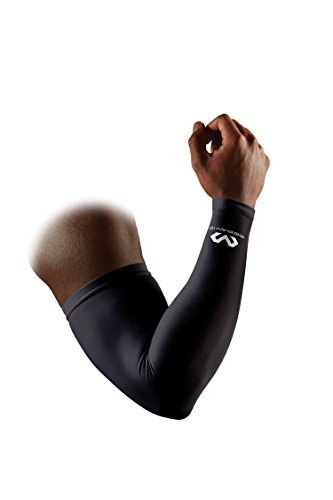
The McDavid 6566 has been around for years, and it earns its place here as the classic all-rounder. The nylon and spandex blend gives a firm, supportive feel with high-stretch fabric that moves with the arm, while the fifty-plus UV protection shields the skin during outdoor play. The hDc fabric wicks moisture to keep the skin cool and dry, and the six-thread flat-lock seams add strength where sleeves usually wear out. One sleeve fits the left or right arm, so a single sleeve covers either side. For court and field sports, this is a dependable sleeve that has outlasted many newer designs.
Specs
- Eighty percent nylon, twenty percent spandex
- Fifty-plus UV skin protection
- hDc fabric wicks moisture to keep skin cool and dry
- Six-thread flat-lock seams
- Machine washable and dryable
- One sleeve fits the left or right arm
- Model 6566
Best for: basketball, football, and volleyball players who want sun protection and steady compression.
Watch out for: the knit feels heavier than the lightest Nike options, so it suits cooler sessions best.
ASIN: B012U083GK
Which One Fits Your Situation
For young athletes
The Nike Youth Pro Elite 2.0 is the clear pick for younger players. It is the only youth-sized sleeve in this guide, it comes as a pair, and the Dri-FIT fabric with UVA/UVB protection suits outdoor practice. Measure the arm before ordering, since youth sizing runs small for older teens. If the youth sizes are too small, move to the Nike Dri-FIT 3.0 or 4.0 in adult S/M rather than forcing a tight youth fit.
For outdoor training in the sun
The Nike Pro Dri-FIT 4.0 and the Bauerfeind sleeve lead here. The 4.0 blocks UVA/UVB and stays put with its stretchy band, while the Bauerfeind adds UPF 80 protection with firmer compression. The McDavid 6566 is a third option with fifty-plus UV protection and a heavier knit that suits cooler outdoor days. Any of the three covers the forearm and biceps far better than a wristband alone.
For recovery between sessions
A sleeve worn after training should feel supportive without squeezing hard. The Bauerfeind sleeve suits athletes who like a firm gradient feel while cooling down, while the Nike Dri-FIT 3.0 suits those who want a lighter touch. Wear the sleeve for the hours after a session rather than overnight, and take it off if the hand feels cold or tingly. Pair the sleeve with rest, fluids, and sleep rather than treating it as a fix on its own.
For court sports
Basketball and volleyball players move fast and dive often, so the sleeve must stay in place and resist scrapes. The McDavid 6566 fits well here, with flat-lock seams and a firm knit that holds up to floor contact. The Nike Dri-FIT 3.0 is the lighter alternative for players who want less bulk on the arm. Either way, measure the biceps first, since a loose sleeve slides down during a dive and a tight one pinches at the band.
Common Mistakes
- Buying by shirt size instead of measuring the biceps and forearm, which leads to a sleeve that slides or pinches.
- Picking the firmest compression for a first sleeve, then finding it too tight to wear for a full session.
- Ignoring sun protection for outdoor play, even though the forearm and biceps spend hours in direct sun.
- Washing a sleeve with harsh detergent or hot drying, which breaks down the stretch and the band grip.
- Wearing one sleeve for every sport without checking whether the size and fabric suit the session.
Frequently Asked Questions
Do arm sleeves help with recovery?
A sleeve adds gentle compression that many athletes find supportive after training, and it can keep the arm warm between efforts. It does not replace rest, sleep, or proper warm-up habits. Wear it for the hours after a session, take it off if the hand feels cold or tingly, and talk with a clinician if you have a circulation concern.
How do I measure for an arm sleeve?
Measure around the biceps at the widest point and around the forearm just below the elbow, using a soft tape while the arm hangs relaxed. Match both numbers to the size chart for the exact model, and favor the biceps number when the two fall in different sizes. A snug fit with no pinching band is the goal.
Can I wear an arm sleeve all day?
Most athletes wear a sleeve for a game or a training session, then take it off after. All-day wear suits light compression best, and the sleeve should come off if the arm feels numb, cold, or marked. Give the skin a break between wears, and wash the sleeve after a hard session so the knit stays fresh.
How do I wash compression arm sleeves?
Wash in cold water on a gentle cycle with mild detergent, then air dry away from direct heat. Skip fabric softener, since it coats the fibers and cuts the wicking effect. Do not use a hot dryer unless the care label allows it, because heat breaks down spandex and loosens the band over time.