We independently review everything we recommend. When you buy through our links, we may earn a commission. As an Amazon Associate we earn from qualifying purchases.
5 Best Trolling Motors for Kayak Fishing (November 2026)
Compare five trolling motors for kayaks and small boats, with thrust, shaft length and battery needs to help you move quietly on the water every trip.
Compare five trolling motors for kayaks and small boats, with thrust, shaft length and battery needs to help you move quietly on the water every trip.
A trolling motor turns a kayak or small boat into a quiet fishing platform. Instead of paddling between spots or drifting with the wind, you glide into position with a twist of the tiller, hold steady over a weed edge, and slip away without spooking fish. Electric motors run far quieter than gas outboards, which matters when fish sit shallow and every splash counts. The right motor matches your hull weight, your transom height, and the water you fish most, and it pairs with a battery that lasts the whole trip.
This guide compares five motors built for kayaks and small boats, from a light 30-pound unit for solo kayaks to a 62-pound motor for heavier hulls and windy water. Each pick lists thrust, shaft length, and battery needs, so you can match the motor to your boat and your fishing style before you commit.
Quick Picks
As an Amazon Associate we earn from qualifying purchases
Product
Best for
Key spec
Minn Kota Endura C2 30
Solo kayaks and light hulls
30 lb thrust, 12V, 30-inch shaft
Newport NV-Series 36lb
Saltwater kayaks and light boats
36 lb thrust, 12V, 30-inch shaft
Minn Kota Endura C2 40
Small jon boats and canoes
40 lb thrust, 12V, 36-inch shaft
Newport NV-Series 46lb
Small boats in wind and current
46 lb thrust, 12V, 30-inch shaft
Newport NV-Series 62lb
Heavier hulls and rough water
62 lb thrust, 12V, 36-inch shaft
How to Choose
Match Thrust to Boat Weight
Thrust is the first number to check, and the rule of thumb is simple: allow about 2 pounds of thrust for every 100 pounds of total weight, including the hull, motor, battery, gear, and anglers. A solo kayak with one angler and light gear moves well on 30 pounds of thrust, while a small jon boat with two anglers, a cooler, and tackle needs 40 pounds or more. Wind and current raise the bar further, since the motor must fight drift as well as move the hull. More thrust than you need adds weight and drains the battery faster, but too little leaves you crawling against a breeze. Add up your loaded weight, then go one level above it.
Pick the Right Shaft Length
Shaft length decides whether the propeller stays underwater. Measure from the top of the transom, where the motor clamps on, down to the waterline, then add enough length for the propeller to sit well below the surface in chop. A shaft that is too short lets the propeller break the surface in waves, which wastes power and makes noise. A shaft that is too long drags extra length through the water and can catch weeds. Kayaks with low transoms usually suit 24- to 30-inch shafts, while small boats with taller transoms need 30 to 36 inches. Check your transom height before you order, and favor the longer shaft when you fish rough water.
Plan Your Battery and Runtime
Every motor here runs on a 12-volt deep-cycle marine battery, which is sold separately, so budget for one plus a charger. Amp draw decides how long the battery lasts: a 30-pound motor drawing 30 amps runs far longer than a 62-pound motor pulling near 58 amps at full throttle. Running at half speed can more than double your time on the water, since draw falls sharply below full power. A Group 24 battery suits light kayaks, while a Group 27 or a 50-amp-hour lithium unit gives heavier rigs more margin. A push-button battery meter, found on several picks below, helps you head back before the battery runs flat.
Saltwater or Freshwater Build
Where you fish decides how tough the motor must be. Saltwater corrodes unprotected metal, so a motor built for bays and tidal creeks needs corrosion-resistant parts, sealed housings, and protective coatings on the shaft and hardware. The Newport motors below are built for both saltwater and freshwater, which suits anglers who split time between a bay and a lake. The Minn Kota Endura C2 motors are freshwater only, so saltwater use voids the warranty and shortens motor life. If a freshwater motor ever sees brackish water by mistake, rinse it with fresh water right after and dry it before storage.
The 5 Best Options
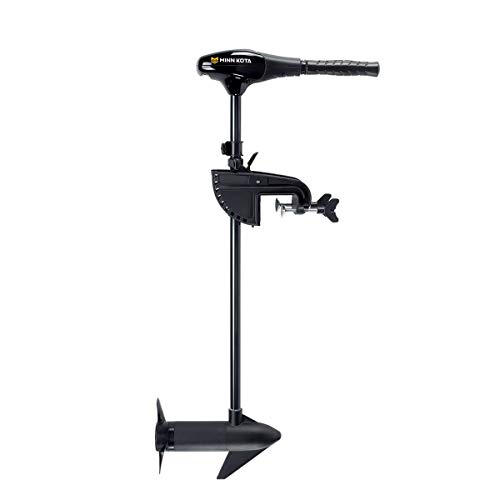
Minn Kota Endura C2 30
Top Pick
Minn Kota Endura C2 30
Best for: Solo kayaks and light canoes on calm lakes and slow rivers.
The Endura C2 30 is the lightest motor in this guide, and it suits solo kayaks and small canoes where every pound matters. Its 30 pounds of thrust move a lightly loaded kayak at a steady trolling pace, and the five forward speeds plus three reverse speeds give fine control around docks and weed lines. The composite shaft flexes instead of snapping when it bumps a rock, and the lever-lock bracket holds the motor firm with ten locking positions. A push-to-test battery meter shows charge at a glance. Availability on this listing has shifted over the past year, so confirm current stock before ordering.
Watch out for: Freshwater only, and 30 pounds of thrust feels thin on a loaded boat in wind.
Newport NV-Series 36lb
Runner-Up
Newport NV-Series 36lb
Best for: Kayak anglers who fish both saltwater and freshwater.
The NV-Series 36lb brings a saltwater-ready build to kayaks that fish bays, tidal creeks, and lakes alike. Its 36 pounds of thrust handle a solo kayak with gear, and the 30-inch shaft reaches deep enough for most kayak transoms. Eight speeds, five forward and three reverse, let you crawl along a shoreline or back away from a snag without drama. The LED battery indicator shows charge at a glance, and the included 40-amp circuit breaker guards the wiring. Availability on this listing has shifted over the past year, so confirm current stock before ordering.
Watch out for: The 2-blade propeller gives less bite than the 3-blade props on the stronger Newport models.
Minn Kota Endura C2 40
Minn Kota Endura C2 40
Best for: Two anglers in a small jon boat or canoe on lakes and slow rivers.
The Endura C2 40 steps up thrust for small jon boats, canoes, and aluminum rigs that carry two anglers and gear. Forty pounds of thrust on a 12-volt battery moves a 12- to 14-foot hull at a useful trolling pace, and the 36-inch shaft suits taller transoms. Five forward speeds and three reverse speeds keep control simple, with no menus to learn, while the telescoping tiller adjusts to your seat height. The composite shaft carries a lifetime guarantee from the maker, and the push-to-test battery meter shows charge at a glance.
Watch out for: Freshwater only, so it does not suit bays or tidal water.
Newport NV-Series 46lb
Newport NV-Series 46lb
Best for: Small boats that fish wind, current, and choppy water.
The NV-Series 46lb sits in the middle of the Newport range, and it suits small boats that need more push than a kayak motor without jumping to a heavy rig. Its 46 pounds of thrust handle a loaded small boat in wind and light current, while the 30-inch shaft fits standard transoms. The small 3-blade propeller, nine inches across, gives a stronger bite than the 2-blade prop on the 36-pound model. Eight speeds with five forward and three reverse settings cover slow trolling and quick repositioning. The 5-LED battery meter and 40-amp breaker round out a tidy package for weekend anglers.
Watch out for: The 12-volt battery is not included, and a 50-amp-hour unit is the recommended size.
Newport NV-Series 62lb
Newport NV-Series 62lb
Best for: Heavier fishing boats and anglers who fish wind and current often.
The NV-Series 62lb is the strongest motor in this guide, built for heavier hulls, bigger loads, and water that pushes back. Sixty-two pounds of thrust on a 12-volt battery keep a loaded fishing boat moving through wind and current, and the 36-inch shaft reaches deep on taller transoms. The large 3-blade propeller delivers a strong bite at low speed, which helps when you hold position over a spot. A 6-inch telescoping tiller adjusts to your seat, and the LED battery indicator tracks charge through the day. The 60-amp breaker in the box guards the wiring under heavy load.
Watch out for: At 23 pounds it is the heaviest motor here, and it draws the most from the battery at full throttle.
Which One Fits Your Situation
You Fish a Solo Kayak on Calm Lakes
Pick the Endura C2 30 or the Newport 36lb and keep the rig light. Either motor moves a solo kayak with ease, and both run on a single 12-volt battery that fits in a kayak crate. The Endura suits freshwater lakes, while the Newport adds saltwater ability for anglers who also fish the coast. Spend the weight you save on a bigger battery and you gain hours on the water.
You Fish Saltwater Bays and Tidal Creeks
Choose a Newport NV-Series motor, since the Endura C2 line is freshwater only. The 36lb suits a solo kayak in sheltered water, the 46lb adds muscle for tidal current, and the 62lb covers a heavier boat in open bays. Rinse the motor with fresh water after every saltwater trip, dry it before storage, and check the propeller and hardware for corrosion through the season.
You Run a Small Jon Boat With Two Anglers
The Endura C2 40 is the natural fit here, with enough thrust for two anglers, gear, and a cooler on a 12- to 14-foot hull. Its 36-inch shaft suits the taller transom of a jon boat, and the simple five-speed control needs no learning curve. Pair it with a Group 27 deep-cycle battery for a full day of trolling, and keep the battery meter in view so the trip home never turns into a paddle.
You Fish Big Water With Wind and Current
Go with the Newport 62lb and a stout battery. Its thrust holds a loaded boat on course when wind pushes the bow around, and the 36-inch shaft keeps the propeller deep in chop. Run at moderate speeds to stretch battery life, since full throttle drains even a large battery fast. A 60-amp breaker and a battery meter come in the box, so check both before you leave the dock.
Common Mistakes
Picking too little thrust for a loaded boat — add up hull, motor, battery, gear, and anglers before you choose, and go one level above the total.
Choosing a shaft that is too short — the propeller must stay underwater in chop, so measure your transom and favor the longer shaft on rough water.
Using a car battery instead of a deep-cycle marine battery — car batteries fade fast under steady trolling loads and wear out early.
Skipping the circuit breaker — every motor here needs the right breaker size, so fit the one in the box and check it before each trip.
Running a freshwater-only motor in saltwater — salt corrodes unprotected parts, so keep the Endura C2 motors on lakes and rivers.
Frequently Asked Questions
How much thrust do I need for a kayak?
A solo kayak with one angler and light gear usually moves well on 30 to 36 pounds of thrust. Add a second angler, a cooler, and tackle, and 40 to 46 pounds fits better. The rough guide is 2 pounds of thrust for every 100 pounds of loaded weight, and wind or current calls for more. When in doubt, go one level above your total.
Can I use a freshwater trolling motor in saltwater?
No, not without risk. The Minn Kota Endura C2 motors are built for freshwater, and saltwater use voids the warranty and speeds up corrosion. If your fishing splits between lakes and the coast, pick a saltwater-ready motor such as the Newport NV-Series. Whatever motor you run, rinse it with fresh water after saltwater trips and dry it before storage.
What battery do I need for a 12V trolling motor?
A 12-volt deep-cycle marine battery is the right match, in Group 24 size for light kayaks or Group 27 for heavier rigs. The Newport 46lb lists a 50-amp-hour battery as the recommended size, which is a sound floor for the stronger motors too. Lithium deep-cycle units weigh less and hold voltage longer, while lead-acid units cost less up front. Bring a charger and top up after every trip.
How long will a trolling motor run on one battery?
Runtime depends on thrust, speed setting, and battery size. A motor at half speed draws far less than at full throttle, so trolling slowly can more than double your time afloat. A 30-pound motor on a Group 24 battery lasts a full morning of fishing, while a 62-pound motor at high speed can drain it in a few hours. Watch the battery meter and head back with charge left.
A
admin
We compare specs, materials and verified owner reviews before a product earns a spot. Rankings are never paid.
Affiliate disclosure. As an Amazon Associate we earn from qualifying purchases at no extra cost to you. Prices accurate as of the date shown.
Compare five pickleball ball machines for practice, with ball capacity, speed, spin, feed rate and portability to help you drill alone and improve fast.