We independently review everything we recommend. When you buy through our links, we may earn a commission. As an Amazon Associate we earn from qualifying purchases.
5 Best Hunting Game Calls for Deer (November 2026)
Find the best hunting game calls for deer and duck, with reed type, tone and ease of use to help you call birds in with confidence on every hunt.
Find the best hunting game calls for deer and duck, with reed type, tone and ease of use to help you call birds in with confidence on every hunt.
A good game call turns a quiet morning into a close encounter. The five calls below cover the sounds that matter most: a doe bleat that pulls a buck across a field, a grunt tube that answers a rival, and a mallard call that finishes birds over decoys. Each one earns its place through reed design, tone, and how little effort it asks from a hunter who is cold, tired, and trying to stay still.
Two of the five below — the Duck Commander Uncle Si and the Hunter’s Specialties True Talker OG — showed no live offers in an older listing snapshot, so confirm the live listing before you order. The other three showed live listings in November 2026. Match the call to the game you hunt most, and practice the sounds at home before the season opens.
Quick Picks
As an Amazon Associate we earn from qualifying purchases
| Product | Best for | Key spec |
| Duck Commander Classic Uncle Si | New duck hunters | Single reed |
| Primos The Original CAN | Foolproof doe bleats | Tip-over can |
| Primos Trophy Grunter | Deep buck grunts | 6-in-1 reed |
| Flextone Bone Collector Buck Collector | Buck, doe and fawn sounds | Rubber sound chamber |
| Hunter’s Specialties True Talker OG | Five deer sounds in one tube | Fingertip control |
How to Choose
Reed count and control
Single reeds give a caller more range and volume, but they ask for steady air and good tongue control. Double reeds forgive sloppy air and produce a usable quack or grunt sooner, which suits a hunter who is still learning. A tip-over can has no reed to blow at all, so it suits anyone who wants one sound done right. Think about how much time you will spend practicing before you choose. A call that fights you in the field will stay in your pocket, while a forgiving call gets used.
Tone and volume for your ground
A raspy, low call carries well in open fields and windy mornings, while a soft, mellow call suits timber and small water where birds and deer are already close. Loud calls can push wary animals away at short range, so volume is not always an advantage. Listen for a tone that matches the animals you hunt: a deep grunt for a mature buck, a high bleat for a young doe, a raspy quack for a hen mallard. The right tone sounds like the animal, not like a human blowing through plastic.
Ease of use in cold and wet weather
Cold hands, rain, and spit all change how a call behaves. Reeds can stick when they get wet or freeze, so a call with a moisture-resistant design earns its keep on a damp morning. A bleat can has no reed to freeze, which makes it the most reliable option when the temperature drops. Rubber grips and simple controls matter when your fingers are numb. Before a hunt, blow the call a few times at home in the cold, and learn how it sounds when the reed is wet so a stuck reed does not surprise you in the stand.
Fit with the game you hunt
Deer and ducks ask for different voices, so a call built for one will not serve the other. A grunt tube and a bleat can cover the deer sounds you need through the rut, from contact grunts to estrus bleats. A mallard call covers the quacks, hail calls, and feed chatter that bring ducks into range. If you hunt both, carry one call for each and keep them on separate lanyards so you grab the right one without looking. A mixed kit costs more, but it keeps you from trying to force a deer call to sound like a duck.
The 5 Best Options
Duck Commander Classic Uncle Si Duck Call
Top Pick
Duck Commander Classic Uncle Si Duck Call
Best for: New duck hunters who want a forgiving first call
The Uncle Si is the simplest duck call in this lineup, and that is its strength. One reed and a polycarbonate barrel give a raspy mallard hen sound with very little air, so a hunter who is new to calling can produce a believable quack on the first morning. The barrel is light at 2.4 ounces and tough enough to ride in a pocket through a long season. It suits close work over decoys, where a soft, raspy greeting does more than a loud hail call. Confirm the live listing before you order, since an older snapshot showed no live offers.
Watch out for: One sound only, so pair it with a second call for varied work
Primos The Original CAN Deer Estrus Bleat Call
Runner-Up
Primos The Original CAN Deer Estrus Bleat Call
Best for: Hunters who want a foolproof bleat for the rut
The Original CAN is the easiest deer call a hunter can own. Tip it over and it makes an estrus doe bleat, with no blowing, no reed placement, and no practice needed. The raised thumb hole gives a consistent seal, and rubber grip rings on the top and bottom keep it from slipping in wet hands. At 2.88 ounces it rides in a jacket pocket and stays quiet until you need it. It makes one sound, so it works best beside a grunt tube, but for stopping a cruising buck during the rut, few calls are this simple or this reliable.
Watch out for: One sound only, and some hunters find it quiet at long range
Primos Trophy Grunter Deer Call
Primos Trophy Grunter Deer Call
Best for: Hunters who want one grunt tube for bucks and does
The Trophy Grunter is the grunt tube to pair with the CAN. Its adjustable reed assembly covers six sounds, from deep buck grunts to doe bleats, and the expandable hose changes the tone so you can go deeper for a mature buck or lighter for a young one. The hose also lets you point the sound where you want it, which helps when a buck is circling downwind. At 0.14 pounds it is light on a lanyard, and the build is simple enough to use with cold hands. Keep the reed clean and dry between hunts so it stays free.
Watch out for: Small reed parts can drop out if the tube comes apart
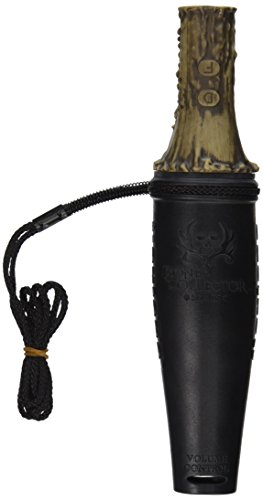
Flextone Bone Collector Buck Collector Deer Call
Flextone Bone Collector Buck Collector Deer Call
Best for: Hunters who want buck, doe, and fawn sounds in one call
Rubber sound chamber with holes for changing sounds
Buck grunts and growls, doe estrus bleats, and fawn bleats
The Bone Collector is the most versatile deer call here, and it looks like nothing else on a lanyard. A rubber sound chamber with holes placed around it lets you cover the holes to shift between buck grunts, doe bleats, and fawn sounds, all from one call. It also handles the snort wheeze, the sound that challenges a dominant buck, and the fawn distress bawl that can pull a doe in close. The rubber body is quiet to carry and easy to grip with cold hands. It takes a little practice to learn the holes, so work with it at home before you hunt.
Watch out for: The hole positions take practice to learn
Hunter’s Specialties True Talker OG Deer Call
Hunter’s Specialties True Talker OG Deer Call
Best for: Hunters who want five deer sounds with fingertip control
The True Talker OG brings back the original True Talker design with the same materials, and it covers five common deer sounds in one tube: mature buck grunt, young buck grunt, doe bleat, fawn bleat, and more. A soft rubber exterior gives a solid grip, and a rubber sleeve over the bellow lets you shape volume, tone, and direction with your fingers. Fingertip control means you can change the sound without moving much, which matters when a buck is looking your way. Confirm the live listing before you order, since an older snapshot showed no live offers.
Watch out for: The bellow sleeve takes a few outings to master
Which One Fits Your Situation
You hunt deer in the rut
Carry the Original CAN and the Trophy Grunter together. The CAN gives you an estrus bleat with no skill needed, and the Trophy Grunter answers with deep buck grunts when a rival shows. Add the Bone Collector if you want fawn sounds and a snort wheeze in the same kit. This trio covers nearly every deer sound you will need from the pre-rut through the post-rut.
You are new to calling
Begin with the Uncle Si for ducks and the Original CAN for deer. Both ask almost nothing of you: one reed and an easy blow on the duck side, and a tip-over bleat on the deer side. You will make believable sounds on your first outing instead of fighting a call that needs weeks of practice. Add a grunt tube later, once you know which sounds your ground needs most.
You hunt ducks over decoys
The Uncle Si is your call. Its single reed gives a raspy hen quack that finishes birds at close range, and it is light enough to hang on a lanyard all morning. Keep your calling soft once birds commit, and save the loud hail calls for distant flocks. A second, louder call helps on windy days, but for timber and small water, the Uncle Si does the job.
You want one call that does the most
Pick the Bone Collector for deer or the True Talker OG for five deer sounds in one tube. The Bone Collector shifts between buck, doe, and fawn sounds by covering holes, while the True Talker OG changes tone with fingertip control. Either one keeps your lanyard light and your options open when you are unsure which sound the morning will need.
Common Mistakes
Calling too often. A few soft sounds every twenty minutes beat constant noise that holds deer and ducks out of range.
Blowing too hard. Most calls need less air than you think, and hard air makes reeds squeal or stick.
Carrying a call you never practiced. Learn the sounds at home first, so the first blow in the field is a good one.
Ignoring wet reeds. Moisture and cold change the tone, so blow the call a few times before you hunt and keep it dry between outings.
Using a deer call for ducks, or the reverse. Match the voice to the game, or the animals will ignore you.
Frequently Asked Questions
What is the easiest deer call for a hunter who is just getting going?
The Original CAN. Tip it over and it makes an estrus bleat, with no reed to blow and nothing to learn. It suits the rut, when a doe bleat can stop a cruising buck or pull one into range. Pair it with a grunt tube later for more sounds.
Can one call work for both deer and ducks?
No. Deer and ducks use different voices, and a call built for one will not fool the other. Carry a deer call for the rut and a duck call for the marsh, and keep them on separate lanyards. The Uncle Si covers ducks here, while the other four cover deer.
Why does my duck call stick when it gets wet?
Moisture can hold a reed against the tone board so it will not vibrate. A call with a moisture-resistant design, like the Uncle Si with its single reed, handles wet mornings better. Blow a few short notes to clear the reed, and keep the call dry between hunts.
How often should I call during a hunt?
Call less than you think. A few soft grunts or bleats every twenty minutes is a common rhythm, and the same restraint works for ducks over decoys. Calling constantly can hold animals out of range, so call, watch, and wait before you call again.
A
admin
We compare specs, materials and verified owner reviews before a product earns a spot. Rankings are never paid.
Affiliate disclosure. As an Amazon Associate we earn from qualifying purchases at no extra cost to you. Prices accurate as of the date shown.
Compare five pickleball ball machines for practice, with ball capacity, speed, spin, feed rate and portability to help you drill alone and improve fast.


 Flextone Bone Collector Buck Collector Deer Call
 Hunter’s Specialties True Talker OG Deer Call