We independently review everything we recommend. When you buy through our links, we may earn a commission. As an Amazon Associate we earn from qualifying purchases.
5 Best Squash Balls for Club and Match Play (November 2026)
Compare five squash balls for club and match play, with bounce, dot speed, durability, and pack size to keep rallies going strong on every court.
Compare five squash balls for club and match play, with bounce, dot speed, durability, and pack size to keep rallies going strong on every court.
The ball you play with shapes every rally before you hit a shot. A slow double yellow dot stays low and demands a full swing, while a bouncy blue dot keeps the ball in play longer and lets newer players build longer exchanges. Pick the wrong dot for your court and your level, and the game feels either dead or wild. Club nights mix cold courts, warm courts, beginners, and league players, so one ball rarely suits everyone in the room.
This guide compares five squash balls for club and match play, covering dot speed, bounce, durability, and pack size. Each ball below has been checked against its listing, with dot color, pack count, and build drawn from the listing itself. Match the dot to your level and your court, and the rallies take care of themselves.
Quick Picks
As an Amazon Associate we earn from qualifying purchases
Product
Best for
Key spec from title
Dunlop Sports Progress Squash Balls
New players learning the game
Red dot, 3-pack, longer hang time
Dunlop Sports Competition Squash Balls
Intermediate club play
Single yellow dot, 3-ball tube
Dunlop Sports Pro High Altitude Squash Balls
Courts above sea level
Single green dot, box of 12
WILSON Staff Squash Balls
Advanced match play
Double yellow dot, 3-pack
ZAWELIYO Single Dot Squash Balls
Beginner training sessions
Single blue dot, 37 mm training ball
How to Choose
Dot Color Sets the Pace
The dot on a squash ball tells you how fast it plays. A double yellow dot is the slowest ball in the range, with the lowest bounce, and it suits warmed-up courts and advanced players who generate their own pace. A single yellow dot bounces a little higher and works well for intermediate club players. A red dot bounces higher still and suits players who are still building swing speed. A blue dot is the liveliest of all, made for beginners and juniors who need the ball to stay in play. A green dot is a special case: it is built for high-altitude courts, where thin air makes a standard ball livelier than usual.
Warm the Ball Before You Judge It
Squash balls play differently cold and warm. A double yellow dot feels dead and heavy for the first few minutes, then comes alive as the rubber warms and the air inside expands. Judge a ball only after a few minutes of hard hitting, with both players driving the ball firmly into the front wall. A ball that feels sluggish on a cold morning court may play perfectly once the court warms up and the rally pace rises. Keep a spare ball in a pocket between games so it holds some warmth, and swap in a fresh ball when the one in play goes soft or loses its bounce.
Match the Ball to the Court
Court temperature changes everything about how a ball behaves. Cold courts in winter make every ball play slower, so a red dot or a single yellow dot often feels right when the walls are cold and the air is still. Warm courts in summer make balls livelier, and a double yellow dot keeps rallies under control when the room is already hot. High-altitude clubs need a green dot ball, because thin air adds bounce that a sea-level ball cannot handle. Ask regulars at your club which dot they play with in each season, and you will rarely go wrong.
Pack Size and Durability
Pack size matters more than it looks. A three-ball tube covers a few club nights, while a box of twelve keeps a whole ladder season supplied and means you always have a fresh ball when one splits or goes soft. Squash balls wear out: the rubber loses its spring, the surface smooths, and the bounce turns uneven. Replace a ball when rallies end early because the ball dies on the front wall, or when the bounce varies from one hit to the next. Buying a larger pack also keeps every ball in the set the same age, so the bounce stays consistent from one night to the next.
The 5 Best Options
1. Dunlop Sports Progress Squash Balls
Top Pick
1. Dunlop Sports Progress Squash Balls
Best for: New players and casual club nights where long rallies matter more than pace.
Red dot for a higher bounce and a slower pace
Three balls in the pack
Slightly larger than a standard ball, with a longer hang time
The Progress is the friendliest ball in this guide, and the right place for anyone new to squash. Its red dot gives a higher bounce and a slower pace than the competition balls, so rallies last longer and new players get more chances to find their timing. The ball is slightly larger than a standard ball, with a hang time about a fifth longer, which makes it easier to read off the front wall. It is the official ball of the PSA World Tour, so the build quality matches the balls the professionals use, in a friendlier speed.
2. Dunlop Sports Competition Squash Balls
Runner-Up
2. Dunlop Sports Competition Squash Balls
Best for: Intermediate club players who want a steady ball for weekly matches.
The Competition is the classic club ball, and the one most intermediate players reach for without thinking. Its single yellow dot gives a middle pace: quicker than a red dot, more forgiving than a double yellow dot, and ready to play after a short warm-up. The three-ball tube keeps the balls clean and protected in a kit bag, and the standard size feels familiar from the first hit. On a cold court it can feel a touch flat until it warms, but once it is going it holds a steady bounce through long rallies.
3. Dunlop Sports Pro High Altitude Squash Balls
3. Dunlop Sports Pro High Altitude Squash Balls
Best for: Clubs and players at altitude who need a ball tuned for thin air.
Single green dot for high-altitude play
Box of twelve balls
Made for courts above sea level
Part of the Pro XX line, the official ball of the WSF and PSA
Altitude changes the game, and this box is built for it. At courts above sea level the thin air makes a standard ball bounce higher than it should, so the green dot is tuned to play at the right pace where the air is thin. The box of twelve suits a club that plays at altitude every week, with enough balls to keep every court supplied and a fresh ball always on hand. The build follows the Pro XX line, the official ball of the WSF and PSA, so the bounce stays consistent from the first ball in the box to the last.
4. WILSON Staff Squash Balls
4. WILSON Staff Squash Balls
Best for: Advanced players and league matches on warmed-up courts.
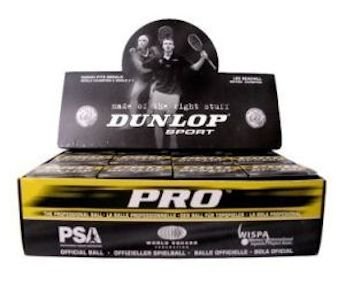
The Wilson Staff is the match ball for players who like their rallies hard and low. Its double yellow dot gives the slowest pace and the lowest bounce in this guide, which rewards clean hitting and punishes loose shots that sit up. The three-pack is a sensible size for a player who competes most weeks, with a spare always ready when a ball splits. Wilson lists this ball under model WRT617900, and it appears on current best-seller lists for squash balls, so it is easy to find and easy to restock.
5. ZAWELIYO Single Dot Squash Balls
The ZAWELIYO is the budget-friendly training ball in this guide, and a useful pick for coaches and beginners. Its single blue dot gives the highest bounce of any ball here, which keeps rallies going while new players learn footwork and timing. The ball measures 37 mm, a touch smaller than the standard 40 mm ball, and the rubber build is made for repeated practice sessions. It is the least proven name in this guide, so treat it as a training ball rather than a match ball, and check the listing carefully before ordering.
Specs
Single blue dot for a high, forgiving bounce
37 mm diameter training ball
Rubber build for repeated practice
Model ZAWELIYO57ypdxszc8-12
Best for: Beginners, juniors, and coaches running training sessions.
Watch out for: A lesser-known brand in a smaller 37 mm size; confirm the pack size on the listing before ordering.
ASIN: B0CZ458VLG
Which One Fits Your Situation
You are new to squash
Grab a red dot or a blue dot ball and keep the game friendly. The higher bounce gives you time to reach the ball and find your swing, and rallies last long enough to learn from. A three-pack is plenty while you are learning, and you can move to a slower ball once your swing speed and footwork catch up with the pace of the game.
You play club league matches
A double yellow dot is the ball your league expects, and the Wilson Staff fits that role. Warm it properly with a few minutes of hard drives before the match, and keep a spare in your pocket so a split ball never stops play. If your club plays on cold courts in winter, keep a single yellow dot tube in the bag as a backup for the first game of the night.
Your club sits above sea level
Order the green dot box and stop fighting the bounce. Thin air makes a standard ball livelier than it should be, and the high-altitude ball brings the pace back to where your timing expects it. A box of twelve keeps every court in the club supplied, and the shared pack means nobody has to guess which ball is the right one for the night.
You coach juniors or run practice sessions
Buy for bounce and for numbers. A blue dot ball keeps young players in the rally, and a red dot ball bridges the gap as they improve. Keep a box on hand so every player has a fresh ball, and retire balls once the bounce turns uneven. The training balls in this guide cost little per ball, so replacing them often is cheaper than losing a session to a dead ball.
Common Mistakes
Playing a double yellow dot on a cold court and deciding the ball is dead before it warms up.
Buying a high-altitude green dot ball for a sea-level club, where it plays far slower than expected.
Mixing dot speeds in one session, so the bounce changes every time a new ball comes in.
Keeping a ball in play long after it has gone soft, and blaming your swing for short rallies.
Choosing a ball by pack size alone, without matching the dot to your level and your court.
Frequently Asked Questions
What does the dot on a squash ball mean?
The dot marks the speed of the ball. A double yellow dot is the slowest, with the lowest bounce, and suits advanced players on warm courts. A single yellow dot is a step quicker, a red dot quicker still, and a blue dot is the liveliest. A green dot is a special high-altitude ball. Match the dot to your level and your court, not to what the best players use.
How do I warm up a squash ball?
Hit the ball hard into the front wall for a few minutes before you count a rally. Drive it with full swings, and keep both players hitting so the rubber warms evenly. A double yellow dot needs the longest warm-up, while a red or blue dot comes alive faster. Swap in a fresh ball if the one in play goes soft, and keep a spare in a pocket between games.
How long does a squash ball last?
A ball lasts a few sessions of hard play before the rubber loses its spring and the bounce turns uneven. Club players who play twice a week often swap in a fresh ball every week or two. Retire a ball when rallies end early because it dies on the front wall, or when the bounce varies from hit to hit. A box of twelve makes regular replacement easy.
Can beginners use a double yellow dot ball?
Beginners can use one, but the game will feel harder than it needs to be. A double yellow dot stays low and needs a swing and a warm court to come alive, so rallies end quickly for players. A red dot or blue dot ball gives a higher bounce and longer rallies, which builds timing and footwork faster. Move to a slower ball once your swing speed catches up.
A
admin
We compare specs, materials and verified owner reviews before a product earns a spot. Rankings are never paid.
Affiliate disclosure. As an Amazon Associate we earn from qualifying purchases at no extra cost to you. Prices accurate as of the date shown.
Compare five pickleball ball machines for practice, with ball capacity, speed, spin, feed rate and portability to help you drill alone and improve fast.


 4. WILSON Staff Squash Balls