Key takeaways
- Compare five padel balls for matches and practice, with bounce, felt durability and visibility to help you pick balls that play true every match.
A padel ball looks like a tennis ball, yet it plays a different game. Padel balls carry lower internal pressure, so they fly slower, bounce lower off the court and glass, and keep rallies under control on a smaller court with walls in play. Open the wrong tube and every shot feels off: lobs sail long, smashes die on the glass, and a fresh can feels dead after one evening.

This guide compares five padel balls that suit matches and practice, from a tournament-grade tube to a bulk pack for clubs that open a fresh can every session. Each pick below is a genuine padel ball sold on Amazon, with its own felt, core and bounce character. Read the quick picks, learn what separates a lively match ball from a tired one, and choose the tube that fits your court, your climate and your group.
Quick Picks
As an Amazon Associate we earn from qualifying purchases
| Product | Best for | Key spec |
| HEAD 3x3B Padel Radical | Bulk value for club nights | 9 balls in 3 cans of 3 |
| Wilson Padel X3 | All-round club play | 3-ball pressurised can |
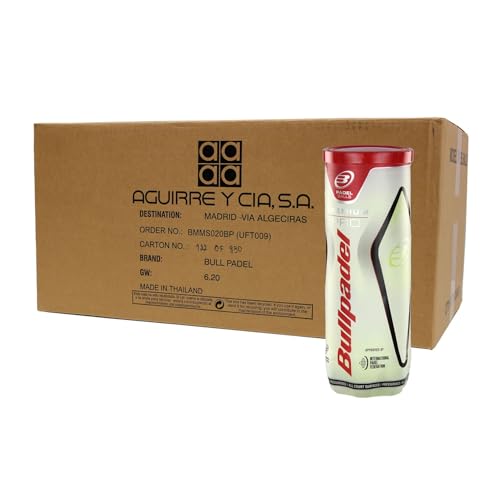
| Bullpadel Premium Pro | Fast tournament play | FIP-approved, 57 g ball |
| FUTURA8 Professional Padel Balls | Training volume | 9 balls, 1.75 ATM core |
| Palbea PRO | Club multipack buying | FIP-approved carton |
How to Choose
Pressurised or pressureless
Most match balls are pressurised: gas sealed inside a hollow rubber core gives the lively bounce and crisp sound that padel is built around. That liveliness fades from the moment you crack the seal, so a pressurised tube is at its best for a few hard sessions, then moves to warm-ups. Pressureless balls get their bounce from a thicker rubber wall instead, so they hold the same bounce for weeks and suit coaching baskets and drills. They feel flatter in a match, though, and few competitive players choose them for league night. Pick pressurised for matches and pressureless for practice volume.
Speed grades and conditions
Brands sell the same ball in standard and faster grades, and the right grade depends on your court and climate. Faster balls carry extra internal pressure, so they fly quicker off the racket and glass and suit cold evenings, sea-level courts and slow, sandy surfaces where a normal ball turns sluggish. Standard balls play calmer and suit hot weather, high altitude and fast indoor courts, where a quick ball becomes hard to control. Match the grade to the conditions, not to ambition: a fast ball on a fast summer court makes rallies chaotic, while a standard ball on a cold damp morning dies before it reaches the glass. When in doubt, take the standard grade.
Felt and durability
The felt is the working surface of a padel ball, and it wears before the core gives up. Fresh felt grips the racket face, bites on slice and keeps flight true; once it fluffs up and wears smooth, the ball skids, spins less and turns inconsistent. Wool-rich felts feel soft and plush on day one yet wear faster on sanded turf, while synthetic felts resist abrasion and hold their character deeper into a ball’s life. Look for a tightly wrapped felt with a clear weave, and expect sandy outdoor courts to wear any felt faster than a clean indoor court. When the felt goes shiny and smooth, the ball is done as a match ball, whatever pressure remains inside.
Visibility and tube size
Padel is played against glass and mesh, so a ball you can track matters as much as one that bounces true. Bright yellow remains the easiest colour to follow under floodlights and against blue or green courts, and a high-visibility felt keeps the ball readable. Tubes hold three balls, and a match needs one fresh tube; regular players keep two to four tubes on hand so a dead set never decides a match. Clubs and coaches buy cartons of six, twelve or twenty-four tubes to cut the cost per tube and always have a can ready. Check the pack before you buy: a single tube, a tripack and a carton hold the same ball in different quantities.
The 5 Best Options
HEAD 3x3B Padel Radical
HEAD’s Radical tripack is the bulk buy for players who open a fresh can every club night. Three cans of three balls arrive sealed in one pack, so a group can split the cost and still play a new ball each session. The felt cover and molded rubber core give a steady, all-round bounce that suits social matches and training alike, without the sharper pace of a tournament-grade tube. It is an Amazon-exclusive pack, which keeps the format simple: one listing, nine balls, no hunting for matching cans. For a regular four who plays weekly, this is the easiest way to keep fresh balls in the bag.
Specs
- 9 balls in 3 cans of 3
- Felt cover with molded rubber core
- Yellow
- Model 575601
- Adult
- Pack weight 610 g
- 1-year manufacturer warranty
Best for: Players who want a fresh can for every club night without reordering weekly.
Watch out for: A tripack suits groups better than a solo player; a single can may last longer in a lone kit bag.
Wilson Padel X3
The Wilson X3 is the tube most club players meet first, and it earns that place with a reliable character. Its Dura-Weave felt is wrapped tight around the core, so the ball holds its bounce and keeps its logo readable through sessions on fast surfaces. Wilson pitches the X3 as a ball for intense matches and training, and the felt is the reason it survives sandy courts better than softer wool blends. It plays lively without turning wild, which makes it a safe default when one tube has to suit four different games. If your group argues over balls, this is the tube that ends the argument.
Specs
- Model WR8900801001
- 3 balls per can
- Padel X3 Ball Can
Best for: Club players who want one dependable tube for mixed groups and fast courts.
Watch out for: A faster sibling, the X3 Speed, exists; check the can name so you buy the standard X3.
Bullpadel Premium Pro
Bullpadel builds the Premium Pro for players who train hard and often. A high-density rubber core holds pressure and shape through repeated impacts, while a premium synthetic felt with low wool content resists the abrasion of sandy courts better than wool-rich blends. The result is a fast, lively ball with a firm feel that suits attacking players and frequent sessions. Bullpadel rates the ball for competition, and its published numbers sit inside the official rebound window. If you play several times a week and want a tournament-legal tube that keeps its character, this is the Bullpadel to open.
Specs
- Pressurised, FIP-approved
- High-density rubber core
- Premium synthetic felt, low wool content
- Diameter 6.5 cm
- Weight 57 g
- Internal pressure 1.75 ATM
- Bounce 135–145 cm
Best for: Frequent players who want a fast, durable tournament-legal ball.
Watch out for: High internal pressure means a quick ball; new players may find the pace hard to judge.
FUTURA8 Professional Padel Balls
The FUTURA8 pack is the training-volume pick: nine balls in three canisters of three, so a coach or a keen group can stock a basket without reordering every week. A polyester felt over a rubber core gives a uniform bounce, and the published figures sit inside the official window, with a ball weight and internal pressure that match the match balls in this guide. The shiny yellow felt stays easy to track against glass and mesh, and the balls are built for all surfaces and intensive play. For drills, lessons and long practice sessions, this pack keeps fresh balls coming at a lower cost per ball.
Specs
- 9 balls in 3 canisters of 3
- Polyester felt and rubber core
- Internal pressure 1.75 ATM
- Bounce 135–145 cm
- Shiny yellow
Best for: Coaches and groups who need volume for drills and practice.
Watch out for: A nine-ball pack suits heavy use; a casual player may take months to open the last canister.
Palbea PRO
Palbea PRO is the carton buy for clubs that plan ahead. Sold in cartons of six, twelve or twenty-four tubes, it lets a club or a weekly group order once and play for a season without chasing single tubes. The ball is FIP-approved, so it meets the official standard for competition, and each tube holds three balls in the usual pressurised format. It is a lesser-known name beside HEAD and Wilson, yet the approval and the multipack format make it a practical pick for organisers. If your club burns through tubes and wants fewer reorders, this carton earns its shelf space.
Specs
- FIP-approved
- Carton options of 6, 12 or 24 tubes
- 3 balls per tube
- Pressurised
Best for: Clubs and weekly groups buying in bulk.
Watch out for: Cartons mean a higher upfront buy; a solo player should take a single tube instead.
Which One Fits Your Situation
You play league matches every week
You need a ball that plays the same in week one and week ten, with a felt that survives sandy courts and a core that holds pressure. Open a fresh tube for match night and move older balls to warm-ups. A tournament-grade, FIP-approved tube is the safe call here, and a tripack keeps the cost down when your group plays every week. Avoid pressureless training balls for league play; they feel flat when points matter.
You coach or run drills
Coaches need volume and consistency: balls that bounce the same from the first drill to the last, and enough of them to fill a basket. A nine-ball pack or a carton of tubes keeps the session moving without a mid-practice reorder. Pressureless balls also earn a place here, since they hold their bounce for weeks of feeding. Keep match balls separate from drill balls so a dead training ball never slips into a match.
You are learning the game
New players should take a calmer, standard-speed ball that buys time on the glass and forgives a loose swing. A fast tournament ball punishes small errors and makes the glass harder to judge, so save the quick tubes for later. A single tube of three is enough to begin: open it fresh, play a few sessions, and learn how a ball fades before you buy in bulk. Bright yellow helps most while you learn to track the ball.
You play in cold or damp weather
Cold air slows the gas inside a pressurised ball, so standard tubes feel dead on winter mornings. Faster balls with higher internal pressure hold their pace better in cold, damp and sea-level conditions, and keep rallies honest in heavy air. Store unopened tubes indoors at room temperature and open the seal at play time, since a tube left in a cold car overnight loses bounce before the first rally. A speed-grade tube is the default for winter play.
Common Mistakes
- Opening a fresh tube days before match night and letting the pressure fade in the bag.
- Using tennis balls for padel and wondering why rallies fly long and bounce high.
- Buying the faster speed grade for a hot indoor court, then fighting a ball that will not slow down.
- Judging a ball by its felt alone; a shiny, smooth felt means the ball is done, even when the core still feels firm.
- Storing unopened tubes in a hot car or a cold garage, which ages the pressure before the seal breaks.
Frequently Asked Questions
Can I use tennis balls for padel?
No. Padel balls carry lower internal pressure than tennis balls, so they fly slower and bounce lower on a smaller court with walls in play. A tennis ball in padel flies too fast, bounces too high off the glass, and changes every rally pattern. For anything beyond a casual first hit, use a proper padel ball.
How long does a pressurised padel ball last?
A fresh pressurised ball is at its best for a few hard sessions, then the bounce softens a little each time you play. Judge by feel, not by the calendar: drop a used ball beside a fresh one, and a clearly lower bounce means the pressure has gone. Dull sound and smooth, shiny felt are the other signs. Retire faded balls to warm-ups and drills.
What does FIP-approved mean on a padel ball?
FIP approval means the ball has been measured against the International Padel Federation specification for size, weight and rebound, so it is legal for sanctioned competition. Approved balls sit inside the official weight and bounce windows, which keeps play fair across brands. For club matches the badge is a useful quality check, even when the match is not sanctioned.
How many tubes should I buy?
One tube of three covers a match, and two to four tubes make a sensible personal stock: one fresh tube for matches, one in play, and a spare so a dead set never decides a game. Clubs and coaches should think in cartons, since multi-tube packs cut the cost per tube and keep fresh balls on hand. Rotate stock and play the oldest opened balls in training.