We independently review everything we recommend. When you buy through our links, we may earn a commission. As an Amazon Associate we earn from qualifying purchases.
5 Best Tennis Ball Machines for Practice (November 2026)
Compare five tennis ball machines for home practice, with ball capacity, oscillation, speed settings and portability to help you drill alone anytime.
Compare five tennis ball machines for home practice, with ball capacity, oscillation, speed settings and portability to help you drill alone anytime.
A tennis ball machine turns an empty court into a practice partner that never gets tired. You can groove a forehand, work on footwork, or drill volleys on your own schedule, without waiting for a hitting partner to show up. The right machine feeds balls at the speed and height you choose, moves them around the court, and keeps going until the hopper runs dry.
This guide compares five machines that suit home practice, from a featherweight backpack unit to full-size club-style feeders. We looked at ball capacity, speed range, spin, oscillation, battery life, and weight, so you can match a machine to your court time, your car, and your game. Every pick below links to an Amazon listing, and each one covers a different way to practice.
Quick Picks
As an Amazon Associate we earn from qualifying purchases
Product
Best for
Key spec
LOBSTER Elite Grand Five LE
Long solo sessions
150-ball capacity, 35 to 80 mph
Spinshot Pro
Simple knob controls
120 balls, 10 to 120 kmph
Nisplay L1
Lightweight court travel
6 kg backpack design, app control
PUSUN PT-Smart
App drills and full-court coverage
100+ balls, 12.4 to 74.5 mph
Sports Tutor Tennis Tutor ProLite
Compact classic machine
125 balls, 10 to 60 mph
How to Choose
Ball Capacity and Session Length
Hopper size decides how long you can drill before you walk around picking up balls. A 50-ball hopper suits short warm-ups and quick sessions, while a 100-ball or larger hopper keeps a rally going long enough to work on patterns. Think about how you practice: short bursts favor a light machine you refill often, while long blocks favor a big hopper. Also check whether the hopper folds or detaches, since that affects storage and transport. A machine that holds 120 to 150 balls sounds generous, but it also weighs more when full, so balance capacity against how far you carry it.
Speed, Spin, and Oscillation
Speed range matters more than top speed alone. A machine that feeds from a gentle 10 mph toss up to 75 mph or faster covers juniors, returning players, and hard hitters in one unit. Spin control adds topspin and backspin, which changes how the ball bounces and forces you to adjust your swing. Oscillation moves feeds across the court so you hit on the run instead of standing in one spot. Random oscillation feels closest to a real rally, while a fixed two-line mode suits forehand and backhand alternation. If a machine lacks oscillation, add it only when the maker offers it as an option.
Power, Weight, and Portability
Battery life and weight decide whether a machine fits your routine. Most portable units run two to four hours on a charge, which covers several sessions before a recharge. Check the recharge time too: some machines need a full night on the charger, while others refill in four hours. Weight matters most when you walk or bike to the court. A 13 lb backpack unit rides on your shoulder, while a 38 lb machine needs wheels or a car. Also note what ships in the box: some machines include the battery and charger, while others sell the battery as a separate item you must order on its own.
Controls, Drills, and Ease of Use
Controls shape how much you enjoy a session. Knob controls suit players who want to turn a dial and hit, with no phone or pairing involved. App controls suit players who like to build drills, save patterns, and change speed, spin, height, and feed rate from the sideline. Preloaded drills help when you want structure without planning each shot, while a remote lets you pause the feed while you collect balls or talk with a coach. Pick the control style you will actually use: a clever app adds nothing if you leave your phone in your bag, and simple knobs add nothing if you crave varied drills.
The Elite Grand Five LE sits at the top of the Lobster line, built for players who want long, varied sessions without reloading every few minutes. Its 150-ball hopper holds enough balls for extended drills, and the 35 to 80 mph speed range covers gentle feeds for warming up and fast balls for match pace. Twelve preloaded drills plus twelve custom slots let you shape a session around the shots you want to groove, while spin control and a 20-function remote keep changes close at hand. It is a full-size machine, so it suits a home court or a club bag room more than a walk to a public park.
Spinshot Pro
Runner-Up
Spinshot Pro
Best for: Players who want simple knob controls and a metal body.
Players who want simple knob controls and a metal body.
Watch out for
The battery ships apart from the machine, so confirm what arrives in the box; also confirm current availability before ordering, since the listing showed no featured offers in an older crawl.
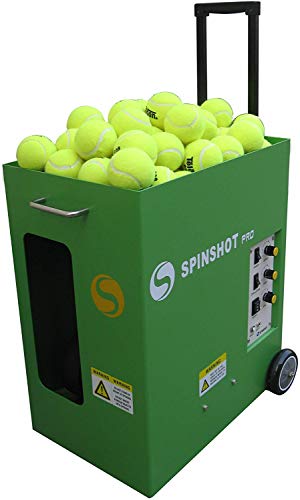
The Spinshot Pro keeps things simple with knob controls that anyone can use, including younger players. Every setting sits on the panel: ball speed from 10 to 120 kmph, feed interval from 2 to 10 seconds, adjustable topspin and backspin, and random horizontal oscillation that sweeps balls across the court. The 120-ball hopper suits long rallies, and the metal body holds up better than plastic shells. Battery power runs two to three hours, though the battery itself ships apart from the machine, so check the box contents when you order. A two-button remote handles feed and oscillation from the baseline.
Nisplay L1
The Nisplay L1 is the lightest machine in this guide, and the easiest to carry. At 6 kg with a backpack shape and a shoulder strap, it rides to the court on your back and fits in a car trunk without a second thought. App and remote control let you set speed up to 60 km/h, feed interval from 1 to 9 seconds, elevation from 15 to 55 degrees, and horizontal oscillation from your phone. The hopper holds up to 50 balls, which suits shorter sessions and warm-ups, and the battery runs two to three hours. It carries Red Dot and iF design awards, which show in the shape.
Specs
Up to 50-ball capacity
Ball speed up to 60 km/h
Feed interval 1 to 9 seconds per ball
Elevation angle 15 to 55 degrees, manually adjustable
Horizontal oscillation
App and remote control
Battery life 2 to 3 hours
Weight 6 kg
Included components: ball machine, ball basket, shoulder strap, portable battery, battery charger, user manual
Best for: Players who walk or bike to the court and travel light.
Watch out for: The 50-ball hopper suits short sessions, so plan on refilling during long drills.
ASIN: B0FJ1L4MLR
PUSUN PT-Smart
PUSUN PT-Smart
Best for: Players who want app-built drills and full-court random shots.
The PT-Smart leans into app control, with three ways to run it: a phone app, a pocket remote, and a watch. You can build custom drills, call up AI drills, or let the machine throw random shots across the full court, with 20 vertical angle settings and 30 horizontal settings to shape depth and width. The hopper holds more than 100 balls, speed runs from 12.4 to 74.5 mph, and feed interval runs from 1.8 to 8 seconds per ball. A 25.6V external lithium battery runs four to six hours and refills in four hours, so one charge covers a long afternoon of practice.
Sports Tutor Tennis Tutor ProLite
The Tennis Tutor ProLite is a compact classic from the maker of the Wilson Portable, built for beginners and intermediates who want a simple, dependable feeder. It stands only 12 inches tall, weighs 29 pounds, and holds 125 balls, so it fits in a trunk and sets up in seconds. Speed runs from 10 to 60 mph with a feed interval from 1.5 to 10 seconds, and the trajectory moves from groundstroke to lob. The battery runs two to three hours, and the machine carries a three-year warranty on parts and labor. Note that the base model has no oscillator, which the maker sells as an add-on.
Specs
125-ball capacity
Ball speed 10 to 60 MPH
Ball feed rate 1.5 to 10 seconds
Trajectories from groundstroke to lob
Weight 29 pounds
Battery life 2 to 3 hours
Full charge in 18 hours
Dimensions 12 x 19.5 x 18 inches
3-year warranty on parts and labor
No oscillator on the base model, optional add-on
Best for: Beginners and intermediates who want a compact, dependable machine.
Watch out for: The base model has no oscillator, so confirm the add-on if you want balls swept across the court; also confirm current availability before ordering.
ASIN: B084Y7GDW9
Which One Fits Your Situation
Solo Evening Sessions After Work
You finish work, grab your bag, and hit the court alone for an hour. You want a machine that sets up fast, feeds at a steady pace, and lets you work on one stroke at a time. A mid-size hopper and a simple remote suit this rhythm, since you refill between drills and pause the feed while you collect balls. Knob controls or a remote beat a phone app here, because you spend your hour hitting, not tapping through menus.
Practice With Family on Weekends
Weekend sessions mix ages and skill levels, so the machine must adjust fast. Younger players need slow, high feeds, while adults want faster balls with spin. A machine with knob controls works well here, since anyone can turn a dial without learning an app. A 120-ball hopper keeps the group moving, and a remote lets a parent pause the feed while a child resets. Pick a sturdy metal body that survives bumps in a busy family car.
Walking or Biking to Public Courts
When the court sits a long walk from home, every pound counts. A 6 kg backpack machine with a shoulder strap beats a 30 lb unit you must drag or drive, and it fits in a small trunk when the session ends. Look for a battery that runs two to three hours and a hopper you can refill from a ball bag. App control helps here, since you set drills from your phone while the machine sits across the net.
Coaching a Group or Running Long Drills
Coaches need a machine that runs for hours and holds enough balls for a full group rotation. A 125-ball or larger hopper cuts refill breaks, while random oscillation moves players across the court and builds footwork. Programmable drills help when you want the same pattern repeated for each player in line. A remote matters most here, since you pause the feed to give feedback, then resume the drill without walking to the machine.
Common Mistakes
Buying the biggest hopper you can find, then carrying a heavy machine you never fully load.
Forgetting that some machines ship the battery apart from the unit, so you arrive at the court with a machine that cannot run.
Skipping oscillation and feeding every ball to the same spot, which builds a groove that falls apart in a real rally.
Leaving the battery flat for weeks between sessions, which shortens its useful life.
Storing wet balls in the hopper, which clogs the feed and leaves marks on the wheels.
Frequently Asked Questions
How many balls should a home machine hold?
For most home players, 100 to 125 balls hits the sweet spot. That range covers a solid drill block without constant refills, and it keeps the machine light enough to move. A 50-ball hopper suits short warm-ups and travel, while a 150-ball hopper suits long sessions and group practice. Match the hopper to your usual session length, not to the biggest number on the box.
Do I need oscillation on a ball machine?
Oscillation moves feeds across the court, so you practice footwork and hit on the run instead of standing still. Random oscillation feels closest to a rally, while a two-line mode alternates forehand and backhand. A machine without oscillation builds strokes, but it can ingrain lazy feet. If you only drill one stroke at a time, you can live without it; if you want match-like movement, treat it as a must-have.
How long does a battery last on a portable machine?
Most portable machines run two to four hours on a full charge, which covers several solo sessions or one long group session. Runtime drops at high speed and fast feed rates, so plan shorter sessions when you drill at full pace. Recharge time varies from four hours to a full night, so charge the battery after each session and keep a spare if your model allows it.
Can a beginner use a ball machine?
Yes. A beginner gains the most from slow feeds at a fixed height, with plenty of time between balls to reset the feet and swing. Set the speed low, turn off spin, and use a wide feed interval. As your timing improves, raise the speed, add spin, and switch on oscillation. A machine never judges a mishit, so it suits early learning.
A
admin
We compare specs, materials and verified owner reviews before a product earns a spot. Rankings are never paid.
Affiliate disclosure. As an Amazon Associate we earn from qualifying purchases at no extra cost to you. Prices accurate as of the date shown.
Compare five pickleball ball machines for practice, with ball capacity, speed, spin, feed rate and portability to help you drill alone and improve fast.