We independently review everything we recommend. When you buy through our links, we may earn a commission. As an Amazon Associate we earn from qualifying purchases.
5 Best Hiking Gaiters for Rain and Snow (November 2026)
Compare five hiking gaiters for rain and snow, with waterproof fabric, calf height, strap fit, and durability to keep dirt, snow, and debris out.
Compare five hiking gaiters for rain and snow, with waterproof fabric, calf height, strap fit, and durability to keep dirt, snow, and debris out.
Rain-soaked trails and deep snow both punish unprotected lower legs. Water creeps over boot collars, mud cakes onto socks, and loose snow melts inside cuffs, leaving feet cold and blistered miles from the trailhead. A good pair of hiking gaiters seals that gap, wrapping the shin and boot top so debris, slush, and rain stay outside where they belong.
The five gaiters below cover the full range of wet-weather hiking, from ultralight mid-calf shells for fast trail days to rugged full-height guards built for postholing through fresh powder. Each one uses a different closure and fabric, so the right choice depends on your boots, your pack weight, and the conditions you hike in most. Use the guide below to match a gaiter to your trips, then check the details before you buy.
Quick Picks
As an Amazon Associate we earn from qualifying purchases
Product
Best for
Key spec from title
OrrinSports Waterproof Leg Gaiters
Wet trails and muddy miles
Waterproof leg gaiters
Kahtoola INSTAgaiter Mid
Fast, light trail days
Mid-length gaiter
Unigear Snow Leg Gaiters
Deep snow and slush
1000D snow gaiters
Pike Trail Adjustable Leg Gaiters
All-round rain and snow
Adjustable leg gaiters
Frelaxy Leg Gaiters
Budget wet-weather cover
Ultra high-performance gaiters
How to Choose
Height and Coverage
Gaiter height decides how much of your leg stays dry. Mid-calf models cover the boot collar and lower shin, which suits rain, wet grass, and shallow snow on maintained trails. Full-height gaiters run to just below the knee and seal out deep powder, scree, and brush on rough off-trail routes. Taller is not always better: extra fabric adds weight and heat, and a tall gaiter can bunch behind the knee on steep climbs. Match height to the deepest conditions you expect, not the average day. If you hike in both shallow mud and knee-deep snow, a mid-height pair with a snug top closure covers most trips, while a full-height pair stays in the pack for winter.
Fabric and Waterproofing
Fabric sets the balance between dryness and comfort. Fully waterproof shells use coated nylon or Oxford weaves that block rain and snow, and they suit long days in steady precipitation. Water-resistant stretch fabrics breathe better and dry faster, which helps on fast hikes where sweat matters as much as rain. A durable water repellent finish makes droplets bead and roll off, but it wears down over a season and needs reapplication. Check the fabric weight too: heavy 1000D weaves resist thorns and crampon nicks, while light stretch weaves pack small and move with your stride. Pick the toughest fabric your trips demand, then accept the weight that comes with it.
Closure and Boot Attachment
A gaiter only works if it stays put. Top closures matter most: a hook-and-loop front strip plus a drawstring or buckle keeps the cuff snug around your calf so snow cannot slip inside. At the bottom, an instep strap runs under the boot and stops the gaiter riding up, while metal shoelace hooks anchor the front to your laces. Rubber foot straps grip well on wet rock but wear faster on pavement; fabric straps last longer but can soak through. Look for closures you can adjust with gloves on, since cold fingers and stiff buckles are a poor combination on a winter trail. Test the fit at home before a long hike.
Fit and Sizing
Gaiters are sized by calf circumference and boot size, not by height alone. Measure around the widest part of your calf while wearing the layers you hike in, then compare that number with the size chart before ordering. A cuff that is too loose lets snow and grit in; one that is too tight restricts circulation and slides down as you walk. Adjustable top drawstrings forgive small sizing errors, but a fixed elastic cuff does not. If you fall between sizes, size up for winter layers and down for summer trail use. Try the gaiters on with your actual hiking boots and gaiter-compatible trousers, and walk around the house to confirm nothing slips, bunches, or chafes.
The 5 Best Options
OrrinSports Waterproof Leg Gaiters
OrrinSports builds this gaiter around a plain waterproof nylon shell, model GT1188, with a hook-and-loop front closure and a buckle strap that holds the cuff tight around the calf. The design is simple on purpose: no zippers to jam with grit, no fussy hardware, just a wide wrap that seals the gap between boot and trouser. At 0.34 kilograms the pair adds noticeable but manageable weight, and the nylon shrugs off mud and wet brush. It suits hikers who want a tough, no-frills guard for rainy trails and slushy spring snow rather than a featherweight shell for fast miles.
Specs
Brand: OrrinSports
Model: GT1188
Material: Nylon
Weight: 0.34 kg
Closure: Hook and loop with buckle strap
Best for: Rainy trails and slushy spring snow.
Watch out for: The pair is heavier than ultralight shells, so fast hikers may notice the extra weight; confirm current stock before ordering, since the listing has shown mixed availability signals.
ASIN: B0FGJ3C88J
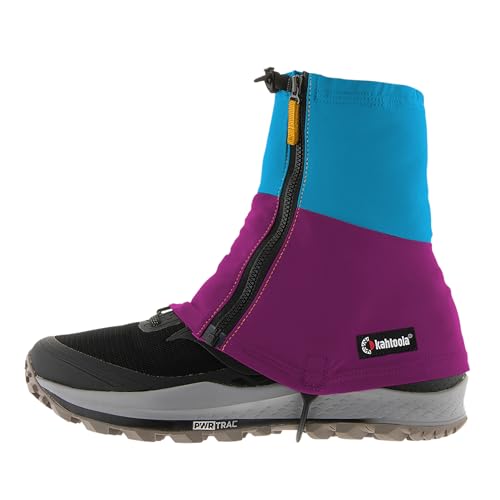
Kahtoola INSTAgaiter Mid
Top Pick
Kahtoola INSTAgaiter Mid
Best for: Fast hikes and trail runs in light rain and wet snow.
Kahtoola takes the opposite approach to bulk, cutting the INSTAgaiter Mid from a stretch-woven blend of 84 percent nylon and 16 percent polyurethane that moves with the leg instead of fighting it. A water-resistant DWR finish sheds light rain and wet snow, while the mid height covers the boot collar and lower calf without trapping heat on climbs. The gaiter is ultralight and packs down small, which makes it easy to carry as insurance on days when the forecast is uncertain. It fits runners and fast hikers who want protection that disappears under a trouser cuff.
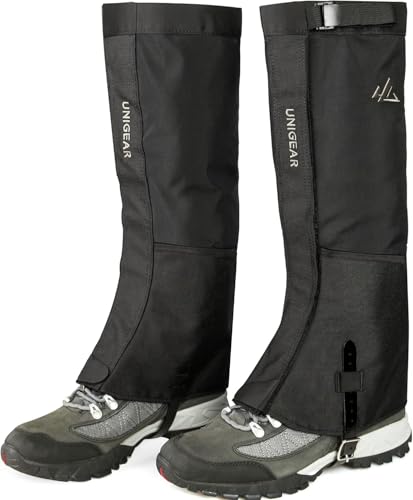
Unigear Snow Leg Gaiters
Runner-Up
Unigear Snow Leg Gaiters
Best for: Deep snow, snowshoeing, and winter trail-breaking.
Unigear aims this gaiter squarely at deep snow. The 1000D TASLON fabric is thick and abrasion-resistant, and a toggle buckle plus a 5-centimetre hook-and-loop closure lock the cuff around the calf. Metal shoelace hooks anchor the front to the boot, so the gaiter stays in place when you kick steps through crust or posthole through drifts. At 8.46 ounces the pair is heavier than a trail-running shell, but the weight buys durability that lighter fabrics cannot match. It is a strong match for winter hikers and snowshoers who break trail in fresh powder.
Pike Trail Adjustable Leg Gaiters
Pike Trail builds its gaiter from honeycomb ripstop nylon polyester, model 1-GATR-PRNT, with an adjustable fit that adapts to different calf sizes and boot heights. The ripstop weave resists tears from branches and scree, while the adjustable closure lets you tighten the cuff over bulky winter trousers or loosen it for summer trail shoes. The Overcast Grey colourway hides trail grime well, and the low-profile design slides easily under rain trousers. It works as a single all-round pair for hikers who face mixed conditions across the seasons rather than one extreme.
Specs
Brand: Pike Trail
Model: 1-GATR-PRNT
Material: Honeycomb ripstop nylon polyester
UPC: 656485313106
Colour: Overcast Grey
Fit: Adjustable
Best for: Mixed rain and snow across all four seasons.
Watch out for: One adjustable size cannot match every calf shape, so check the size guide against your own measurements.
ASIN: B09YB4HWT2
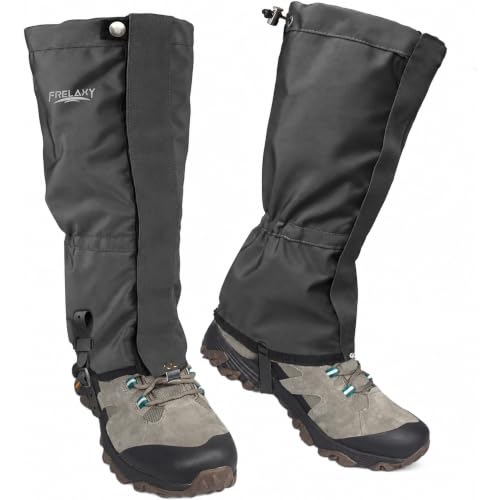
Frelaxy Leg Gaiters
Frelaxy Leg Gaiters
Best for: Budget wet-weather cover for rain, snow, and muddy trails.
Budget wet-weather cover for rain, snow, and muddy trails.
Watch out for
Confirm current stock before ordering, as this pick rests on a single tracker source; check sizing carefully, since the three sizes cover a wide range.
Frelaxy keeps things practical with an Oxford-fabric gaiter that claims full waterproofing and pairs it with an upgraded rubber foot strap for grip on wet ground. The adjustable fit covers three sizes, with calf circumferences from 37 centimetres in small to 44 centimetres in large, so most hikers find a size that seals well. At 218 grams the pair is light enough to live in a pack lid, and the simple wrap design goes on fast at the trailhead. It suits budget-conscious hikers who want solid wet-weather cover without paying for a premium mountain brand.
Which One Fits Your Situation
You hike in steady rain
Pick a fully waterproof shell with a sealed top closure, such as the OrrinSports or Frelaxy gaiter. Steady rain finds every gap, so a hook-and-loop front strip plus a buckle or drawstring matters more than fabric weight. Pair the gaiter with waterproof rain trousers that overlap the cuff, and check that the instep strap holds on slick rock. Avoid water-resistant stretch shells here: they wet out after an hour of continuous rain.
You break trail in deep snow
Choose a tall, thick gaiter that locks onto the boot, such as the Unigear pair. Deep snow pushes against the cuff with every step, so metal shoelace hooks and a toggle buckle beat a simple elastic top. The 1000D fabric resists crampon nicks and frozen crust, and the wide hook-and-loop strip stays sealed when the gaiter flexes. Size the cuff over your winter layers, not over bare calves.
You move fast and pack light
Take the Kahtoola INSTAgaiter Mid. Its stretch-woven shell weighs almost nothing, packs into a pocket, and moves with your stride instead of bunching behind the knee. The mid height covers the boot collar on wet trails without trapping heat on climbs. Accept the trade-off: water-resistant fabric handles drizzle and wet grass, not hours of driving rain, so check the forecast and carry a heavier shell if the weather turns.
You want one pair for every season
The Pike Trail gaiter is the best single-pair compromise. Its adjustable ripstop shell tightens over winter trousers and loosens for summer trail shoes, and the honeycomb weave resists tears across rocky and brushy ground. The Frelaxy pair is the budget alternative, with three sizes and a rubber foot strap that grips in mud and snow alike. Either pair covers rain, slush, and shallow snow; add a taller winter gaiter only if you regularly hike in knee-deep powder.
Common Mistakes
Buying by height alone without measuring calf circumference over hiking layers.
Choosing a water-resistant stretch shell for all-day rain, then wondering why feet get wet.
Skipping the instep strap or shoelace hooks, which lets the gaiter ride up within the first mile.
Sizing the cuff over bare skin instead of over winter trousers, leaving a gap for snow to enter.
Forgetting to check that the gaiter fits over your actual boots before a long hike.
Frequently Asked Questions
Do hiking gaiters keep feet dry in heavy rain?
They help a lot, but they are one part of a system. A waterproof gaiter seals the gap between boot and trouser, yet water can still enter through the boot itself or run down from rain trousers that end above the cuff. Pair gaiters with waterproof boots and rain trousers that overlap the cuff, and your feet stay dry far longer than with boots alone.
What height gaiter do I need for snow?
Match height to snow depth. Mid-calf gaiters suit packed trails and shallow snow, while full-height gaiters that reach just below the knee handle deep powder and off-trail routes. If you only buy one pair, choose the taller option for winter trips and accept the extra fabric, since a short gaiter cannot keep deep snow out of your boots.
Can I wear gaiters with trail running shoes?
Yes, low and mid-height gaiters work well with trail running shoes, and many runners use them to keep grit and mud out on dusty or wet trails. Choose a lightweight stretch model with a secure instep strap and shoelace hooks, and check that the gaiter does not rub the Achilles area. Heavy full-height gaiters are overkill for running and tend to overheat.
How do I clean and store hiking gaiters?
Brush off dried mud after each hike, then wash the gaiters by hand with mild soap and lukewarm water. Rinse thoroughly, air-dry them away from direct heat, and reproof the water-repellent finish when droplets stop beading. Store them flat or loosely rolled in a dry place, with buckles unfastened, so the fabric and closures keep their shape between trips.
A
admin
We compare specs, materials and verified owner reviews before a product earns a spot. Rankings are never paid.
Affiliate disclosure. As an Amazon Associate we earn from qualifying purchases at no extra cost to you. Prices accurate as of the date shown.
Compare five pickleball ball machines for practice, with ball capacity, speed, spin, feed rate and portability to help you drill alone and improve fast.