Key takeaways
- A pretend wisteria play and woodland note guide for hanging paper clusters along a windowsill edge, with sorting by color, bloom counting and labels.
A hanging row of paper wisteria can turn a plain windowsill into a small woodland edge. Each play piece is a long cluster of small paper blooms strung down a slim paper stem, wide and open near the top and narrowing to small closed buds at the tip. Lilac, violet, pink and white clusters hang side by side from a row of sticks or a small arch, and children spend a calm stretch of the afternoon hanging them, swapping them and hanging them once more. The work is quiet, the pieces are light, and a finished row can stay up for days as the backdrop for other small play along the sill.
Real wisteria is sweet-scented, and it is worth saying plainly that these paper blooms carry no scent at all. What they offer instead is shape and order. Clusters can be sorted by length and color, the blooms on each stem can be counted from the wide top down to the final bud, and a short note can record which cluster hangs at which end of the row. The clusters are long and tangle if they are bunched into a heap, and the small blooms tear if they are pulled, so the handling stays gentle: lift each cluster by its stem, carry it flat, and hang it with room to swing free of its neighbors.
As an Amazon Associate, we earn from qualifying purchases.
How to choose
Choosing paper wisteria for pretend play comes down to paper, length and bloom shape. Begin with the paper. A medium weight folds cleanly, holds a soft curve in each petal, and resists tearing when small hands lift a cluster by its stem; very thin paper crumples, and heavy card refuses to fold into small buds. Next, look at length. A set with clusters of several lengths gives the sorting play its point: long clusters for the middle of the arch, shorter ones for the ends, and one plainly long and one plainly short cluster for counting games. Bloom shape matters too. The pleasing clusters carry wide, open blooms near the top, smaller half-open blooms below them, and tight closed buds at the tip, so a child counting down a stem meets a clear pattern rather than a row of identical shapes. Check the stem as well. It should bend gently for hanging, hold a hook or loop at the top, and stay firm enough that the cluster hangs straight rather than twisting into its neighbor. Color range is the final point: lilac, violet, pink and white together give enough variety for sorting by color alone. A set that answers on paper, length, shape, stem and color will serve many afternoons of hanging, counting and noting.
Vantasii Canvas Zipper Pouches
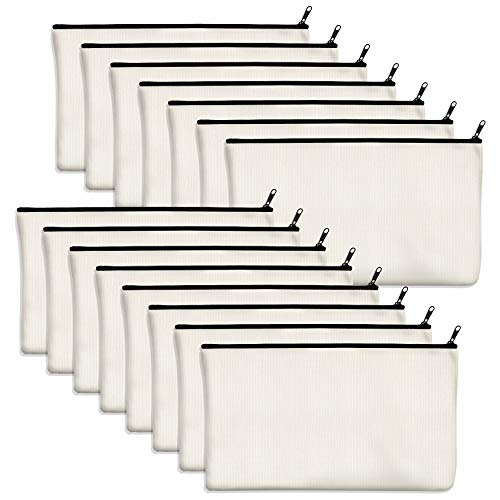
Fifteen canvas pouches give a full set of paper wisteria clusters a calm home between play sessions. The habit that keeps the pieces in good shape is simple: one cluster per pouch, laid in flat with the stem running the length of the bag, the zipper drawn closed once the blooms sit smooth. Bunched clusters tangle and crease; a cluster resting alone in its own pouch keeps its shape and comes out ready to hang. The canvas is soft against folded paper, so petal edges and small buds are not rubbed or bent while the pouch is carried from shelf to sill. A short label on each pouch, naming the color and length of the cluster inside, turns tidying away into part of the sorting play, and children can find the lilac cluster or the long white one without opening every bag. One limit matters and is worth stating plainly: the pouches are not waterproof. Paper blooms must go in dry, and the pouches belong on a shelf or in a drawer, never on a damp sill where window condensation gathers. Kept dry, the set waits neatly for the next hanging session, and the row along the windowsill can be rebuilt in minutes.
Specs
- Pack size: 15 pouches
- Material: Canvas
- Closure: Zipper
- Water resistance: Not waterproof
Safari Ltd. Wild Toob

A set of small animal figures gives the hanging row a population. Beneath the paper wisteria, children line up the figures along the sill as if the woodland edge had residents: a fox under the lilac cluster, an owl near the arch, a deer at the far end. The figures are firm, painted pieces that stand on their own on a flat sill, and they hold up well to being moved, counted and rearranged through a long afternoon of play. Their scale suits the scene, small enough to tuck under a hanging cluster yet large enough for young hands to grip and place with care. The play value is in the arranging. Figures can be sorted by kind, counted in and out of the shade of each cluster, and matched to the notes in a pocket notebook, so a page might record three figures under the white cluster and two under the pink. When the row comes down, the figures gather into one pouch or box and wait for the next build. They also travel well to other scenes, standing in for woodland animals wherever a story needs them, and they give shy players a quiet job, placing and replacing residents while others hang the blooms above them.
Specs
- Type: Animal figure set
- Note: Discontinued by manufacturer
Pilot G2 Pens
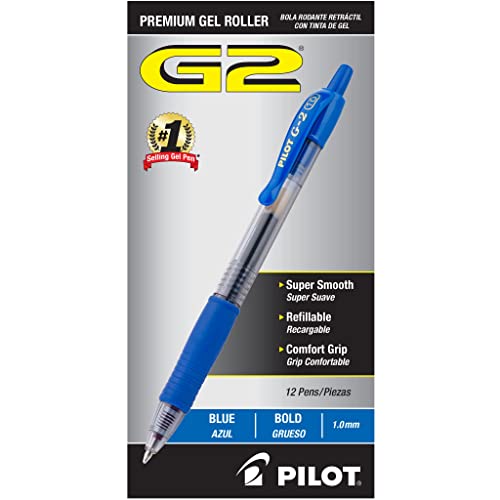
Gel pens earn their place in this project through tags and labels. Each wisteria cluster deserves a small paper tag tied to its stem, giving its color, its length and its bloom count, and a smooth gel pen writes those tags neatly without snagging or tearing thin paper. The ink flows evenly and dries promptly, so a finished tag can be tied on at once without smudging the figures written on it. The same pen labels the storage pouches, writes the row plan in a pocket notebook, and marks the two ends of the arch so children know where the counting begins. A pen that writes in a clean, dark line also helps young writers: letters stay legible even at small sizes, and a page of counts and cluster names can be read back the next day without guesswork. Keep one pen with the notebook and one with the pouches, and the labeling habit survives the whole season of play. A tag written in gel ink stays clear for as long as the cluster lasts, through many hangings, readings and rebuildings of the row, and spare pens keep well in the same drawer as the paper and glue.
Specs
- Type: Gel pens
- Use: Notes and labels
- Ink: Gel
Fashion Angels Alphabet Sticker Book

Letter stickers turn the sorting side of the play into gentle reading practice. A sticker book of alphabet letters lets children spell out the name of each cluster color along the top of a notebook page, stick an initial on each storage pouch, and label the ends of the row so the hanging order can be rebuilt the same way twice. Peeling and placing a letter takes care and a steady hand, and the small, focused work suits the calm pace of the whole project. Pages of spare letters also invite free play between sessions: names of the woodland animals, the days of the week, or a short title for the row itself, spelled out and stuck along the arch. The stickers are flat and light, so labeled pouches still stack neatly, and a label can be covered with a fresh letter when a cluster changes color or a pouch changes contents. For children who are meeting letters for the first time, matching a sticker to the opening letter of a color name is a satisfying job with a clear finish. Keep the book with the notebooks and pens, and labeling becomes a habit rather than a chore, one small letter at a time.
Specs
- Type: Sticker book
- Use: Letters and labels
feela Pocket Notebooks

Three pocket notebooks are the memory of the wisteria row. One book can hold the counts, page by page: how many blooms run down the lilac cluster, how many down the white, which cluster is longest and which hangs at each end of the arch. A second book makes a fine list book, gathering color lists, names for the rows children build, and the order in which clusters were hung on a given day. The third can travel, riding in a pocket to the table or the garden bench where cutting and folding happen, gathering sketches of cluster shapes before they are built. The books are small and light, easy for young hands to hold open while the other hand counts, and the pages take pencil and gel pen cleanly. One boundary is worth stating plainly in any home where notebooks are shared: these books are for logs and lists, and never for full passwords or other private entries. Kept to play records, they stay safe to share, to read aloud, and to leave open on the sill. Over a season the filled pages become a small archive of rows built and rebuilt, and rereading them is its own quiet pleasure.
Specs
- Pack size: 3 notebooks
- Format: Pocket size
- Use: Logs and lists
- Note: Never for full passwords
FAQ
Do the paper blooms smell like real wisteria?
No. Real wisteria carries a sweet scent, but cut and folded paper carries no scent at all, and it is best to say so plainly before play begins so nobody feels let down. The pleasure of the paper version is in its shape, its colors and its order: long clusters, open blooms above and closed buds below, all hanging in a row that children arrange themselves.
How do we keep the clusters from tangling?
Hang each cluster with a little air around it, and never bunch the set into a heap. When the row comes down, lay each cluster flat in its own canvas pouch, stem running the length of the bag, and draw the zipper closed. Lifted by the stem and carried flat, a cluster keeps its shape; dragged by its blooms or stuffed into a shared box, it twists, creases and tangles with its neighbors within minutes.
What counting play works well with the clusters?
Count the blooms down one stem, from the wide open blooms at the top to the final closed bud, then count the next stem and compare. Children can sort the clusters by length, line them up in order of length, group them by color, and write every count in a pocket notebook. Matching animal figures to clusters adds a second count: how many figures stand under each cluster, and how many blooms hang above them.
Where should the wisteria row hang?
Along a windowsill or a small indoor arch, in a dry spot out of direct weather. Paper and damp are poor partners, so keep the row away from open windows on rainy days and away from sinks and steamy kettles. A row of sticks taped or tied along the sill, or a light arch set on the sill ends, gives each stem a hook point, and the clusters can hang there for days, ready for counting, sorting and noting whenever the mood strikes.
Final verdict
Paper wisteria earns its place as a pretend play piece because it asks for calm hands and gives back order: a row of hanging clusters that can be sorted, counted and noted, then taken down and rebuilt in a new arrangement the next day. The strongest sets pair well-made clusters, in a range of lengths and colors, with simple supports: canvas pouches for flat, dry storage, animal figures to live along the woodland edge, gel pens and letter stickers for tags and labels, and pocket notebooks to hold the counts. None of it is fragile in a worrying way, yet all of it rewards gentle handling, and the row along the windowsill looks lovely while it waits for the next round of play.
Product and ASIN Reference
| Product | ASIN |
|---|---|
| Vantasii Canvas Zipper Pouches | B08CMQ6QG4 |
| Safari Ltd. Wild Toob | B000BNEOS0 |
| Pilot G2 Pens | B001AQPQBQ |
| Fashion Angels Alphabet Sticker Book | B09N7XCNTN |
| feela Pocket Notebooks | B0BG4MFCZC |