Key takeaways
- Compare the best hunting boots for cold weather, with waterproof leather, insulation, traction, and fit to keep your feet warm and dry on long hunts.
Cold feet end a hunt long before the light does. Once toes go numb, focus slips, the walk back feels twice as long, and the next morning opens with dread instead of anticipation. A cold-weather hunting boot has one job above all others: keep feet warm and dry through hours of still air, wet grass, and frozen ground, without turning every step into a chore.
Buyers split into clear camps. Stand hunters need maximum insulation and a tall shaft that seals out snow. Walkers need a lighter boot that breathes while moving. Upland hunters want leather lace-ups that flex and grip over miles of rough ground. The five boots below cover those camps, from an uninsulated rubber classic to a fleece-lined extreme-cold specialist.
Quick Picks
As an Amazon Associate we earn from qualifying purchases
| Product | Best for | Key spec from title |
|---|---|---|
| Irish Setter Wingshooter 845 | Upland bird hunts | 7-inch full-grain leather, UltraDry waterproof |
| Rocky BearClaw 200G | Cold-weather deer stands | 200g Thinsulate, GORE-TEX membrane |
| LaCrosse Alphaburly Pro 18 | Wet, muddy ground | 18-inch rubber over neoprene, scent-free |
| Muck Arctic Pro | Extreme cold | 8mm neoprene, comfort range to -60°F |
| Danner Pronghorn 45003 | Long miles on rough ground | 8-inch full-grain leather, GORE-TEX lining |
How to Choose
Match insulation to how you hunt
Insulation is measured in grams, and the right number depends on movement, not just temperature. A hunter who sits in a stand for four hours needs far more insulation than one who walks ridges all morning, because movement generates heat and stillness lets cold creep in. Uninsulated boots suit active hunters and mild late-season days. Around 400 grams covers most cold-weather walking hunts. Boots with 800 to 1000 grams suit long sits in freezing air, while 1600 grams and the thickest neoprene are for the coldest stands. Buy for the coldest hunt you take, not the average one, and remember that a boot that is too warm makes feet sweat, and damp feet chill faster than dry ones.
Choose between rubber pull-ons and lace-up leather
Rubber boots and leather boots solve different problems. A tall rubber boot pulls on in seconds, seals completely against water and mud, and traps no scent, which matters when deer are downwind. The trade-off is support: a pull-on shaft flexes at the ankle and gives less lateral hold on side slopes, and the fit is looser by design. A lace-up leather boot locks the ankle, supports the foot over uneven ground, and breathes better on long walks, but it needs a waterproof membrane and regular care to stay dry. Hunters who wade wet fields and sit in damp stands usually reach for rubber. Hunters who cover miles of dry, rough country usually reach for leather.
Check waterproofing beyond the label
Almost every cold-weather hunting boot claims to be waterproof, yet the details decide whether feet stay dry. A waterproof membrane, such as GORE-TEX or a rubber shell over neoprene, blocks water from the outside while letting some moisture escape from inside. Seam sealing matters as much as the membrane, because water finds the stitching first, and a gusseted tongue stops water that runs down the leg. Height matters too: an 18-inch shaft keeps snow and creek water out where a 7-inch boot lets it in at the top. Check the outsole tread, since a boot that slips on ice or mud is a hazard no membrane can fix. Look for widely spaced lugs that shed mud instead of packing it.
Get the fit right before the season opens
A cold-weather boot that fits in September can pinch in November, because thick socks and swollen feet after miles of walking change the space inside. Try boots on late in the day with the socks you hunt in, and leave a thumb’s width ahead of the toes. The heel should lift only slightly, and the calf should close around a tall shaft without cutting in. Lace-up boots need a break-in period of several short walks before a long hunt, while rubber boots need a check for calf room with hunting layers on. A boot that feels perfect in the store and blisters on the first ridge is the wrong boot.
The 5 Best Options
Irish Setter Wingshooter 845
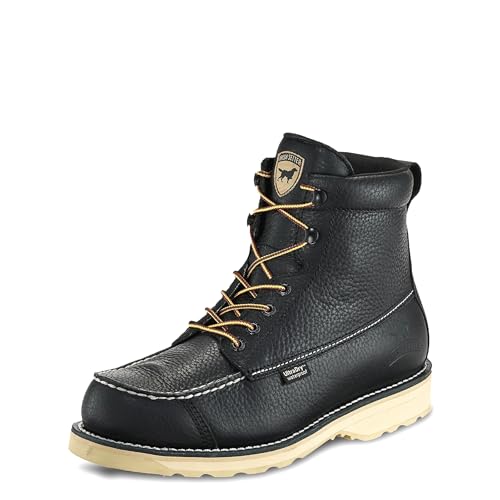
The Wingshooter 845 is the classic upland boot in this group, a 7-inch lace-up built from full-grain waterproof leather with the Prairie outsole that has marked Irish Setter boots for decades. It is uninsulated, which makes it the most breathable pick here, and the right choice for hunters who walk all day in cold but not bitter weather. The Goodyear welt construction and steel shank give it a firm, supportive feel underfoot, while the UltraDry membrane and moisture-wicking nylon lining keep feet dry through wet grass and creek crossings. It will not keep a still hunter warm in deep cold, but for active upland days it is hard to beat.
Specs
- Height: 7 inches
- Upper: full-grain waterproof leather
- Waterproofing: UltraDry waterproof membrane
- Construction: Goodyear leather welt with steel shank
- Footbed: removable polyurethane
- Outsole: Prairie outsole
- Lining: moisture-wicking nylon
- Insulation: uninsulated
Best for: Active upland hunters who walk miles in cold, wet cover.
Watch out for: No insulation, so it runs cold on long, still sits.
ASIN: B07J2M1H31
Rocky BearClaw 200G

The BearClaw pairs a 9-inch lace-up leather boot with a GORE-TEX membrane and 200 grams of Thinsulate, a combination that suits hunters who need real warmth without the bulk of a pac boot. Full-grain leather and tough nylon form the upper, Goodyear welt construction with a storm welt keeps the sole attached through seasons of rough use, and the BearClaw 3D outsole sheds mud with a self-cleaning lug pattern. The lace-to-toe design lets the boot adjust from the ankle to the calf, and the cushioned Air-Port footbed softens long walks to the stand. Mossy Oak Break-Up camo breaks up the outline in timber and brush.
Specs
- Height: 9 inches
- Upper: full-grain leather and nylon
- Waterproofing: GORE-TEX membrane
- Insulation: 200 grams of 3M Thinsulate
- Construction: Goodyear welt with storm welt
- Footbed: cushioned Air-Port footbed
- Outsole: BearClaw 3D self-cleaning lug outsole
- Camo: Mossy Oak Break-Up
Best for: Hunters who want a warm, supportive lace-up for cold-weather stands and walks.
Watch out for: Heavier than uninsulated boots, so long walks take more effort.
ASIN: B000IZSQZS
LaCrosse Alphaburly Pro 18

The Alphaburly Pro is the tall rubber boot in this group, an 18-inch pull-on built from hand-laid natural rubber over a neoprene core. It is the simplest answer to wet ground: the rubber shell is fully waterproof and scent-free, the neoprene core adds warmth and flex, and the adjustable rear gusset lets the shaft fit over heavy layers or bare calves. An embossed liner moves air inside the boot, an EVA footbed cushions the step, and the Burly Pro outsole grips mud and snow while shedding muck. This uninsulated version suits hunters who move between stands and want a boot that pulls on fast and never leaks.
Specs
- Height: 18 inches
- Upper: hand-laid natural rubber over neoprene core
- Waterproofing: fully waterproof rubber shell, scent-free
- Lining: embossed liner for air circulation
- Footbed: EVA footbed
- Shank: nylon shank
- Outsole: Burly Pro outsole
- Fit: adjustable rear gusset
- Insulation: uninsulated (this version)
Best for: Hunters crossing wet fields, marsh edges, and muddy ground.
Watch out for: Uninsulated, so pair it with heavy socks for the coldest sits; confirm the exact camo pattern at checkout since listings vary by pattern.
ASIN: B00B28ULCQ
Muck Arctic Pro

The Arctic Pro is the warmest boot in this group, built for hunters who stand in deep cold and need every layer of insulation working at once. An 8mm neoprene bootie with a fleece lining wraps the foot, 2mm of thermal foam sits under the footbed, and the boot carries a comfort range down to -60°F. The tall rubber shell is fully waterproof, the stretch-fit topline binding seals the calf against snow, and the Bob-Tracker outsole grips ice and frozen ground. It is a heavy boot, and it walks like one, but for long sits in the coldest weather, nothing else here keeps feet as warm.
Specs
- Comfort range: -60°F to 30°F
- Bootie: 8mm neoprene with fleece lining
- Footbed: 2mm thermal foam under the footbed
- Upper: tall rubber shell, fully waterproof
- Topline: stretch-fit binding seals out snow
- Midsole: EVA midsole
- Outsole: Bob-Tracker molded outsole
- Model: Arctic Pro-U
Best for: Long sits in extreme cold, ice fishing, and deep-winter hunts.
Watch out for: Heavy and warm; it is too much boot for active walking hunts.
ASIN: B007KI2H06
Danner Pronghorn 45003

The Pronghorn 45003 is the long-distance boot in this group, an 8-inch lace-up that has anchored Danner’s hunting line for years. Full-grain leather and a GORE-TEX waterproof breathable lining keep feet dry through wet cover, while the 8-inch height and lace-up fit give ankle support that rubber pull-ons cannot match. At about 3.4 pounds per pair it carries light for a leather boot, which matters when the walk to the stand runs long. It is uninsulated, so hunters who sit in deep cold will want the insulated Pronghorn variants instead, but for miles of rough ground in cold weather, the 45003 is the steady choice.
Specs
- Height: 8 inches
- Upper: full-grain leather
- Waterproofing: GORE-TEX waterproof breathable lining
- Weight: about 3.4 pounds per pair
- Fit: lace-up with ankle support
- Model: 45003
Best for: Hunters covering long miles over rough, uneven ground.
Watch out for: Uninsulated, so it is not the pick for long, still sits in deep cold; confirm availability at checkout, as this is an older model number.
ASIN: B00KHKG44O
Which One Fits Your Situation
Long sits in a deer stand
When the hunt means sitting still for hours in freezing air, insulation matters more than weight. The Muck Arctic Pro leads here, with its 8mm neoprene and fleece lining, followed by the Rocky BearClaw with 200 grams of Thinsulate. A tall shaft seals out snow, and a roomy toe box leaves space for thick socks. Dress the feet last, after the walk in, so sweat never chills inside the boot.
Still hunting through wet fields
If the morning means crossing wet grass, ditches, and muddy field edges, reach for the LaCrosse Alphaburly Pro. Its 18-inch rubber shell keeps water out where shorter boots let it in, and the scent-free rubber helps when deer are downwind. The Muck Arctic Pro is the backup for the coldest wet days, when insulation matters as much as waterproofing.
Upland miles over rough ground
Hunters who walk all day through brush, rocks, and side slopes need a lace-up that locks the ankle. The Irish Setter Wingshooter 845 leads here, with its Goodyear welt and steel shank, followed by the Danner Pronghorn 45003 for longer miles. Both breathe better than rubber on the move, and both grip uneven ground without the flop of a loose pull-on.
Chores and short walks in deep cold
Not every cold-weather boot is for the stand. For feeding stock, clearing a trail, or a short walk to a blind in deep cold, the Muck Arctic Pro is the easy pick: pull it on, stay warm, and forget about it. The Rocky BearClaw works too, when the ground is dry enough for a lace-up and the walk is short.
Common Mistakes
- Buying the warmest boot for a walking hunt, then sweating through the socks and chilling on the sit.
- Wearing cotton socks, which hold moisture against the skin and pull heat away from the feet.
- Choosing a size that fits bare feet, leaving no room for the thick socks cold weather demands.
- Skipping the break-in: new lace-up leather needs several short walks before a long hunt, or blisters follow.
- Trusting a waterproof label without checking the shaft height and seam sealing, then stepping into water over the top.
Frequently Asked Questions
How much insulation do I need for late-season hunts?
It depends on how much you move. Hunters who sit still in a stand need 800 to 1000 grams or more, while active hunters can stay warm with 200 to 400 grams or even an uninsulated boot with heavy socks. Buy for the coldest hunt you take, not the average day, and remember that sweat from over-insulation chills feet faster than dry cold does.
Are rubber boots warm enough for cold weather?
Yes, when the rubber sits over neoprene and the boot carries enough insulation for the hunt. The LaCrosse Alphaburly Pro uses a neoprene core for warmth, and the Muck Arctic Pro pairs 8mm neoprene with a fleece lining for the coldest days. Uninsulated rubber boots need heavy socks in deep cold, but the shell itself never leaks.
Should I size up for thick socks?
Usually yes, by half a size, but the right answer comes from trying the boot on with the socks you hunt in. A thumb’s width ahead of the toes keeps cold air from pressing against them, while a heel that lifts only slightly means the fit is right. Never buy a size based on dress shoes alone.
Do leather hunting boots need waterproofing treatment?
Yes. A waterproof membrane handles most of the work, but the leather still needs care to stay supple and water-resistant. Clean off mud after each hunt, let the boots dry at room temperature away from direct heat, and condition the leather before the season opens. A treated upper lasts longer and keeps its shape through hard use.