Key takeaways
- Compare the best bike pedals for grip and efficiency. Find flat and clipless pedals with sealed bearings and grippy platforms for road and trail rides.
Choosing bike pedals shapes every ride more than most riders expect, because the pedal is the one contact point that controls both power and confidence. A flat pedal with a wide platform and tall pins holds a shoe in place on rough trails, while a clipless pedal locks the foot in and lets a rider pull through the full pedal stroke. The wrong choice shows up fast: feet slipping off on descents, knees aching from a poor foot position, or a pedal that wobbles after a wet season. Bearing type, spindle material, platform size, and cleat setup all decide how a pedal feels over time.
This guide is for commuters, trail riders, and road riders who want pedals that match how they actually ride, plus riders moving to clipless pedals for the first time. Every pedal below was picked from its Amazon listing details: platform, spindle, bearings, cleats, and thread size.
Quick Picks
As an Amazon Associate we earn from qualifying purchases
| Product | Best for | Key spec from title |
|---|---|---|
| Shimano PD-M520 | Clipless trail and gravel riding | Dual-sided SPD entry with chromoly spindle |
| Shimano PD-EH500 | One bike for clipped and flat shoes | SPD on one side, flat platform on the other |
| RaceFace Chester | Maximum grip on flat pedals | Nylon composite platform with 8 pins per side |
| ROCKBROS Aluminum Flat Pedals | A light alloy flat pedal on a budget | Aluminum platform with sealed bearing axle |
| FOOKER FK922S | A low-cost nylon flat pedal for daily rides | Nylon fiber platform with 3 bearings |
How to Choose
Flat or Clipless
Flat pedals suit riders who want to put a foot down instantly, such as trail riders on technical ground, commuters in street shoes, and anyone building confidence on the bike. The shoe rests on the platform, so the rider can shift foot position at will and bail out without a twist of the ankle. Clipless pedals suit riders who want a fixed foot position and power through the full stroke, such as road riders. The shoe locks to the pedal with a cleat, which keeps the foot planted and lets the rider pull up as well as push down. The trade is commitment: clipless pedals demand compatible shoes and a short learning curve, while flat pedals accept any stiff-soled shoe.
Platform Size and Pins
A wide platform spreads pressure across the shoe, which keeps feet comfortable on long rides and steadies the rider when standing. Narrow platforms concentrate force under the middle of the foot and can feel harsh after an hour. Pins matter just as much: tall, replaceable steel pins bite into the sole and hold the foot on rough ground, while short or worn pins let the shoe slide at the worst moment. Look for a platform at least as wide as the shoe, with pins on both the inner and outer edges. Riders with large feet should favor the largest platform in the range, and tall pins chew up soft soles on long walks.
Bearings and Spindle
Sealed bearings keep grit and water out of the axle, which is what lets a pedal spin smoothly through wet winters and dusty summers. Unsealed or loosely sealed bearings can feel fine on day one and develop play within a season. The spindle carries the whole load, so chromoly steel is the safe baseline for trail and commuting use, while cheaper steel can bend under a hard landing. A sealed cartridge bearing axle with a chromoly spindle is the combination to look for in this guide. Service matters too: pedals with a grease port or a simple rebuild kit last far longer than sealed units that cannot be opened.
Shoe Compatibility and Cleats
Clipless pedals only work with shoes that carry the matching cleat, so the shoe decision comes with the pedal decision. Two-bolt SPD cleats fit mountain bike shoes, touring shoes, and many commuter shoes, and they recess into the tread so walking stays easy. Three-bolt road cleats fit road shoes only and make walking awkward. Check the cleat standard before ordering, and confirm that the cleats come in the box, since some listings sell the pedal alone. Flat pedals have no such constraint, but they still reward a stiff sole: soft running shoes bend around the platform and lose power.
The 5 Best Options
Shimano PD-M520

The PD-M520 has been the default first clipless pedal for mountain bikers and gravel riders for two decades, and the reason is simple: it does the basics with no fuss. Both sides take an SPD cleat, so clipping in never needs a glance down, and the adjustable tension lets a new rider set an easy release before dialing it up. The chromoly spindle and sealed bearing axle hold up to mud, grit, and regular washing, which is exactly the abuse a trail pedal sees. At this level of the range, nothing else pairs that durability with such a wide base of compatible shoes and spare cleats.
Specs
- Dual-sided SPD clipless entry
- Chromoly spindle
- Sealed cartridge bearing axle
- Adjustable cleat tension
- Ships with cleats included
- 9/16-inch thread
- Model PDM520L
Best for: Trail and gravel riders moving to clipless pedals for the first time.
Watch out for: Confirm the listing shows model PDM520L, since a variant URL under a different code circulates for this pedal.
ASIN: B000KC3Y0G
Shimano PD-EH500

The PD-EH500 solves the one-bike problem: one side carries an SPD clipless mechanism, and the other side is a flat platform for regular shoes. A commuter can clip in for the long ride to work and ride home in street shoes, while a rider new to clipless pedals can practice on the flat side and clip in when ready. The flat side has enough grip for a short errand, though it is smoother than a dedicated pinned platform, so it suits mixed use rather than rough trails. Build follows the usual Shimano pattern, with a chromoly spindle and a sealed bearing axle that shrugs off wet weather.
Specs
- SPD clipless on one side, flat platform on the other
- Chromoly spindle
- Sealed bearing axle
- Adjustable cleat tension
- Ships with cleats included
- 9/16-inch thread
- Model EPDEH500
Best for: Riders who share one bike between clipped-in rides and flat-shoe trips.
Watch out for: The flat side is smoother than a pinned platform, so it suits roads and paths more than rough trails.
ASIN: B07CDQ4K7S
RaceFace Chester
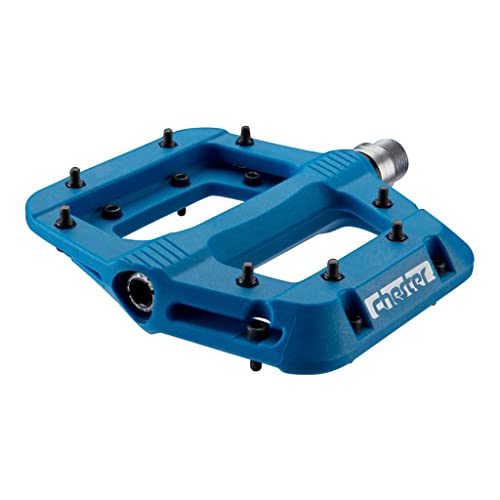
The Chester is the flat pedal that trail riders reach for when grip matters more than anything else. Its nylon composite body keeps weight down while the platform stays wide, and eight replaceable steel pins on each side bite hard into the sole. The chromoly steel axle and fully sealed bearing hold up to rock strikes and wet seasons, and the pedal comes in several colors, including the blue version listed here. It is a proven shape that has stayed in production for years because the platform size and pin layout simply work, from bike park laps to all-day trail rides.
Specs
- Nylon composite body
- 8 replaceable steel pins per side
- Chromoly steel axle
- Fully sealed bearing
- 9/16-inch thread
- Model PD20CHEBLU, blue
Best for: Trail riders who want the strongest grip from a flat pedal.
Watch out for: Confirm current availability on the listing before ordering, since tracking data for this code is older.
ASIN: B07TMZ6P2Z
ROCKBROS Aluminum Flat Pedals
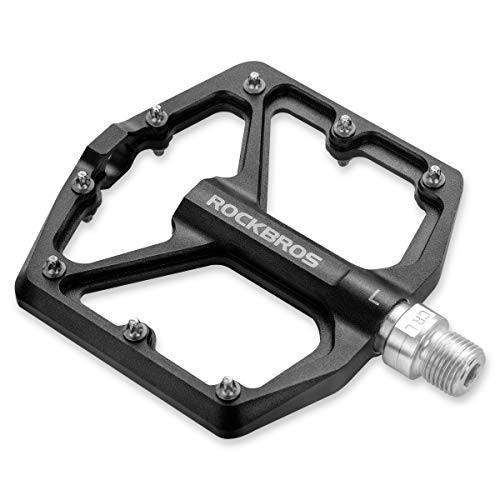
ROCKBROS makes the case that a solid alloy flat pedal does not need a premium badge. The aluminum platform is light for its size, the sealed bearing axle spins freely, and the 9/16-inch thread fits standard adult cranks. Anti-slip pins around the platform edge hold the shoe without the sharp bite of taller trail pins, which makes this pedal friendly for commuters and casual riders who step on and off often. It is a straightforward pick for a second bike, a commuter build, or a rider replacing worn stock pedals with something grippier and lighter.
Specs
- Aluminum alloy platform
- 9/16-inch sealed bearing axle
- Anti-slip pins
- Model K203
- Platform about 4.7 by 3.9 inches
- One size, unisex
Best for: Commuters and casual riders who want a light alloy flat pedal on a budget.
Watch out for: The pins are shorter than trail pins, so grip on muddy ground is weaker than on a dedicated trail pedal.
ASIN: B08FFHW2PV
FOOKER FK922S
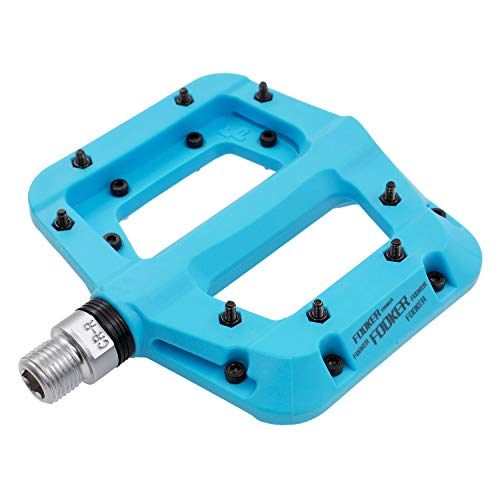
The FOOKER FK922S is the budget pick that still behaves like a proper flat pedal. Its nylon fiber platform shrugs off scrapes that would mark alloy, and three bearings per pedal keep the spin smooth under daily use. The non-slip surface and 9/16-inch thread fit most adult mountain and hybrid bikes, and the platform is wide enough for a stable stance on paths and light trails. It will not match a premium trail pedal for pin grip, but for the money it covers commuting, school runs, and relaxed weekend rides with ease, and replacement is cheap if a crash damages it.
Specs
- Nylon fiber platform
- 3 bearings per pedal
- Non-slip surface
- 9/16-inch thread
- Model FK922S
- For BMX and mountain bikes
Best for: Daily riders who want a low-cost flat pedal that still spins smoothly.
Watch out for: Confirm current availability on the listing before ordering, since tracking data for this code is older.
ASIN: B07ZBYH96G
Which One Fits Your Situation
You ride trails and want to clip in
Pick the Shimano PD-M520. Dual-sided SPD entry means no fumbling for the right side on a climb, and the adjustable tension lets a rider set an easy release while learning. The sealed axle and chromoly spindle handle mud and grit, and the huge base of SPD-compatible shoes makes finding footwear simple.
You share one bike between clipped and flat shoes
Pick the Shimano PD-EH500. One side clips in for longer rides, the other side takes any shoe for short trips, so a single bike covers commuting, errands, and weekend rides. It is the only pedal here that truly serves two riding styles without a tool change and without buying a second bike.
You want the most grip without cleats
Pick the RaceFace Chester. Eight pins per side and a wide nylon platform hold the shoe planted on rough descents, and the sealed bearing shrugs off wet weather. It is the strongest flat-pedal grip in this set, and the blue version stands out on the trail. Flat pedals also let you step off fast when a line goes wrong.
You want a low-cost flat pedal for daily rides
Pick the FOOKER FK922S for the lowest outlay, or the ROCKBROS aluminum pedal if a metal platform appeals more. Both spin smoothly on sealed bearings and fit standard cranks, and both suit commuting, school runs, and relaxed weekend rides without demanding special shoes. Both use sealed bearings and standard threads, so fitting takes only a few minutes.
Common Mistakes
- Buying clipless pedals without matching shoes and cleats in hand
- Picking a platform narrower than the shoe, which concentrates pressure and hurts on long rides
- Ignoring thread size: most adult bikes use 9/16-inch, while some kids and folding bikes use 1/2-inch
- Leaving cleat tension at the factory setting instead of easing it off for the first rides
- Choosing a color variant without checking that the model code matches the pedal wanted
Frequently Asked Questions
Do I need special shoes for clipless pedals?
Yes. Clipless pedals need shoes with a matching cleat bolted to the sole: two-bolt SPD cleats for the Shimano pedals here, fitted to mountain bike, touring, or commuter shoes. The cleat locks into the pedal mechanism and releases with a twist of the heel. Flat pedals need no special shoes, though a stiff sole helps power transfer and comfort on long rides.
What thread size do most adult bikes use?
Most adult bikes use a 9/16-inch pedal thread, and every pedal in this guide uses it. Some kids bikes and folding bikes use a smaller 1/2-inch thread, so check the crank before ordering. Forcing the wrong thread damages the crank arm, and that repair costs far more than the pedal. A quick look at the old pedal axle or the bike manual settles it.
Are flat pedals good for trail riding?
Yes, when the platform is wide and the pins are tall enough to bite the sole. The RaceFace Chester in this guide is built for exactly that, with eight pins per side and a sealed bearing. Flat pedals also let a rider bail out fast on technical ground. The trade is less power on climbs, since the foot cannot pull up the way a clipped-in shoe can.
How often should I service pedal bearings?
Sealed bearings need little attention, but a yearly check keeps them spinning well: spin each pedal by hand, feel for roughness or play, and listen for grinding. If a pedal wobbles side to side, the bearing or bushing is worn and the pedal needs service or replacement. Riders in wet or muddy conditions should check more often, since grit shortens bearing life.