We independently review everything we recommend. When you buy through our links, we may earn a commission. As an Amazon Associate we earn from qualifying purchases.
5 Best Squash Bags for Rackets and Gear (November 2026)
Compare five squash bags for rackets and gear, with racket capacity, padding, shoe pockets and carry straps to help you pack for every match.
Compare five squash bags for rackets and gear, with racket capacity, padding, shoe pockets and carry straps to help you pack for every match.
A good squash bag keeps rackets safe, shoes apart from clean kit, and everything in one place for the walk to the club. The wrong bag means frames knocking together, damp shoes pressed against a fresh shirt, and a strap that digs in before you reach the court. Capacity matters most: a bag built for two rackets will not hold a full match kit, while a twelve-racket tour bag can feel oversized for a casual evening game.
OUR TOP PICK
Tecnifibre Tour Endurance 12R Tennis and Squash Bag
The five bags below cover the range from a compact two-racket backpack to a roomy twelve-racket tour bag, with three, four, and nine-racket options in between. Each one is built to carry squash rackets, with padding, pockets, and straps that suit different ways of getting to the court. Use the guide to match capacity to your real load, then pick the carry style that feels best on your shoulder.
Quick Picks
As an Amazon Associate we earn from qualifying purchases
Product
Best for
Key spec
Tecnifibre Tour Endurance 12R
Full match kits with many rackets
Holds 12 rackets
HEAD Tour Team Backpack
Hands-free trips with shoes kept apart
Holds 2 rackets, shoe compartment
Wilson Advantage Team Triple
Light carry for regular sessions
Holds 3 rackets
Franklin Sports 4 Racket Bag
Simple shoulder carry for four rackets
Holds 4 rackets
Tecnifibre Tour Endurance 9R
Mid-size load for league nights
Holds 9 rackets
How to Choose
Racket capacity
Count the rackets you carry on a normal match night, then add room for a spare. A two-racket backpack suits players who travel light, while a three or four-racket bag covers most club players who bring a backup frame and a few balls. Tour bags that hold nine or twelve rackets suit coaches, league players, and anyone who carries rackets for family members as well. Buying more capacity than you need adds bulk and weight, so match the bag to your real load rather than the largest number on the shelf. Check whether the listed capacity counts the main compartment alone or every pocket combined.
Padding and protection
Racket frames crack and strings snap when bags get tossed into car trunks or stacked under other kit. Look for a padded main compartment with dividers or sleeves that keep frames from knocking against each other. A firm base helps the bag hold its shape when you set it down, and a water-resistant outer fabric keeps rain and court sweat from soaking through. Tarpaulin-style microfibre and rip-stop fabric both stand up to scuffs from concrete and tarmac. Thin, unpadded bags cost less, but they leave rackets exposed every time the bag gets dropped or squeezed into a locker.
Shoe and gear pockets
Squash shoes belong in their own pocket, away from clean clothes and racket grips. A ventilated shoe compartment lets damp shoes air out instead of trapping moisture inside the bag, and a wet pocket keeps a sweaty shirt from touching dry kit. Accessory pockets matter too: a fleece-lined pocket protects a phone and keys from scratches, while an outside zip pocket holds balls, a grip, and a water bottle within easy reach. Count the pockets before you buy, and picture where each item in your kit will live. A bag with one big compartment and no pockets forces everything into a single jumble.
Carry options and comfort
A bag that hurts to carry will stay at home, so try the straps before you commit. Backpack straps spread the load across both shoulders and suit longer walks and bike rides, while a single padded shoulder strap works well for short trips from car to court. Grab handles help when you lift the bag into a trunk or onto a shelf. Check the strap padding and the adjustment range, since a strap that fits a tall player may hang too low on a shorter one. The bag should sit close to your back without swinging, and the zips should open smoothly when your hands are full.
The 5 Best Options
Tecnifibre Tour Endurance 12R Tennis and Squash Bag
Top Pick
Tecnifibre Tour Endurance 12R Tennis and Squash Bag
Best for: coaches and league players who carry many rackets.
Capacity: 12 rackets
Fabric: light, waterproof rip-stop fabric with tarpaulin microfibres
The Tour Endurance 12R is the largest bag in this guide, built for players who carry a full set of rackets plus kit for a long session. Its light, waterproof rip-stop fabric shrugs off rain on the walk to the club, and the tarpaulin microfibres resist scuffs from hard floors and car trunks. Backpack straps and carrying handles give you two ways to move it, which helps when the bag is fully loaded. The twelve-racket capacity suits coaches and league players who bring spares for themselves and others.
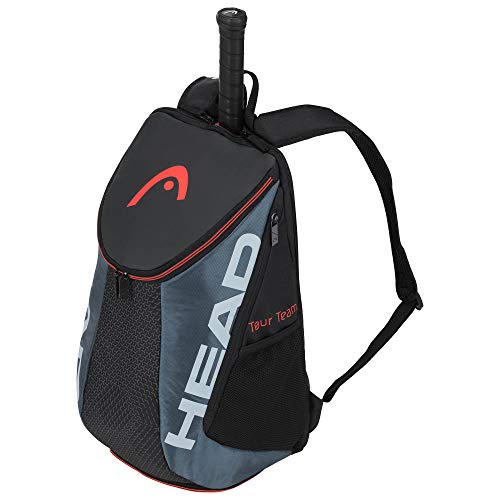
HEAD Tour Team Tennis Backpack
Runner-Up
HEAD Tour Team Tennis Backpack
Best for: players who walk or cycle to the club with two rackets.
Capacity: up to 2 rackets
Shoe compartment: integrated, keeps shoes apart from kit
The HEAD Tour Team Backpack turns a two-racket bag into a hands-free carry that works for bike rides and crowded trains as well as short walks. A large main compartment holds the rackets, while an integrated shoe compartment keeps damp shoes away from clean kit. An exterior zip pocket holds balls and small accessories, and the adjustable padded shoulder straps spread the load evenly. At 14 by 7 by 22 inches, it fits in most lockers and car trunks without a fight.
Wilson Advantage Team Triple Tennis Racket Bag
Wilson Advantage Team Triple Tennis Racket Bag
Best for: regular club players who carry three rackets and light kit.
Capacity: up to 3 rackets
Compartments: primary compartment plus deep secondary front compartment
The Wilson Advantage Team Triple is a light, slim bag for players who want three rackets and a little extra room without the bulk of a tour bag. A primary compartment holds the frames, and a deep secondary front compartment takes a towel, balls, and a change of shirt. The red and white design stands out in a crowded locker room, so the bag is easy to spot. It carries well on one shoulder and slips into a car trunk or a narrow locker without fuss.
Franklin Sports Tennis Racket Shoulder Travel Bag
Franklin Sports Tennis Racket Shoulder Travel Bag
Best for: casual and league players who want a slim four-racket shoulder bag.
Capacity: up to 4 adult-size rackets
Carry: adjustable padded shoulder strap and top handles
Pocket: fleece-lined valuables pocket for phone, keys, and sunglasses
The Franklin Sports shoulder bag is a simple, no-fuss option for players who want four rackets and a comfortable carry. An adjustable padded shoulder strap and top handles give you two ways to move it, and the fleece-lined valuables pocket keeps a phone, keys, and sunglasses safe while you play. At 29 by 4 by 12 inches, the slim shape fits easily in a car trunk or along a locker-room bench. It suits men and women, and it works just as well for a casual game as for a regular league night.
Tecnifibre Tour Endurance 9R Tennis and Squash Bag
Tecnifibre Tour Endurance 9R Tennis and Squash Bag
Best for: league players who want nine-racket capacity without the largest tour bag.
Capacity: 9 rackets
Fabric: light, waterproof rip-stop fabric with tarpaulin microfibres
The Tour Endurance 9R is the mid-size member of the Tour Endurance line, holding nine rackets where the 12R holds twelve. It uses the same light, waterproof rip-stop fabric and tarpaulin microfibres, so it handles rain and scuffs just as well. The nine-racket capacity suits league players who carry several frames plus spares without wanting the full bulk of the largest tour bag. Backpack straps and carrying handles keep the load comfortable on the way to the court.
Which One Fits Your Situation
You play once a week with one or two rackets
The HEAD Tour Team Backpack fits this routine best. Two rackets, a pair of shoes, and a few balls fill it without waste, and the backpack straps keep your hands free on the walk to the club. The shoe compartment keeps damp shoes away from your shirt, and the bag fits in a standard locker. Skip the tour bags here: extra capacity only adds weight you will not use.
You play league matches and carry spares
League nights call for backup frames, so look at the Tecnifibre Tour Endurance 9R or 12R. Nine rackets cover most league players, while twelve suits coaches and players who carry frames for others. The waterproof fabric and tough microfibres handle wet car parks and busy club corridors. Pick the 9R if your locker is tight, and the 12R if you regularly carry a full set for a team.
You walk or cycle to the club
Hands-free carry matters most here, so a backpack is the right shape. The HEAD Tour Team Backpack spreads the load across both shoulders, and its padded straps stay comfortable on longer trips. Keep the load light: two rackets and shoes are plenty for a ride, and a heavy tour bag will pull at your shoulders. The Franklin shoulder bag works for short walks, but a backpack wins on a bike.
You want a simple bag at a modest size
The Wilson Advantage Team Triple and the Franklin Sports shoulder bag both fit this brief. Three or four rackets, a towel, and a few balls cover most casual games, and neither bag overwhelms a small locker. The Wilson is the lighter of the two and suits players who travel light, while the Franklin adds a fleece-lined pocket for valuables. Choose the Wilson for the slimmest carry and the Franklin if you want room for one more frame.
Common Mistakes
Buying a bag that holds fewer rackets than your match-night kit, then forcing frames into side pockets.
Packing damp shoes next to clean clothes instead of using a shoe compartment or a separate pouch.
Ignoring strap comfort and learning too late that a thin strap digs in on a long walk.
Choosing the largest tour bag for a casual game and carrying empty space every week.
Forgetting to measure your locker or car trunk before ordering a long tour bag.
Frequently Asked Questions
How many rackets should a squash bag hold?
Match the bag to your normal kit. Two or three rackets suit most casual players, while four covers players who bring a backup frame. League players and coaches often need nine or twelve, since they carry spares for themselves and others. Count your frames on a busy match night, add one spare, and pick the smallest bag that holds that number comfortably.
Can a tennis bag work for squash rackets?
Yes, in most cases. Squash rackets are shorter than tennis rackets, so a bag built for tennis frames will hold squash frames with room to spare. The Tecnifibre bags in this guide are sold for both tennis and squash, and the other picks use the same compartment shapes. Check the bag length against your longest racket, and make sure the main compartment closes fully around the frames.
Do I need a shoe compartment?
You do if you play often. A shoe compartment keeps damp, smelly shoes away from clean clothes, racket grips, and balls. Ventilated pockets also let shoes dry between sessions instead of trapping moisture inside the bag. If your bag has no shoe pocket, carry shoes in a separate drawstring pouch and keep it outside the main compartment.
How do I keep rackets safe inside a bag?
Use the padded main compartment and keep frames in their own sleeves or dividers so they cannot knock together. Pack shoes and hard items in separate pockets, and avoid stacking heavy kit on top of the rackets. Store the bag upright in a locker or car trunk, and dry it out after wet sessions so the fabric and zips last longer.
A
admin
We compare specs, materials and verified owner reviews before a product earns a spot. Rankings are never paid.
Affiliate disclosure. As an Amazon Associate we earn from qualifying purchases at no extra cost to you. Prices accurate as of the date shown.



 Franklin Sports Tennis Racket Shoulder Travel Bag
 Tecnifibre Tour Endurance 9R Tennis and Squash Bag