We independently review everything we recommend. When you buy through our links, we may earn a commission. As an Amazon Associate we earn from qualifying purchases.
5 Best Folding Saws for Camping Trips (November 2026)
Find the best folding saws for camping and bushcraft, with blade length, tooth style and lock strength to help you cut cleanly on every trip.
Find the best folding saws for camping and bushcraft, with blade length, tooth style and lock strength to help you cut cleanly on every trip.
A folding saw earns its place in a camp kit by doing one job well: turning deadfall and low limbs into firewood without eating up pack space. The right blade length, tooth pattern, and lock decide whether you cut cleanly with a few smooth pulls or fight a wobbly blade all evening. This guide compares five folding saws that cover the full range of camp work, from trimming small branches around a tent to processing thicker logs for a long fire.
Each saw below was checked against its Amazon listing for blade length, blade material, handle material, weight, and model number, and every code was verified by searching the code itself. Four of the listings showed no featured offers at the last crawl, so those entries carry a note on confirming availability before ordering. Pick by the wood you cut most often, not by the longest blade on the page.
Quick Picks
As an Amazon Associate we earn from qualifying purchases
Product
Best for
Key spec
Silky Gomboy Curve 240
Large limbs and pruning around camp
240 mm curved blade
Corona RazorTOOTH 10-Inch
Fast cuts on mid-size branches
10-inch curved blade
Corona RazorTOOTH 7-Inch RS 7245
Light carry and small limbs
7-inch curved blade
Silky PocketBoy 170 Outback
Backpacking and tight spaces
170 mm blade
The Friendly Swede Folding Saw
Budget-friendly all-round camp use
8-inch blade
How to Choose
Blade Length and Cut Capacity
Blade length sets the ceiling on what you can cut in one stroke. A 7-inch or 8-inch blade handles tent stakes, small branches, and kindling with ease, and it folds down small enough for a daypack side pocket. A 10-inch blade reaches across thicker limbs without forcing you to cut from both sides. The 240 mm Gomboy and the 170 mm PocketBoy sit between those poles, with the longer blade suited to pruning and the shorter one built for tight, controlled cuts. Match the blade to the thickest wood you expect to meet, then leave a little margin so the saw never works at its limit.
Tooth Style and Blade Material
Teeth decide how fast a saw bites and how clean the cut looks. Large, widely spaced teeth clear chips quickly and power through green wood, while finer teeth leave a smoother edge on dry branches and work better for precise trimming. High-carbon steel holds an edge longer than basic stainless, and impulse-hardened teeth stay sharp through many trips but cannot be sharpened easily once they dull. A curved blade pulls the teeth into the wood on the draw stroke, which suits pruning, while a straight blade tracks truer on long, even cuts. Choose the tooth pattern for the wood you cut most, not for the hardest wood you might meet once.
Lock Strength and Handle Comfort
A folding saw is only safe when the lock holds. Look for a blade that snaps firmly into the open position and stays there under load, with no wobble at the hinge. A lock that also holds the blade closed keeps the teeth covered in your pack and protects your other gear. The handle should fill your palm without sharp edges, and a rubber or textured grip matters when your hands are cold or wet. Check the lock with gloves on if you camp in cold weather, because a small release button can be hard to work with numb fingers. A comfortable handle lets you saw longer without blisters, which matters on a full day of trail clearing.
Weight and Packability
Every ounce matters when the saw rides in a backpack, but a saw that is too light can flex under load. The saws in this guide run from about half a pound to over two pounds, and the lightest options fold small enough to slip into a jacket pocket. A bow-style frame saw cuts bigger logs but takes up more room, while a pocket folder tucks into a side pocket and disappears until you need it. Think about where the saw will live: inside the pack, strapped outside, or in a vehicle. A saw with a case or a scabbard protects the blade and the rest of your kit, which counts for more than saving an ounce.
The 5 Best Options
Silky Gomboy Curve 240
Top Pick
Silky Gomboy Curve 240
Best for: Pruning green limbs and clearing trail brush around camp.
The Gomboy Curve 240 is the pruning specialist of this group, with a 240 mm curved blade that pulls through green limbs with a smooth draw stroke. Its large-tooth pattern clears chips fast, and the rubber handle stays comfortable through long sessions of trail clearing or camp pruning. At 0.26 kg it is light enough for a daypack, and the blade folds into the handle so the teeth never snag your other gear. The listing showed no featured offers at the last crawl, so confirm availability before ordering; fresh November 2026 roundups still list this exact model as a current pick.
Corona RazorTOOTH 10-Inch Folding Saw
Runner-Up
Corona RazorTOOTH 10-Inch Folding Saw
Best for: Fast cuts on mid-size branches and firewood prep at camp.
The 10-inch RazorTOOTH is the workhorse for mid-size camp wood, pairing a long curved blade with a triple-ground tooth pattern that bites fast on the pull stroke. Its carbon steel blade holds an edge through a weekend of firewood prep, and the plastic handle gives a secure grip even when your hands are damp. At 0.36 kg it balances reach and carry weight well, folding down for a pack side pocket. This is the pick for campers who process most of their firewood at camp rather than carrying a full-size saw.
Corona RazorTOOTH 7-Inch RS 7245
Corona RazorTOOTH 7-Inch RS 7245
Best for: Light pack weight and quick cuts on small limbs and kindling.
The 7-inch RS 7245 is the light carry of this group, built for campers who want a capable saw that all but disappears in a pack. Its curved SK5 steel blade cuts limbs up to 3 inches across, and the compact handle still gives enough leverage for steady two-handed work on thicker branches. The saw has been bought in large numbers, which speaks to how widely it is used for camp and garden work alike. The listing showed no featured offers at the last crawl, so confirm availability before ordering; fresh November 2026 roundups still list this exact model as a current pick.
Silky PocketBoy 170 Outback Edition
Silky PocketBoy 170 Outback Edition
Best for: Backpacking and tight spaces where a full-size saw will not fit.
The PocketBoy 170 Outback is the backpacker’s folder, packing a 170 mm blade into a package that rides in a pocket or a hip-belt pouch. Its medium teeth handle both green and dry wood, and the black nickel and tin plating protects the blade from rust in wet weather. The composite handle feels solid in hand, and the included hard case keeps the blade covered between jobs. The listing showed no featured offers at the last crawl, so confirm availability before ordering; fresh November 2026 roundups still list this exact model as a current pick.
The Friendly Swede Folding Saw
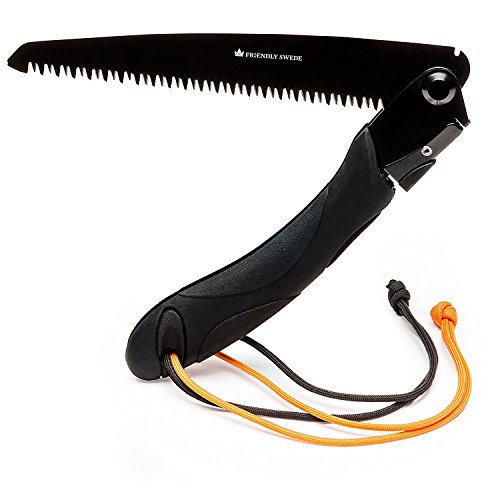
The Friendly Swede Folding Saw
Best for: Budget-friendly all-round camp use and first-time folding saw buyers.
The Friendly Swede is the budget pick of this group, with an 8-inch stainless steel blade and a thermoplastic elastomer handle that stays grippy in cold and wet conditions. Its seven teeth per inch sit in the middle ground between aggressive ripping and smooth finishing, so it handles green and dry wood alike. Two pieces of paracord come with the saw, handy for lashing it outside a pack. The listing showed no featured offers at the last crawl, so confirm availability before ordering; fresh November 2026 roundups still list this exact model as a current pick.
Which One Fits Your Situation
You Hike Miles to Camp
When every gram counts, carry the shortest capable blade. A 170 mm folder rides in a pocket and handles the limbs and kindling a backpacking camp actually needs. Skip the long blades and frame saws, which add weight and bulk for cutting power you will rarely use on the trail. A light folder also means you will actually bring it, which beats a better saw left behind in the car.
You Process Firewood at a Drive-Up Site
When the car carries the weight, choose reach over compactness. A 10-inch blade or a 240 mm curved blade clears thicker limbs in fewer strokes, and the extra length pays off when you work through a pile of deadfall. Keep a short folder as a second saw for kindling and trimming, so the big blade never has to do fine work it was not made for.
You Want One Saw for Camp and Garden
A mid-size folder does double duty best. A 7-inch or 8-inch blade trims garden branches at home and cuts kindling at camp, and it folds small enough to live in a toolbox between trips. Look for a lock that holds the blade closed, so the saw travels safely in a tool bag, and a handle that stays comfortable through a full afternoon of pruning.
You Camp in Wet or Cold Weather
Wet hands and cold mornings punish a slippery handle and a rust-prone blade. Pick a saw with a rubber or textured grip and a blade with a rust-resistant coating, and dry the blade before folding it away. A saw that locks open and closed with gloves on is worth more in November rain than an extra inch of blade.
Common Mistakes
Buying the longest blade you can find, then leaving it behind because it is too heavy to carry.
Cutting with the blade only partly open, which strains the lock and risks the blade folding mid-cut.
Forcing a dull blade through thick wood instead of letting the teeth do the work on the pull stroke.
Storing the saw wet or dirty, which dulls the edge and invites rust on uncoated steel.
Using a pruning saw on nails, wire, or bone, which chips teeth meant for wood alone.
Frequently Asked Questions
What blade length is best for camping?
For most campers, a 7-inch to 10-inch blade covers the work. Short blades handle kindling and small limbs with less weight, while a 10-inch blade reaches across thicker branches for firewood. A 170 mm folder suits backpackers, and a 240 mm curved blade suits pruning. Match the blade to the thickest wood you cut often, not to the biggest log you might meet once.
Do folding saws cut on the pull or the push stroke?
Most folding saws cut on the pull stroke, including the Japanese-style blades in this guide. Pulling keeps the blade straight and lets the teeth bite without bending, which is why these saws feel so efficient. Push gently on the return stroke to clear the cut, and let the weight of the saw do the work rather than forcing it.
How do I keep a folding saw sharp?
Clean the blade after each trip, dry it fully, and store it folded in its case or with the teeth covered. Avoid cutting dirt, nails, or wire, which dull teeth fast. Impulse-hardened teeth stay sharp for a long time but are hard to resharpen, so treat the blade gently and replace the saw when the teeth no longer bite cleanly.
Can I carry a folding saw in a backpack?
Yes, as long as the blade locks closed and the teeth are covered. A pocket folder with a case fits in a side pocket or hip-belt pouch, while a longer saw rides strapped outside the pack. Check local rules for the area you visit, since some parks and trails limit cutting, and only saw dead wood where it is allowed.
A
admin
We compare specs, materials and verified owner reviews before a product earns a spot. Rankings are never paid.
Affiliate disclosure. As an Amazon Associate we earn from qualifying purchases at no extra cost to you. Prices accurate as of the date shown.
Compare five pickleball ball machines for practice, with ball capacity, speed, spin, feed rate and portability to help you drill alone and improve fast.


 Silky PocketBoy 170 Outback Edition
 The Friendly Swede Folding Saw