We independently review everything we recommend. When you buy through our links, we may earn a commission. As an Amazon Associate we earn from qualifying purchases.
Best Trail Cameras for Wildlife and Property Watch 2026
Compare the best trail cameras for wildlife and property watch — cellular and Wi-Fi picks with fast triggers, no-glow night vision, and long field life.
1. TACTACAM Reveal X Gen 3.0 — The Best All-Around Cellular Trail Camera
Brand TACTACAM; Model Reveal X Gen 3.0 (RV-TC-XGEN3); Photo resolution 4K; Video 1080p; Connectivity 4G LTE cellular; Night vision Low-glow infrared; Memory No SD card needed; ASIN: B0D7FQNM38
3. Moultrie Edge 2 — The Best Cellular Camera That Connects Itself
Brand Moultrie; Model Edge 2; Photo resolution 36MP; Video 1080p; Connectivity 4G LTE, auto-connect; Detection range 100 ft; Night vision range 100 ft; ASIN: B0D9361QVT
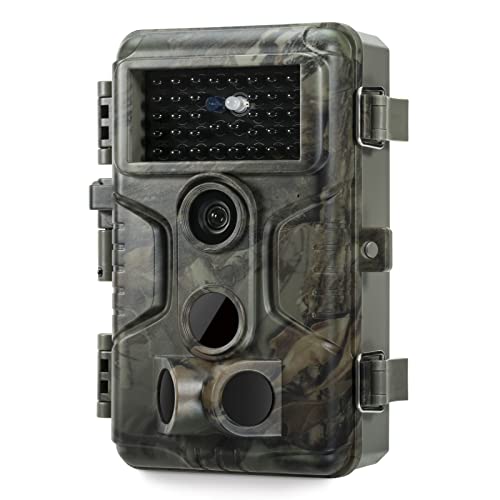
5. GardePro E6 WiFi — The Best Trail Camera for Checking in Person
Brand GardePro; Model E6; Photo resolution 48MP; Video 1296p; Connectivity Wi-Fi + Bluetooth (phone link up to 45 ft, no home router, no cellular); Viewing angle 110 degrees; Night vision 940nm no-glow infrared, 75 ft; Weather protection IP66; Power 8 AA batteries; ASIN: B08VRDFSNL
Compare the best trail cameras for wildlife and property watch — cellular and Wi-Fi picks with fast triggers, no-glow night vision, and long field life.
A trail camera sits in the woods or at the edge of a field and waits. When something moves, it takes a photo or a short clip, then waits again. Hunters track which animals pass through a spot and when; landowners watch a gate, a barn, or a remote cabin.
The five cameras below cover the two main ways a trail camera works. Cellular models send photos to your phone, so you can check a distant spot without driving out to it. Non-cellular models store everything on a memory card or let you pull files over a short-range wireless link when you visit.
As an Amazon Associate, we earn from qualifying purchases.
Quick Answer
For most people, the TACTACAM Reveal X Gen 3.0 is the strongest all-around pick, with 4K photos, 1080p video, and 4G LTE that sends images to your phone. If you want no monthly plan, the GardePro A3S gives 64MP photos and a 0.1-second trigger. The Moultrie Edge 2 and SPYPOINT Flex-M are the other two cellular options, while the GardePro E6 WiFi suits anyone who checks a camera in person.
1. TACTACAM Reveal X Gen 3.0 — The Best All-Around Cellular Trail Camera
Top Pick
1. TACTACAM Reveal X Gen 3.0 — The Best All-Around Cellular Trail Camera
Brand TACTACAM; Model Reveal X Gen 3.0 (RV-TC-XGEN3); Photo resolution 4K; Video 1080p; Connectivity 4G LTE cellular; Night vision Low-glow infrared; Memory No SD card needed; ASIN: B0D7FQNM38
The Reveal X Gen 3.0 is the camera to buy when you want photos on your phone without thinking about the camera again. It connects over 4G LTE and sends images straight to the TACTACAM app. The 4K photo mode captures far more detail than most trail cameras.
Low-glow infrared shows only a faint red glow if you look straight at it, so animals are less likely to shy away. Video records in 1080p. The camera needs no memory card: internal storage handles the images.
This listing is the single camera alone; bundles exist under different codes. The cellular connection is the ongoing cost to weigh: a data plan is required to send photos and is separate from the camera. For a camera placed hours from home, that cost buys back the drive out to check it.
2. GardePro A3S — The Best Non-Cellular Trail Camera
Runner-Up
2. GardePro A3S — The Best Non-Cellular Trail Camera
Brand GardePro; Model A3S; Photo resolution 64MP; Video 1296p; Trigger speed 0.1 seconds; Night vision No-glow infrared, 100 ft; Connectivity None (memory card only); ASIN: B087G8W2PY
The GardePro A3S is for anyone who wants a trail camera with no plan, no app subscription, and no signal to worry about. It records to a memory card, and you collect the files when you visit the camera. There is nothing to pay after the camera, and no cell signal to hunt for in a deep hollow or a thick stand of timber.
The headline number is 64MP for still photos, the highest in this group, and it shows in the detail of a close animal: antler points, coat patterns, and the marks that separate one individual from another. Video records in 1296p. The trigger fires in 0.1 seconds, the fastest here, so a fast-moving animal is caught in the frame instead of leaving an empty trail behind.
Night vision reaches 100 feet with no-glow infrared, 940nm light that is invisible to the eye, so animals do not see a flash. Because the A3S has no cellular radio and no Wi-Fi, it cannot send photos anywhere; you walk out and swap the card. On your own property, that is a small chore; on a distant lease, the drive adds up. The older GardePro A3 is a different model with 48MP, and the A3S two-pack is a separate listing with its own code.
3. Moultrie Edge 2 — The Best Cellular Camera That Connects Itself
3. Moultrie Edge 2 — The Best Cellular Camera That Connects Itself
Brand Moultrie; Model Edge 2; Photo resolution 36MP; Video 1080p; Connectivity 4G LTE, auto-connect; Detection range 100 ft; Night vision range 100 ft; ASIN: B0D9361QVT
The Moultrie Edge 2 takes the setup work out of cellular scouting. It connects over 4G LTE and picks its own carrier automatically. That auto-connect feature is the reason to choose it.
Photos come in at 36MP and video at 1080p, a solid middle ground. Detection and flash range both reach 100 feet, matching the longest ranges in this group.
The Edge 2 here is a single unit. The Edge 2 Pro is a different model under a different code, and the two-pack is again a different listing. Like every cellular camera, the Edge 2 needs a data plan to send photos; the plan is separate from the camera, and any free tier covers only a small number of images. Budget for the plan as part of the camera.
4. SPYPOINT Flex-M — The Best Cellular Camera With a Free Photo Plan
The SPYPOINT Flex-M is the cheapest way into cellular scouting, and it has one feature no other camera here offers: a free plan that sends up to 100 photos every month with no fees and no long-term commitment. For a camera watching a single trail, 100 photos a month is often enough, so the camera can run with no recurring cost at all.
Photos are 28MP and video is 720p with sound, the lowest resolution in this group, but enough to identify an animal or a vehicle. The trigger fires in 0.4 seconds, and both flash range and detection range reach 90 feet. Dual SIM comes preloaded with two activated SIM cards.
Four capture modes cover the usual jobs: photo, video, time-lapse, and time-lapse plus. A microSD card is required and is not included, so add one to the order. This listing is the single camera alone; the twin pack and the solar bundle are separate listings with their own codes.
Specs
Brand SPYPOINT; Model Flex-M; Photo resolution 28MP; Video 720p with sound; Trigger speed 0.4 seconds; Flash range 90 ft; Detection range 90 ft; Connectivity Dual SIM cellular; Free plan 100 photos per month; Memory microSD required, not included; ASIN: B0D1TTDBST
5. GardePro E6 WiFi — The Best Trail Camera for Checking in Person
5. GardePro E6 WiFi — The Best Trail Camera for Checking in Person
Brand GardePro; Model E6; Photo resolution 48MP; Video 1296p; Connectivity Wi-Fi + Bluetooth (phone link up to 45 ft, no home router, no cellular); Viewing angle 110 degrees; Night vision 940nm no-glow infrared, 75 ft; Weather protection IP66; Power 8 AA batteries; ASIN: B08VRDFSNL
The GardePro E6 WiFi is the pick for someone who visits the camera anyway and wants to see what it saw without pulling a card. Its built-in Wi-Fi and Bluetooth link your phone to the camera from up to 45 feet away in open ground. From that link you can preview the area, download photos and video, and change settings without opening the case.
Night vision uses 940nm no-glow infrared with a range of 75 feet, and the housing carries IP66 weather protection. Eight AA batteries power the camera.
The important limit is what the Wi-Fi does not do. The E6 cannot connect to a home router or to the internet, and it has no cellular radio, so it cannot send photos while you are away; the link works only when you are standing near the camera with your phone. That makes it a poor choice for a distant lease and a strong choice for your own land. The E7 and E8 are different cameras, and the code here belongs to the original E6 single camera.
How to Choose a Trail Camera for Wildlife and Property Watch
Begin with the connection question, because it splits the whole market in two. A cellular camera sends photos to your phone, which is worth a lot when the camera sits on a distant lease. A non-cellular camera costs nothing after the purchase, but you have to go and get the files. If the camera is on your own land and you pass it every week, non-cellular saves money.
Next, match the trigger and the detection range to the ground. A fast trigger matters most on a narrow trail; the 0.1-second trigger on the A3S is built for exactly that. On a wide food plot or a driveway, detection range matters more. A 100-foot range covers a broad opening.
Night vision is the third decision, and the type matters more than the number. No-glow infrared is invisible to the eye and keeps animals calm, which is what you want for wildlife. Low-glow shows a faint red light and usually reaches a little farther, which suits a gate or a driveway.
Photo resolution helps when you need to identify an individual animal. A 64MP image shows antler points and coat markings that a 28MP image may blur. Power is the last piece: cold weather shortens battery life sharply, and lithium AA batteries hold up far better in winter than alkaline cells, so carry spares.
Who Should Skip These Trail Cameras
These five cameras watch wildlife and property from a tree or a post, and they are the wrong tool for several nearby jobs. If you need a camera for a porch, a front door, or the inside of a house, buy a home security camera instead. Those plug into mains power and record continuously, which a trail camera cannot do.
For a car, a trail camera is again the wrong choice. A dash cam records the road while you drive and locks its footage after an impact, which a trail camera cannot do. Action cameras are a third confusion to avoid: a camera that straps to a helmet and records while you move is a different product from a trail camera that sits still.
Beyond the wrong jobs, a few people should skip the cellular picks. If the spot has no cell signal at all, a cellular camera cannot send anything, and the plan is wasted money. If you check the camera every few days anyway, the non-cellular A3S or the Wi-Fi E6 does the same job without a plan.
Frequently Asked Questions
Do I need a data plan for a cellular trail camera?
Yes, except for the free tier on the SPYPOINT Flex-M. The TACTACAM Reveal X Gen 3.0 and the Moultrie Edge 2 both need a data plan to send photos, and the plan is separate from the camera. The Flex-M includes 100 photos a month free, with paid plans for more. The GardePro A3S and E6 WiFi have no cellular radio at all, so they never need a plan.
How far can a trail camera see at night?
The GardePro A3S and the Moultrie Edge 2 both reach 100 feet, the SPYPOINT Flex-M reaches 90 feet, and the GardePro E6 WiFi reaches 75 feet. No-glow infrared is invisible to the eye, while low-glow shows a faint red light.
Will a trail camera work where there is no cell signal?
A non-cellular camera works anywhere, because it stores photos on a card and never needs a signal; the GardePro A3S is the pick here for a dead zone. A cellular camera can still record to its card in a dead zone, but it cannot send photos until it has a signal, so the plan brings no benefit there.
What is the difference between no-glow and low-glow infrared?
No-glow infrared uses 940nm light that is invisible to the human eye and to most animals, so the camera stays hidden at night. Low-glow uses a shorter wavelength that shows a faint red glow when you look directly at the camera, but it usually reaches a little farther. For shy wildlife, no-glow is the safer choice; for a gate or driveway, low-glow is fine.
Final Verdict
The TACTACAM Reveal X Gen 3.0 is the best all-around trail camera here, pairing 4K photos and 1080p video with a cellular link that needs no memory card and no trip to the woods. Hunters and landowners who want images on their phone will get the most from it.
If you want no plan at all, the GardePro A3S is the clear alternative. Its 64MP photos, 1296p video, and 0.1-second trigger are the best image numbers in this group, and it asks for nothing after the purchase except batteries and a card. The Moultrie Edge 2 suits anyone who wants cellular without choosing a carrier, and the SPYPOINT Flex-M suits anyone who wants the smallest ongoing cost, thanks to its free 100 photos a month. The GardePro E6 WiFi rounds out the group for the watcher who visits the camera in person. Pick by the connection first, then by the ground you need to cover.
Product and ASIN Reference
Product
ASIN
TACTACAM Reveal X Gen 3.0
B0D7FQNM38
GardePro A3S
B087G8W2PY
Moultrie Edge 2
B0D9361QVT
SPYPOINT Flex-M
B0D1TTDBST
GardePro E6 WiFi
B08VRDFSNL
A
admin
We compare specs, materials and verified owner reviews before a product earns a spot. Rankings are never paid.
Affiliate disclosure. As an Amazon Associate we earn from qualifying purchases at no extra cost to you. Prices accurate as of the date shown.
Compare five pickleball ball machines for practice, with ball capacity, speed, spin, feed rate and portability to help you drill alone and improve fast.



 5. GardePro E6 WiFi — The Best Trail Camera for Checking in Person