Key takeaways
- Set up a calm kids watercolor play day with animal figures to paint, stickers, a grown-up notebook, brush pouches and pens for signing finished art.
A watercolor play day is one of the calmest ways to fill an hour with young children, as long as the table is set up with a little care. The paint set itself is the reader’s own; the picks in this guide are the support pieces around it. Animal figures give small painters something real to look at, stickers help a finished piece feel complete, and a few simple organizers keep brushes, pencils, and notes in their places. With those pieces ready, the session can stay slow and pleasant rather than turning into a hunt for supplies.
A few ground rules shape the whole day. Paints are art materials and are never eaten or drunk, and the rinse-water cup is never a drink, so keep it small, steady, and clearly separate from any cup used at snack time. Grown-ups supervise from beginning to end, and the paint maker’s own age guidance is the guide for who joins in. Old clothes or aprons are a sensible habit, spills get wiped right away, and hands are washed when the painting is done.
As an Amazon Associate, we earn from qualifying purchases.
How to choose
Begin with the paint set you already own and read its packaging before anyone sits down. Follow the paint maker’s age guidance for who should take part, and take any non-toxic wording at face value only as the maker states it, without stretching it into a promise that paint belongs anywhere near mouths. Paint stays on paper and brushes, full stop.
Set the water cup up for success. A small, heavy, steady cup is harder to tip than a tall one, and it should look nothing like the cups the children drink from. Place it where a grown-up can reach it, keep a cloth beside it for drips, and wipe spills right away so paper and sleeves stay dry. When the water turns murky, a grown-up swaps it; the children keep painting.
Plan the drying space before the painting begins. Wet artwork should rest flat, out of the way of elbows and passing sleeves, until it is fully dry. A clear shelf, a spare tray, or one end of the table can serve, and nothing should be stacked on a wet page. Signing, stickers, and filing all wait until the surface is dry.
Finally, think about what happens around the painting. A figure to copy gives the session a subject. A notebook gives the grown-up a place for lists and drying notes. Pouches give clean, dry brushes a home, and worn tools should leave the set: retire cracked paint pans and frayed brushes rather than letting them spoil small efforts.
Safari Ltd. Wild Toob

The paint set is the reader’s own; what a young painter often needs next is something worth painting. The Safari Ltd. Wild Toob gives the table a small cast of wild animal figures that can stand beside the paper as models. A child can pick a lion, set it in good light, and try to match its shape and colors on the page. When the brush needs a rest, the same figures slip into pretend scenes laid out next to the artwork, which keeps the play day moving without more mess. Because the figures are small, a grown-up should hand them out and gather them back in, and they belong on the table as play pieces only, never in mouths. The tube keeps the set together between sessions, so the art corner can be packed away in one motion. For families building a gentle routine, this is the piece that turns plain practice into a small story: choose an animal, paint it, then invent where it lives. It also pairs well with the sticker book below, when a finished painting needs a border or a name label.
Specs
– Format: Tube of small wild animal figures
– Role at the table: Models to paint and figures for pretend scenes beside the artwork
– Use: Play only
Fashion Angels Alphabet Sticker Book

A painting feels finished when a child can sign it, label it, and file it away with pride. The Fashion Angels Alphabet Sticker Book supports that last stage of the play day. Its alphabet stickers can spell a name along the bottom of a dry painting, mark the front of the art folder, or add a word to a scene once the paint has dried fully. Stickers go on after drying, never on wet paint, and a grown-up can help younger children peel and place the letters they want. The book also gives restless hands a quiet job while a sibling’s work dries flat on the table. Keep the book closed and stored with the art supplies so the pages stay clean, and let each child pick letters at their own pace rather than racing to use the most. Used this way, the sticker book is less about ornament and more about ownership: the child names the work, the work goes into the folder, and the folder becomes a small gallery the family can look through later. It is a gentle way to close the session, with every painter leaving the table holding something that feels kept.
Specs
– Format: Alphabet sticker book
– Use: Name labels, lettering on finished paintings, marking the art folder
– Timing: Apply only after paint has dried
feela Pocket Notebooks

Every art table runs better when a grown-up has somewhere to put the small notes that pile up: which colors are running low, whose painting needs more drying time, and what to set out next time. The feela Pocket Notebooks come as a 3-pack, so one can live with the art supplies, one in a kitchen drawer, and one in a bag for ideas on the go. The pages suit supply lists and a simple drying-time log, so a painting begun in the morning can be checked after lunch without guesswork. These notebooks are for lists and logs only; they are not a place for full passwords or other private details, which belong in a proper password manager. The pocket size also means the notebook can sit at the corner of the table without crowding paper and paint. At the end of the session, the grown-up can jot down what worked, which brushes are wearing out, and which paint pans have cracked and should be retired. Over a few weekends, that small habit builds a clear picture of what the art table needs, and restocking supplies becomes a short list instead of a scramble.
Specs
– Pack count: 3 pocket notebooks
– Use: Supply lists and a drying-time log for the grown-up
– Note: For lists and logs only, never full passwords
Vantasii Canvas Zipper Pouches
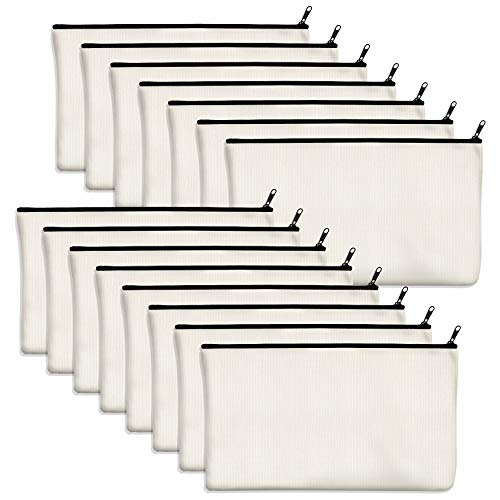
Brushes last longer when they are washed, dried fully, and only then put away. The Vantasii Canvas Zipper Pouches, a 15-pack of canvas pouches, give the art table a simple home for brushes and pencils once they are clean and dry. One pouch can hold the watercolor brushes, another the pencils and crayons, and a third the small tools a grown-up keeps for the session. The zipper keeps pieces from spilling into a drawer, and the canvas keeps the set light and easy to carry to a garden table on a fine day. These pouches are for dry storage only; they are not waterproof, so a wet brush should rest on a cloth until it is dry before it goes inside. With 15 pouches in the pack, a family can also set aside spares for other rooms and still keep the art set complete. Labeling each pouch with the pens below means a child can help tidy up by matching the label, which turns clearing the table into part of the play day rather than a chore after it.
Specs
– Pack count: 15 canvas zipper pouches
– Material: Canvas
– Use: Dry storage for washed and fully dried brushes and pencils
– Care note: Not waterproof; store items only when dry
Pilot G2 Pens

The last job of the play day belongs to the grown-ups, and the Pilot G2 Pens are kept for that moment. A gel pen is a tidy way to write a child’s name and the date on the back of a dry painting, so the art folder tells its own story months later. The same pens handle the labels on the pouches, the notes in the pocket notebook, and the supply list on the fridge. Keeping these pens as grown-up tools matters: gel ink belongs on labels and lists, not in small hands that are still learning where pens should and should not go. Store the pens with the notebooks, away from the paint and water, so ink stays off the artwork. When a painting is dry and flat, a grown-up can sign it with the child watching, which gives the session a calm, finished feeling. It is a small ritual, but rituals are what turn a one-off activity into a family habit. Paired with the sticker letters, the written name and date make each piece feel kept rather than merely done, and the folder slowly becomes a record of how the young painter’s work changes across the season.
Specs
– Type: Gel pens
– Use: Labels and lists; signing and dating finished paintings
– Who uses them: Grown-ups
FAQ
What age is right for a watercolor play day?
The paint maker’s age guidance is the deciding voice, so read the set’s packaging and follow it. Younger children join in only when the maker says the set suits them, and a grown-up stays at the table the whole time either way. If a child still puts most things in the mouth, wait, or keep that child on crayons at a separate spot while older children paint.
How do we keep the rinse water from being treated as a drink?
Use one small, plain, steady cup that looks nothing like the children’s drinking cups, and say the rule out loud before painting begins: paint water is never a drink. Keep the cup on the grown-up’s side of the table, swap it when it gets murky, and serve any real drinks away from the art table at a proper break.
What should happen when a painting is finished?
Lay it flat in the drying spot and leave it alone until the surface is fully dry. Then a grown-up can write the child’s name and the date on the back with a gel pen, the child can add alphabet stickers if they wish, and the piece can go into the art folder. Signing after drying keeps ink and stickers off wet paint.
How do we care for brushes and paint pans between sessions?
Wash brushes in clean water, shape them gently, and let them dry fully before they go into a pouch, since the pouches are for dry storage and are not waterproof. Look over the set as you tidy: retire cracked paint pans and frayed brushes, wipe the table, and wash hands with soap once everything is away.
Final verdict
A good watercolor play day rests on a few quiet supports rather than a long shopping list. The Wild Toob gives children a subject, the sticker book and the grown-up’s gel pen give each painting a finished, kept feeling, the pocket notebooks hold the lists and drying notes, and the canvas pouches keep clean brushes and pencils together for next time. Set the water cup small and steady, keep paints on paper and off plates, lay wet work flat to dry, and let the paint maker’s guidance lead on ages. With those habits in place, the art table becomes a calm corner the family can return to whenever an hour needs filling.