Key takeaways
- Build a pretend shop day with animal figure customers, sticker signs, play lists, storage pouches and pens for labels, with grown-ups close by.
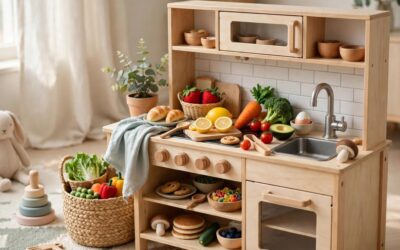
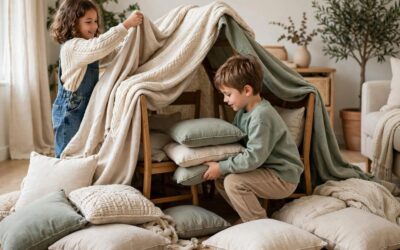
A play shop day turns a corner of the living room into a small, cheerful market, with a counter, a till, shelves of pretend goods and a queue of very patient customers. It is the kind of open-ended play that fills a whole morning: children arrange the shelves, welcome shoppers, write lists and keep the little shop running while grown-ups stay close by. The setup needs no special furniture. A low table or a sturdy box becomes the counter, cushions mark the shop floor, and a handful of simple props gives the game its shape. This kit gathers five everyday items that support the theme without taking it over.
Everything here is pretend, and that rule shapes the whole day. The goods on the shelves are toys and household bits that are safe to handle, the tokens in the till are play pieces with no amounts on them, and the signs carry words and pictures rather than figures. Nothing from the play set is food, and nothing gets eaten during the game; real snacks belong at a real table, served by grown-ups away from the shop floor. With that ground rule clear, children can run the shop freely, and grown-ups can join in as customers, helpers or the person who keeps the shelves in order.
As an Amazon Associate, we earn from qualifying purchases.
How to choose
A good play shop runs on clear ground rules and simple props, so choose the setup before choosing the goods. Pick a spot where a grown-up can sit nearby for the whole game: a corner of the living room, a rug in the hall or a patch of kitchen floor away from cooking. Decide who sets up the counter, since the furniture, the till and the shelving are grown-up jobs, and agree where the shop ends and the rest of the room begins. Check the maker age guidance on every item in the kit and match pieces to the children playing; anything small, capped or pointed stays in grown-up keeping and comes out only when it is needed. Plan the snack rule in advance: the shop sells nothing real, so hungry shopkeepers close the door, wash their hands and eat at a proper table with food served by grown-ups. Think about storage before the first customer arrives, because a shop that packs away in five minutes is a shop that gets played with again. Pouches for tokens and labels, a tube for the figures and a notebook for the log give every piece a home. Finally, agree the closing routine: count everything back in, retire anything damaged, and note in the log what the shop needs next time.
Safari Ltd. Wild Toob

The Wild Toob gives the shop its customers. Inside the tube is a set of small wild animal figures, and on shop day they line up at the counter as the shoppers of the day: a lion waiting by the ribbon shelf, a giraffe tall enough to see over the signs, a zebra with a list as long as its stripes. Because the figures are play-only props, children can give each one a name, an errand and a patient place in the queue, and the shop game gains a gentle story that carries it along. Grown-ups hand the figures out and gather them in again, since the pieces are small and belong with adult supervision. The maker age guidance on the tube is the rule for who plays with what, and any figure that cracks or loses a part comes out of the game for good. At closing time, the head count matters: every figure goes back into the tube, one by one, which turns tidy-up into the final job of the shopkeeper’s day. Kept together in their tube, the animals are ready to queue again next time, and the counter can welcome them back whenever the shop sign goes up.
Specs
- Contents: Tube of small wild animal figures
- Role in play: Play-only figures and shop-day story props
- Keeping: Counted back into the tube after play
- Guidance: Maker age guidance applies; small parts stay with grown-ups
Fashion Angels Alphabet Sticker Book

Signs make the shop feel real, and the Fashion Angels Alphabet Sticker Book is the sign-writing kit. Its alphabet stickers let children spell out the words the shop needs: OPEN on the door card, FRESH above the pretend fruit, NEW beside the ribbon shelf, and the name of each customer on a small label. Because the signs carry letters and pictures only, the game stays free of figures and amounts, which keeps the focus on words, reading and neat presentation. Grown-ups can write the longer words in pencil first so younger children can place stickers over the guides, and older children can compose whole signs on their own. Stickers belong on paper and card signs, labels and the shop notebook, not on furniture or walls, and a grown-up decides where each sign may go. A sheet of spare stickers lives in one of the canvas pouches, ready for repairs when a corner lifts. When the shop closes, the signs stack flat inside the notebook or a pouch, so the whole pretend high street folds away into a drawer and comes out again, word perfect, on the next play day.
Specs
- Contents: Alphabet sticker book
- Use: Letters for labels, signs and name cards
- Surfaces: Paper and card signs, labels and notebooks
- Keeping: Spare sheets stored flat in a pouch
feela Pocket Notebooks

Every shopkeeper needs a notebook, and the feela Pocket Notebooks come as a pack of three, which suits a shop day neatly: one book for the shopping lists customers hand over, one for the shop log that records what the shelves hold, and one spare for sign practice and sudden ideas. The books are small enough to sit beside the till and sturdy enough to be opened a hundred times in a morning. Lists are the heart of the game: a customer writes or dictates three items, the shopkeeper finds them on the shelves, and the log gains a line for each happy shopper. One firm rule travels with these notebooks wherever they are used in the home: they are for play lists and logs only, and never for full passwords or real private details, which belong in proper keeping elsewhere. On shop day that rule is easy to keep, since every page holds pretend errands and animal names. At closing time the log shows the trading of the day in simple lines, and the books slide into a pouch with the pens, ready for the next morning the shop sign turns to OPEN.
Specs
- Pack: Three pocket notebooks
- Use: Play shopping lists and shop logs
- Rule: Lists and logs only, never full passwords
- Keeping: Stored with the pens in a pouch
Vantasii Canvas Zipper Pouches
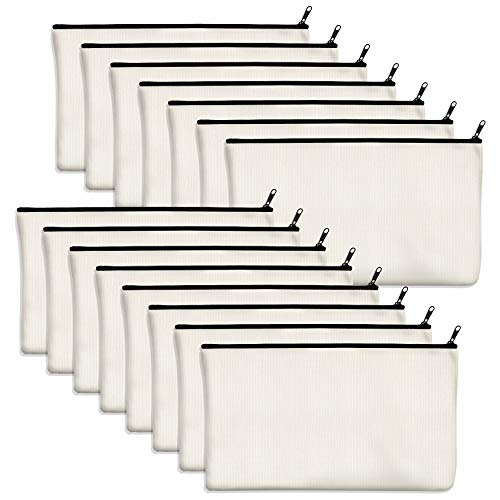
The Vantasii Canvas Zipper Pouches are the back-room storage of the shop, and with fifteen canvas pouches in the pack there is one for every job the day invents. Pretend tokens live in one pouch by the till, spare labels and sticker sheets in another, ribbon lengths in a third, and the play lists from finished customers in a fourth. The zip on each pouch keeps small pieces together between games, which matters when the shop shares a room with everyday life. Canvas pouches are for dry storage only, so they hold dry items and stay away from drinks, paint water and damp cloths; if a pouch ever feels damp, empty it and let it air before it goes back to work. Grown-ups are in charge of the pouches that hold the smallest pieces, and each pouch is counted back onto its hook or into its drawer at closing time. Because the pack is generous, a few pouches can stay empty as spares for the day a new shelf, a market stall or a second branch of the shop appears in the game. Simple and unshowy, they keep the whole pretend high street tidy behind the scenes.
Specs
- Pack: Fifteen canvas zipper pouches
- Material: Canvas, for dry storage only
- Use: Tokens, labels, sticker sheets and small pieces
- Keeping: Counted back in at closing time
Pilot G2 Pens

The Pilot G2 Pens handle the writing in the shop that stickers cannot: the flowing hand on customer lists, the neat labels tied to ribbon bundles, and the OPEN and CLOSED faces of the door sign. Gel ink writes smoothly on the paper and card the shop uses, so signs look neat with very little pressure, which helps younger writers and pleases older ones. These are real pens, though, and the game treats them that way. Grown-ups write the big signs, older children use the pens as the maker guidance for the household allows, and the youngest shopkeepers use crayons from their own box. Caps go back on the moment a pen is set down, since a loose cap is a small part that belongs with grown-ups, and pens rest in their pouch rather than rolling off the counter. Ink belongs on paper and card only, never on skin, clothes or furniture, and a pen that leaks or cracks is retired at once. With two or three pens in the shop pouch, there is always one for the shopkeeper, one for the customer with a list, and one spare for the grown-up keeping the log.
Specs
- Type: Gel pens
- Use: Labels, signs and lists on paper and card
- Users: Grown-ups and older children, as maker guidance allows
- Keeping: Capped and stored in a pouch after use
FAQ
Which children is a play shop day for?
The kit suits a wide span of ages as long as the pieces match the players. Follow the maker age guidance printed on each item, keep small parts such as the animal figures and pen caps in grown-up hands, and let younger children play with a grown-up right beside them as a customer or helper. Older children can run the counter, write the signs and keep the log with less help.
How do the pretend tokens work?
The tokens are plain play pieces with no amounts on them, kept in a pouch by the till. A customer passes one over, the shopkeeper puts it in the pouch, and the game moves on to the greeting, the list and the wrapping. Keeping figures off the tokens and signs keeps the play centred on words, manners and imagination rather than sums, and every token is counted back in at closing time.
What happens when the shopkeepers get hungry?
The shop closes for a break. Play goods stay on the shop side of the room, hands are washed, and real food is served by grown-ups at a real table away from the play set. Nothing from the shelves, pouches or till is food, and nothing gets eaten as part of the game. When the break ends, the sign turns back to OPEN and trading carries on.
How do we pack the shop away?
Closing time follows the same count every day. Figures go back into their tube one by one, tokens return to their pouch, pens are capped and put away, and signs stack flat inside the notebook or a spare pouch. Anything cracked, torn or leaking is retired rather than packed. A line in the shop log records what the shelves hold, so the next shop day begins with a full count.
Final verdict
A play shop day asks very little of a household: a table for a counter, a rug for a floor and five simple items that each do one job well. The animal figures supply the customers and the stories, the sticker book writes the signs, the notebooks hold the lists and the log, the pouches keep tokens and small pieces in order, and the pens give the shop its neat hand. With grown-ups setting up, supervising and serving real snacks at a real table, the game stays safe, calm and rich in words. Pack it away with a full count, and the little shop is ready to open again whenever the family fancies a morning of pretend trading.