Key takeaways
- Build a kids nature table with safe fallen finds, sorting pouches, play logs, sticker letters, and animal figures for a calm treasure play day.
A nature table gives a walk somewhere to land. Instead of pockets full of forgotten bits, the finds of the day get a tray, a cloth, and a calm corner where kids can sort, match, and talk about what they found. This kit supports that table with animal figures for pretend play, a sticker book for letter games, pocket notebooks for play logs, zippered pouches for sorting, and pens that stay in grown-up hands. Everything here is a play and sorting aid for fallen finds only, gathered slowly and handled gently, with grown-ups close by from the first leaf to the final count.
The gathering rules matter more than the gear. Only fallen finds are gathered: leaves, twigs, pebbles, empty shells, and acorns that are already on the ground. Nobody breaks branches or picks from living plants, and shells come home only when they are empty, because a shell can be a home for a creature. Some parks and beaches ask that finds stay where they fell, so follow local rules before anything goes in a pouch. Acorns and seed pods are never food and are not for eating, nothing goes in mouths, and stones are carried, never thrown.
As an Amazon Associate, we earn from qualifying purchases.
How to choose
Choose the spot before the stuff. A nature table works best on a low tray or a washable cloth in a corner where a grown-up can sit alongside, because supervision is part of the kit, not an extra. Plan the walk around the table: pick a route with plenty already on the ground, like a park path after a breezy night, and bring one pouch per child so sorting begins outdoors. Keep the group small enough that every find can be named, admired, and counted, and agree the rules out loud before anyone picks anything up: fallen finds only, empty shells only, nothing in mouths, no throwing stones, and hands washed when the play is done. Back home, lay the finds out, match them with the animal figures, and write the play log while memories are fresh. Pieces that are damp, crumbling, or sharp edged go back outside or in the bin rather than on the table, and anything cracked or torn gets retired. The table itself stays simple: a few finds at a time, swapped as new walks bring new material, so the corner stays calm instead of crowded.
Match the kit to the youngest walker. If a toddler joins the walk, the table sits higher, the figures and caps stay fully in grown-up hands, and finds get bigger and simpler: broad leaves, smooth pebbles too large to mouth, and chunky twigs. Older kids can take charge of the log and the letters. One kit serves both, as long as the grown-ups hold the small parts and the counting stays a shared job at the end of every session.
Safari Ltd. Wild Toob

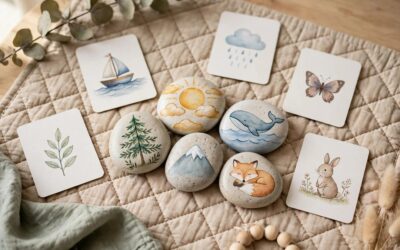
The Wild Toob gives the nature table a cast of small animal figures, and they turn a pile of fallen finds into a matching game. A child can set a figure beside the leaf, pebble, or acorn it might live near, then tell a short story about where the creature sleeps and what it eats. The figures also help grown-ups steer the play: ask which animal would climb this twig, which one would hide under that leaf, and which one would never be found on this path at all. Because the figures are small parts, they stay with grown-ups between turns, come out only while everyone is seated at the table, and go back into a pouch as soon as play moves on. Follow the maker age guidance on the pack, and keep the figures away from younger siblings who still mouth everything. Nothing from the table goes in mouths, figures included. At the end of the day, count the figures back in alongside the finds, so the set is whole for the next walk. Retire any figure that cracks or breaks, and wipe the set clean before it goes back on the shelf.
Specs:
– Small animal figures for pretend play
– Small parts stay with grown-ups
– Follow maker age guidance
Fashion Angels Alphabet Sticker Book

Letter play gives the table a second game. After the finds are sorted, kids can hunt the sticker book for the letter each find begins with: L for leaf, P for pebble, A for acorn, S for shell. The sticker goes in the play log or on a label card beside the tray, not on the find itself, so the natural pieces stay clean and can go back outside later. Grown-ups can stretch the game by asking for the sound each letter makes, or by lining up the finds in alphabet order along the edge of the table. Younger kids can simply match one letter per find with help, while older kids write the whole word in the notebook and add the sticker as a reward mark. Keep the sticker sheets at the table rather than on the walk, so the outdoor part of the day stays about looking and gathering. When a sheet runs low, the game still works with letters written by hand. At tidy-up time, check that no stray stickers have ended up on the finds themselves, and count the book back into its pouch with the rest of the kit.
Specs:
– Alphabet sticker book
– Made for letter play
feela Pocket Notebooks 3-pack

The pocket notebooks turn the table into a record. Each child gets a page per walk: the date, the place, and a list of what came home, with a quick sketch of a favorite find. That log is how the count back in stays honest, because the page says how many pebbles, shells, and acorns should be on the tray when the day ends. The notebooks are small enough for a pouch, so the log can begin outdoors on a bench while the walk is still fresh. Keep the writing simple: names of finds, one line about where each one lay, and a mark beside anything that will go back outside. These notebooks are for play logs and lists only, and never for writing full passwords; anything private belongs in a password manager, not on paper at a play table. When a notebook fills up, it becomes a small shelf keepsake of the season, and a fresh one takes its place in the pouch. If a page gets damp or torn, copy the count onto a clean page and retire the worn one, so the record of what is on the table is always easy to read.
Specs:
– Pocket notebooks, pack of 3
– For play logs and lists only
– Never for full passwords; use a password manager
Vantasii Canvas Zipper Pouches 15-pack
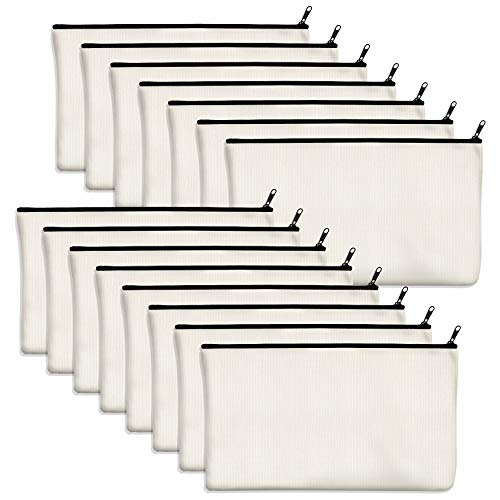
Fifteen pouches sound like a lot until sorting begins. One pouch per child for the walk, one for pebbles, one for leaves, one for shells, one for the figures, one for the sticker book and pens, and suddenly the set makes sense. The zippers keep small finds from drifting into coat pockets and car seats, and a labeled pouch per kind of find turns the count back in into a quick, calm job: empty each pouch onto the tray, count against the log, and zip everything away. Canvas takes the knocks of a play day well, and a pouch that comes home grubby can be shaken out and left to dry before the next walk. One limit needs saying plainly: these pouches are not waterproof. A pouch caught in rain, or carrying a damp shell, will let moisture through, so wet finds travel home in a grown-up’s dry bag instead, and pouches stay for dry finds only. Retire any pouch with a torn seam or a zipper that no longer closes, because a pouch that spills small parts works against the whole counting system the table depends on.
Specs:
– Canvas pouches with zippers, pack of 15
– Not waterproof
Pilot G2 Pens

The pens are the grown-up tool in the kit. A gel pen writes the labels that keep the system together: names on pouches, dates in the play log, and the count list that gets checked at tidy-up time. Smooth ink matters here because labels get written on benches, tray edges, and other less than perfect surfaces, and a pen that writes cleanly the first time keeps the job quick. The caps are small parts, so the pens stay with grown-ups from cap off to cap on, and they live in their own pouch between uses rather than loose on the table where a younger child could reach them. Kids who are old enough to write can use a pen at the table with a grown-up beside them, writing find names in the log; the pen goes back to the grown-up pouch as soon as the writing is done. Keep pens away from the finds themselves, since ink on a shell or leaf means that piece gets retired instead of going back outside. When a pen runs dry, replace it and move the old one out of the kit, so the count of pens in the pouch always matches what the log expects.
Specs:
– Gel pens
– Caps are small parts and stay with grown-ups
FAQ
What can kids gather for a nature table?
Only things that have already fallen: leaves, twigs, pebbles, empty shells, and acorns. Nothing gets broken off branches or picked from living plants, and local rules come first, since some places ask that finds stay where they fell.
Why do shells need to be empty?
A shell can be a home for a small creature, so only empty shells come to the table. If a shell has a tenant, it stays on the shore or the path where it belongs, and the walk moves on to the next find.
Can wet finds travel home in the pouches?
No. The canvas pouches are not waterproof, so damp finds ride home in a grown-up’s dry bag. Dry finds only in the pouches, and let a pouch that got grubby dry out fully before the next walk.
How does a nature table day end?
With a count. Every find and figure is counted back in against the play log, worn or cracked pieces are retired, and hands are washed once the tray is clear. Finds that belong outside go back out on the next walk.
Final verdict
A nature table day runs on simple rules and a small, steady kit. Gather fallen finds only, leave living plants and shelled homes alone, keep small parts and pen caps with grown-ups, and let nothing near mouths. The figures, stickers, notebooks, pouches, and pens each carry one job: matching, letters, logging, sorting, and labeling. Count everything back in, wash hands, and the table is ready for the next walk. Families who want one calm corner that turns short walks into slow, talkative play will find this kit does the job without turning the day into a lesson. Begin with one tray, one pouch per child, and a short route, then let the table grow only as the counting habit settles in. Keep the rules kind, keep them the same on every walk, and the finds will do the teaching.