Key takeaways
- A shell hunt play day kit for kids with shore-walk guidance, sorting games, animal figures, stickers, notebooks, pouches, and pens for labeling finds.
A shell hunt gives a simple shore walk a clear purpose. Instead of wandering along the waterline with no plan, kids head out with a job: look for empty shells, study each one closely, and bring back a small collection they can sort, group, and talk about once they are home again. The activity suits a wide mix of ages because every child can join in at their own level, from spotting one smooth white shell in the sand to lining up a full row of finds by size, shape, and shade.
This kit gathers five support pieces for that kind of play day. None of them replaces close supervision on the shore, and none of them does the hunting for the child. They simply help grown-ups organize the outing: figures for pretend play once the walk is over, a sticker book and notebooks for recording finds, pouches for keeping shells grouped on the way home, and pens for labeling. A few simple safety habits run through every section below.
As an Amazon Associate, we earn from qualifying purchases.
How to choose
Begin with the shore itself. Some shores are full of empty shells after a breezy night, while others hold only a few, so a quick look ahead helps set fair hopes for younger children. Check the local shore rules before you go, because some places ask visitors to leave shells where they lie. If that is the rule where you walk, the same kit still works for a counting, sketching, and photograph-only day, with sorting done from drawings and notes.
Next, agree on the shell rules as a family before anyone picks anything up. Only empty shells come home. Every shell gets a gentle turn and a look inside, and if a living creature is using it, the shell goes back near where it was found. Sharp or broken shells go back too, since their edges can cut small fingers and they crumble in a bag. Everyone washes hands after the walk, since shore finds carry sand and salt.
Then plan how the finds will travel. A hunt goes better when each child knows the categories ahead of time: big and small, round and spiral, pale and dark, smooth and ridged. Carrying pieces should keep those groups apart so the sorting game survives the trip home. A few notes about where each shell turned up turn a pile of shells into a small field project. Finally, shells need a rinse and a dry spot afterward, and the play value lasts longer when figures, stickers, and notebooks are ready for a table session.
Safari Ltd. Wild Toob

The Safari Ltd. Wild Toob gives the play day a second act once the walk is over. The tube holds a set of small wild animal figures, and those figures turn a pile of shells into a scene: a shoreline village, a tide pool gathering, or a row of creatures waiting by the water. Kids who lose interest in sorting after ten minutes often keep going when the figures come out, because the shells become props in a story rather than items sitting in a row.
The figures also support sorting games of their own. Children can group the animals by kind, line them up beside shells of a matching shade, or place one figure as a marker at the head of each sorting pile. Pairing a figure with a shell group gives younger children a clear, playful reason to finish each category. Because the figures are small parts, grown-ups should keep them away from very young children, follow the maker age guidance for the set, and retire any figure that cracks or breaks. Handled with that care, the Toob adds pretend play value that lasts long after the shells have been rinsed, dried, and put away.
Specs:
- Product type: Tube of small wild animal figures
- Play uses: Pretend play and sorting games
- Handling note: Small parts; keep away from very young children and follow maker age guidance
- ASIN: B000BNEOS0
Fashion Angels Alphabet Sticker Book

The Fashion Angels Alphabet Sticker Book is the labeling engine of this kit. It holds more than one thousand stickers, and the alphabet format means children can spell out the words that organize the whole afternoon: big, small, round, spiral, pale, dark, smooth, and ridged. A sticker label on each sorting tray or paper plate turns a loose pile of shells into a tidy display, and sounding out each label word adds letter practice without making it feel like a lesson.
Beyond labels, the stickers reward careful work. A child who finishes a sorting row can pick a sticker for the front of the play log, and a full page of labels makes a fine record to keep with the shells. Grown-ups may want to guide sticker use toward paper, trays, and notebook pages rather than the shells themselves, since the shells look better plain and may return to the shore on a later visit. With more than one thousand stickers in the book, there are plenty for labels, rewards, and a few purely fun pages as well.
Specs:
- Product type: Sticker book
- Sticker count: More than one thousand stickers
- Main uses: Labeling sorting trays, notebook pages, and play records
- ASIN: B09N7XCNTN
feela Pocket Notebooks 3-pack

The feela Pocket Notebooks give the hunt a memory. These small paper pocket notebooks are sized for a coat pocket or a grown-up’s bag, and they suit play logs and lists: where each shell was found, its shade, whether it is smooth or ridged, and how many of each kind the group found. A quick sketch of an unusual shell, drawn on the spot, often holds a child’s attention longer than the shell itself.
A three-pack means each child can keep a personal log, or the family can run one book per outing and build a small shelf of shore records over a season. Older children can write their own entries, while younger ones can dictate a line or two for a grown-up to write down. One firm boundary keeps these notebooks in their proper role: they are for play logs and lists only. Full passwords never belong in a paper notebook; families should use a proper password manager for those instead. Kept to logs, lists, tallies, and sketches, the notebooks become the piece of the kit that children reach for first when they want to retell the day.
Specs:
- Product type: Small paper pocket notebooks
- Pack size: 3-pack
- Main uses: Play logs, lists, tallies, and sketches
- Use boundary: Logs and lists only; use a password manager for passwords
- ASIN: B0BG4MFCZC
Vantasii Canvas Zipper Pouches 15-pack
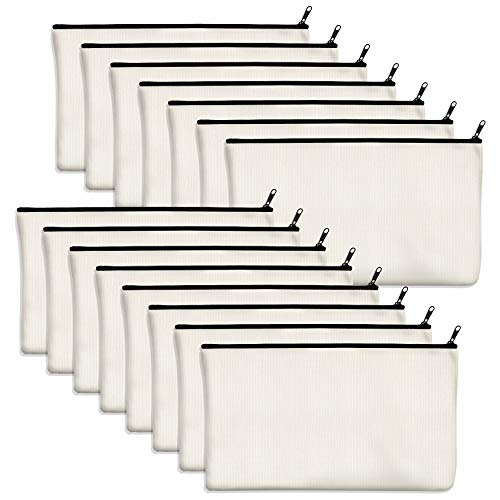
The Vantasii Canvas Zipper Pouches handle the carrying work. This multi-piece set of canvas zipper pouches comes in assorted sizes, which maps neatly onto a sorting plan: a large pouch for the big shells, a mid-size pouch for spirals, a small one for tiny finds that would vanish in a big bag. Zippers keep the groups apart on the walk home, so the categories a child worked hard to gather do not collapse into one mixed pile.
One fact deserves plain words: these canvas pouches are not waterproof. A pouch will hold dry or merely damp shells for the trip home, but it will not protect a pocket or a car seat from a soaking wet, sandy shell. The smoother routine is to shake off loose sand at the shore, let very wet finds drain on a towel first, and only then zip them away. Back home, the pouches rinse out and dry quickly. They also serve between hunts as tidy storage, one pouch per category on a shelf, with no shells rattling loose in a drawer.
Specs:
- Product type: Canvas zipper pouches
- Set size: 15-pack, multi-piece set in assorted sizes
- Main uses: Grouping shells and small finds by category
- Water note: Not waterproof; dry very wet finds before storing them inside
- ASIN: B08CMQ6QG4
Pilot G2 Pens

The Pilot G2 Pens finish the kit by making every label and log entry clear. These gel ink pens write smoothly on notebook paper and on plain paper tags, which makes them the right tool for dating a play log page, writing a child’s name on a pouch tag, or marking the shore and date on a record card kept with a favorite shell. Clear writing matters more than it sounds: a label nobody can read in a month might as well not exist.
Pens in this kit are for grown-ups and older kids, the ones who can manage a cap and keep the pen on paper. Pen caps are small parts, so grown-ups should keep pens and caps away from very young children, recap each pen when the writing is done, and store pens with the notebooks rather than loose in a play bag. That small routine also keeps gel ink off shells, pouches, and car upholstery. With two or three pens in the kit bag, one can live with the notebooks, one with the pouches, and a spare can ride along for labels at the shore itself.
Specs:
- Product type: Gel ink pens
- Main uses: Labeling tags and writing log entries and lists
- Handling note: For grown-ups and older kids; keep caps away from very young children
- ASIN: B001AQPQBQ
FAQ
What should a child do with a shell that has a living creature inside?
Leave it in peace. The rule for the whole hunt is empty shells only, so a shell with a creature inside goes gently back near where it was found. Watch it for a minute from a respectful distance, note it in the play log, and move on. The hunt still counts the sighting as a find, just one that stays at the shore.
How should we sort the shells once we get home?
Rinse the shells, let them dry on a towel, and then sort by one clear trait at a time: size first, then shape, then shade. Use the alphabet stickers to label a tray or paper plate for each group, and keep each finished group in a canvas pouch. One trait at a time keeps the game calm for younger children, while older kids can add a second pass, such as smooth versus ridged in the big shell group.
Are the canvas pouches fine for wet shells straight from the water?
No. The Vantasii pouches are canvas and are plainly not waterproof, so a soaking wet shell will dampen the pouch and anything near it. Shake off the sand, let wet finds drain on a towel, and zip them into a pouch once they are merely damp or dry. Treating them as grouping and storage pieces keeps car seats and pockets dry.
What belongs in the play log, and what should stay out of it?
The log is for the day itself: the shore you visited, the date, where each shell turned up, its shade and shape, a tally of each kind, and a sketch or two. Lists of what to bring next time fit well too. Passwords and other private details never belong in a paper log; families should keep those in a password manager instead. The feela notebooks are for play logs and lists only, and that boundary keeps them safe to share.
Final verdict
A shell hunt works because the shore supplies the treasure and the child supplies the curiosity. This kit simply adds the thin layer of order that turns a handful of finds into a full play day: pouches that keep shell groups apart, notebooks that hold the story of the walk, stickers and pens that label every category, and animal figures that carry the play on long after the shells are dry. Keep the safety habits steady, meaning supervision throughout, empty shells only, hands washed afterward, sharp pieces left behind, and local shore rules followed, and the kit will serve outing after outing, from the first toddling shell spotter to the older child keeping a dated log of every spiral and shade.