Key takeaways
- Build a calm pretend vet clinic for kids with toy animals, play charts, stickers and tidy storage that keeps every play day gentle and easy to pack away.
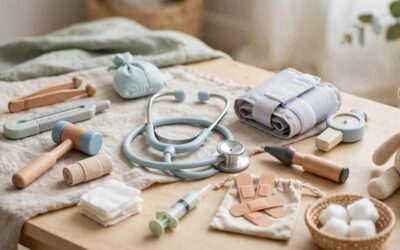
A pretend vet clinic gives a child a kind job to do. The toy animals line up as patients, the child listens, looks, and writes a few notes, and the whole scene stays gentle from the first minute to the last. Nothing here needs to be real, and that is the point. A play clinic works best when the child leads, a grown-up stays nearby, and every prop has a clear place to go when play ends.
This guide gathers five simple pieces that fit together into one calm play day kit. Toy animals play the patients, a sticker book decorates the play charts, small notebooks hold the pretend notes, zip pouches keep the small pieces together, and smooth pens make the writing easy. Each piece earns its place by being easy to use, easy to pack away, and easy to enjoy again tomorrow.
As an Amazon Associate, we earn from qualifying purchases.
How to choose
Look first at the age guidance on each listing, and let the maker guidance lead. A pretend vet clinic suits children who enjoy caring for toy animals, drawing, and making up gentle stories, and the pieces below suit a wide range of ages when a grown-up stays close. Small parts belong with grown-ups, and the smallest figurines suit older children who no longer put things in their mouths.
Pick pieces that do more than one job. A notebook can hold a patient chart in the morning and a drawing in the afternoon. A pouch can carry the clinic kit to a grandparent’s house and then hold the pens at home. A sticker book can decorate charts, name tags, and a pretend waiting room sign. When every piece has two or three uses, the kit stays small and the play stays rich.
Keep the whole clinic pretend, and keep it kind. Play charts carry drawings, stickers, and invented names only, with no real personal details and no amounts anywhere. Toy animals are the only patients, never real pets. Nothing from the play set is eaten, and no play item goes in mouths, ears, or noses. Real medicine and real thermometers are never playthings and stay in grown-up keeping. Count every piece back in at the end of the day, retire any damaged piece at once, and wash hands after play.
Safari Ltd. Wild Toob

The Wild Toob gives the clinic its patients. Twelve small animal figurines fill the tube, and each one can take a turn on the examination table, which in this kit is a folded blanket on the floor. A child can line the animals up in the waiting area and call one forward. The giraffe may need a long look at its neck, the bear may need a rest, and the elephant may need the most room. Because the animals differ in shape and size, the child finds a new story each time the tube opens.
The figures are hand painted, so each animal has its own colors and markings for a child to notice and name. A grown-up can ask which animal is next, what it might need, and where it should rest after its visit. That kind of gentle talk builds vocabulary and patience without any lesson plan. The tube keeps the whole set together between play days, which matters in a busy house where small pieces wander off.
One note for the grown-up buying the set: a roundup notes the Wild TOOB as discontinued by the maker, so it is worth a live re-check before buying. The animals are small, so maker age guidance leads, small parts stay with grown-ups, and a cracked or damaged figure comes out of play at once. Count all twelve back into the tube at the end of the day, and the clinic is ready for its next patients.
Specs
- 12 mini figurines: giraffe, bear, tiger, camel, lion, crocodile, gorilla, hippo, rhino, zebra, panther, elephant
- Hand painted
- Non-toxic and BPA free as listed for the TOOB line
Fashion Angels Alphabet Sticker Book

A pretend vet clinic needs signs, charts, and name tags, and this sticker book supplies the letters for all of them. With more than 2,000 alphabet stickers inside, a child can spell out a clinic name, label each animal patient, and decorate the play charts that hang on the wall. The letters are bright and easy to peel, so small fingers can manage them with a little patience, and a grown-up can help with the trickier placements.
The book shines in the quiet moments of the play day. While one animal rests, the child can build a sign for the waiting room, mark a chart with the letters of an invented animal name, or decorate the cover of a patient log. Stickers give the clinic a finished look that crayons alone cannot match, and they let a child who is still learning letters practise them in a playful setting. Nothing here needs to be neat. A crooked sign is still a sign, and a chart full of colorful letters is still a chart.
Keep the sticker habit gentle. Stickers belong on paper, charts, and notebooks, not on walls, furniture, or skin. A grown-up can set out a few sheets at a time so the book lasts across many play days, and any sticker sheet that is torn or damp comes out of the kit. At the end of the day, the book slides back into the kit with the rest of the supplies, ready for the next round of signs.
Specs
- 2,000+ alphabet stickers
- Fun and colorful craft letter stickers
- For accessorizing notebooks, journals, and more
feela Pocket Notebooks

Every good clinic keeps notes, and these small notebooks are the patient charts of the kit. A child can draw each animal, add a few stickers from the alphabet book, and write an invented name beside the picture. The hardcover keeps the pages flat while a child writes on a lap or on the floor, and the pocket size means the chart book travels easily from the playroom to the garden. Three notebooks in the pack mean one child can keep a chart book, a drawing book, and a spare, or three children can each have a book of their own.
The pen holder on each notebook keeps the three included black pens with the book, so the kit never loses its pens in the middle of play. College ruled lines give older children a gentle guide for their writing, while younger children can simply draw across the page. A grown-up can remind the child that the notebooks are for logs, lists, and drawings only, never for full passwords, and that a password manager is the right place for anything a grown-up needs to keep safe.
Because the notebooks are small, they suit short notes rather than long stories. That fits a play clinic well, where each patient gets a few lines and a picture. Count the notebooks back into the kit at the end of the day, and retire any notebook whose cover is torn or whose pages are damp.
Specs
- 3-pack pocket notebooks with 3 black pens
- A6 size, 3.5 x 5.5 in
- Hardcover, college ruled, pen holder
Vantasii Canvas Zipper Pouches
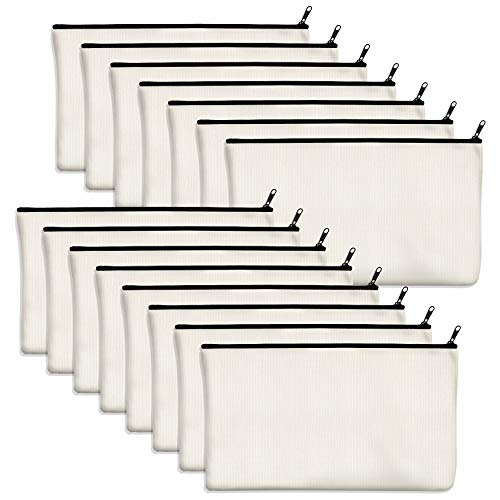
A play clinic has many small pieces, and these canvas zip pouches keep them from scattering across the room. One pouch can hold the pens, another can hold the stickers, and a third can hold the smallest animal figures for a trip to a grandparent’s house. The zipper closure keeps everything inside while the kit rides in a bag, and the plain canvas gives a child a surface to decorate with stickers or drawings of their own. Fifteen pouches in the pack mean there is one for every job, plus spares for the next play day idea.
Canvas is a plain, honest material, and it is worth stating plainly that these pouches are never waterproof. They are tidy row aids, not protection against spills, so drinks and wet hands stay away from the kit. A grown-up can show the child how to zip a pouch closed, how to label it with a sticker, and how to put it back in the same place each time. That small routine is what keeps a play kit usable for months rather than days.
The pouches also make tidy-up part of the play. A child can sort the clinic supplies into pouches, count the pouches back into the kit, and feel the satisfaction of a tidy shelf. Retire any pouch whose zipper sticks or whose seam splits, and keep the pouches dry between play days.
Specs
- 15-pack blank cotton canvas zipper bags
- 8.3 x 4.7 in
- Model zh094
Pilot G2 Pens

Smooth pens matter in a play clinic, because a child who struggles with a scratchy pen soon gives up on the chart. These gel pens write in a steady blue line, and the bold point makes each letter easy to see on the page. The retractable tip means no lost caps, and the contoured grip helps small hands hold the pen without strain. Twelve pens in the pack mean the clinic never runs short, and a grown-up can keep a few aside as spares for the next play day.
The pens suit the patient charts, the play signs, and the drawings that fill the notebooks. A child can write an invented animal name, circle a letter on a chart, or draw a heart beside a patient who is feeling better. Because the pens are refillable, they last longer than a pen that is thrown away when the ink runs out, and a grown-up can show the child how a refill works when the time comes.
Keep the pens with the notebooks, in the pen holder or in a zip pouch, so the whole writing set stays together. Pens are for paper only, never for skin, walls, or furniture, and any pen that leaks or cracks comes out of the kit at once. Count the pens back in at the end of the day, and the clinic is ready to open again.
Specs
- Bold point, blue ink, 12-pack
- Retractable, refillable gel roller
- Model 31257
FAQ
How do I set up a pretend vet clinic at home?
Pick a clear spot on the floor, lay down a blanket as the examination table, and set out the toy animals, notebooks, pens, and stickers within easy reach. Let the child arrange the waiting area, write a sign, and call the first patient forward. Keep a grown-up nearby, keep everything pretend, and pack every piece back into the kit when play ends.
What age is a pretend vet clinic kit good for?
Maker age guidance leads for every piece in the kit. Small figurines and small parts suit older children who no longer put things in their mouths, while younger children can enjoy the larger play with a grown-up close by. The notebooks, stickers, and pens suit a wide range of ages when the play stays supervised and gentle.
Can real pets join the pretend vet clinic?
No. Toy animals are the only patients in this kit, never real pets. Real pets need rest, space, and care from a grown-up, and they should never be part of a play examination. A child can still enjoy caring for a toy lion or a toy elephant while a real pet naps nearby in its own spot.
How do I keep the kit tidy between play days?
Give every piece a home. Animal figures go back in the tube, stickers stay in the book, notebooks and pens go in a zip pouch, and pouches go back in the kit. Count everything back in at the end of the day, retire damaged pieces at once, and store the kit somewhere dry. A tidy kit is a kit that gets played with again.
Final verdict
A pretend vet clinic works when the pieces are simple, the play stays gentle, and tidy-up is part of the game. Toy animals give the clinic its patients, stickers give it signs and charts, notebooks hold the pretend notes, pouches keep the small pieces together, and smooth pens make the writing easy. Nothing here asks for much, and that is the strength of the kit. A child can open the clinic, care for a dozen animals, and pack it all away before dinner, ready to open again tomorrow.