Our Short List of 3


All 3 Picks at a Glance
| Product | Specs | Action |
|---|---|---|
| 1. OPTIMA YellowTop D34 Dual Purpose AGM — the straightforward top-post pick | Check price on Amazon | |
| 2. Odyssey 34-PC1500T Extreme Series AGM — the reserve capacity pick | Check price on Amazon | |
 3. XS Power D3400 AGM Power Cell — the high output pick | Check price on Amazon |
Key takeaways
- Compare dual-purpose AGM batteries for a 4WD winch, with cranking amps, reserve capacity, terminal layout and charging checks to match before you buy.
As an Amazon Associate we earn from qualifying purchases.
Affiliate Disclosure: This article contains affiliate links. If you buy through a link on this page, we may earn a commission at no extra cost to you.
Why a winch asks more of a battery than starting does
A winch pull is not a normal starting event. Starting asks for a short, sharp burst of current and then the alternator takes over. Winching asks for a long, heavy draw while the engine may be idling, the cable is under load, and the vehicle may be sitting at an awkward angle on a slope, in mud, or against a rock step. The battery has to deliver starting power first, then sustain the winch motor, then recover enough to start the engine again if you shut it down during a recovery. A battery that only looks strong on a cold cranking amps label can still disappoint in that second and third job.
That is why the best battery for a 4WD winch is usually a dual-purpose AGM battery rather than a basic starting battery. Dual-purpose designs are built to crank an engine and to tolerate deeper discharge and recharge cycles than a starting-only battery is meant to handle. AGM construction also helps off road, because the electrolyte is held in glass mat separators rather than sloshing freely, the case is sealed, and the battery can cope better with vibration from corrugated tracks, washouts, and rocky climbs. Vibration matters more than many owners expect. A battery that works on the road can lose life early if its internal plates are being shaken for hours at a time.
This guide compares three dual-purpose AGM batteries that fit the winch use case in different ways. One is a widely available standard top-post option whose listing names trucks with winches directly, one is a high reserve capacity pure lead AGM, and one is a high output AGM power cell that its listing describes for winch use as well as other high draw work. None of them is a universal fit. Group size, terminal position, hold-down style, and cable reach decide whether a battery actually belongs in your engine bay, so the checks after the reviews are as important as the picks themselves.
What to check before you choose
Start with fitment. Most mid-size and full-size 4WD vehicles use a Group 24, Group 27, Group 34, or Group 65 battery, but trays vary and some vehicles leave very little room above the terminals for winch cables and a battery isolator. Measure the tray, note which side the positive terminal sits on, and check whether your winch cables need top posts, side terminals, or both. A reversed terminal layout can turn a simple swap into a cable stretching problem, and stretched cables are a safety problem, not just an inconvenience.
Next, look past a single headline number. Cold cranking amps tell you about starting in cold conditions. Reserve capacity tells you how long the battery can keep supplying a moderate load, which is closer to what matters during a long pull. Amp hour capacity helps when you also run a fridge, lights, or a compressor from the same battery. For winching, you want a healthy balance of all three, plus a design that can recharge and repeat the effort. A winch motor under heavy load can draw several hundred amps, so cable size, clean terminals, and a charging system in good order matter just as much as the battery badge.
Finally, think about how the battery will be used the rest of the year. If the winch is used twice a year and the vehicle is a daily driver, a proven dual-purpose AGM in the starting position is usually the sensible route. If you winch often, run accessories overnight, or do long solo trips, a dual battery system with an auxiliary battery and a proper isolator or DC-DC charger may be the better answer, and the starting battery choices here still apply to the main position. What you should not do is fit a starting-only battery, drain it repeatedly with the winch, and expect it to last.
Our picks at a glance
The OPTIMA YellowTop D34 is the straightforward fitment pick, with standard SAE top posts that match the clamps already fitted to many Group 34 vehicles. The Odyssey 34-PC1500T is the reserve capacity pick, with a larger amp hour rating and a long reserve figure for repeated pulls. The XS Power D3400 is the high output pick, built as an AGM power cell with a very high amp rating and threaded terminals, for owners who are comfortable checking fitment more carefully. All three are 12 volt AGM batteries. All three need a fitment check against your tray and terminal layout before you order.
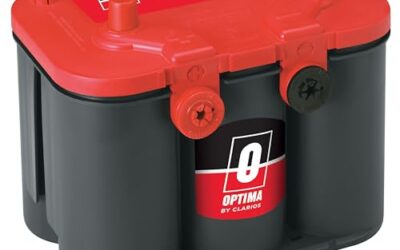
1. OPTIMA YellowTop D34 Dual Purpose AGM — the straightforward top-post pick
The YellowTop line is OPTIMA’s dual-purpose range, positioned between a pure starting battery and a dedicated deep cycle battery. The D34 version, model 8012-021 in the listing, lists 750 cold cranking amps, a 55 amp hour capacity, and a reserve capacity of 120 minutes in manufacturer and listing information. Its Amazon listing describes the YellowTop range for trucks with winches and other high demand accessories, which is exactly the duty covered here. Those figures put it squarely in the range a mid-size 4WD needs for starting plus winching, without moving up to an oversized case that may not fit a standard tray.
The feature that makes this version easy to live with is its conventional layout: a Group 34 case with standard SAE top posts, listed at 10 by 6 7/8 by 7 13/16 inches and 42.9 pounds. That means the factory post clamps on many Group 34 vehicles fit without adapters, and winch cables are planned onto those same top posts in the usual way. Plan that connection properly rather than stacking lugs carelessly: use sound lugs, clean contact surfaces, and check the stack sits flat and tight, because a loose or corroded stack adds resistance and heat at the terminal. Anyone who has tried to loosen a corroded stack of lugs on the side of a track will understand why that care matters. Note that this D34 is the top-post-only version, so if your vehicle needs side terminals, this is not the variant to order.
OPTIMA batteries use a spiral wound cell design rather than flat plates, and the company promotes that design for vibration resistance. For a 4WD that spends time on rough roads, vibration resistance is a real buying point rather than a marketing extra. The sealed AGM design is maintenance free in normal use and can be mounted in the standard engine bay position without worrying about free liquid electrolyte.
There are limits to be honest about. At 55 amp hours, this is not the largest capacity battery in this guide. If you plan to run a fridge overnight from the same battery and then winch the next morning, you are asking a lot of a single battery of this size, and a dual battery setup would serve you better. The case shape is also distinctive, so check the hold-down arrangement in your tray. Some factory clamps designed for a rectangular case need attention with a spiral cell case. Neither point is a deal breaker, but both are worth checking on your own vehicle rather than assuming.
Choose the YellowTop D34 if you want one battery to start the vehicle and run the winch, your vehicle uses standard SAE top posts, and your tray takes a Group 34 style battery. It is the most straightforward recommendation in this guide for a typical dual-purpose build.
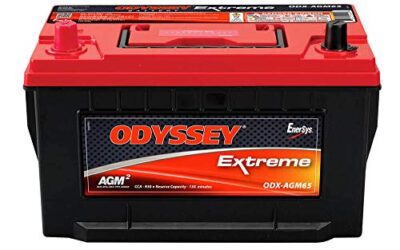
2. Odyssey 34-PC1500T Extreme Series AGM — the reserve capacity pick
Odyssey’s Extreme Series batteries use thin plate pure lead AGM construction, and the 34-PC1500T is the Group 34 member of that range that appears in Amazon US listings under this ASIN. Listing and manufacturer specification information for the PC1500 family gives a capacity of 68 amp hours at the 20 hour rate, a reserve capacity of 135 minutes, and a pulse cranking figure of 1500 amps, with cold cranking amps listed at 850 to 880 depending on the specification sheet revision. Treat the reserve and capacity figures as the useful comparison points here: both are higher than the YellowTop above, and that extra depth is exactly what repeated winching draws on.
In practical terms, more reserve capacity means more margin during a long or repeated recovery. A single short pull to clear a washout will not trouble any healthy battery in this guide. A winch session that involves repositioning the vehicle, pulling in stages, letting the motor cool, and pulling again is a different test. That is where a battery with greater depth, and a design intended to cycle and recover, earns its place. Odyssey also promotes a long service life for the Extreme Series and strong deep cycle capability for an AGM starting battery, which suits vehicles that combine daily use with regular off road work.
The PC1500T uses a standard top terminal layout in a Group 34 case, so it drops into many trays that take that group size, but you will be connecting winch cables to the same posts as the vehicle cables. Plan the connection properly, with suitable lugs and clean contact surfaces, and consider a terminal distribution solution if the post is getting crowded. Crowded, poorly seated lugs are a common and avoidable source of voltage drop.
The trade-offs are weight and the need to charge it correctly. Pure lead AGM batteries are heavy for their size, and like all AGM batteries they prefer a charger with an AGM profile when they are charged outside the vehicle. If your workshop charger is an old unit with no AGM setting, factor in a suitable charger rather than shortening the life of an expensive battery. Also confirm the exact terminal orientation for your vehicle, because the PC1500 family includes a reversed terminal variant sold under a different model name. Ordering the reversed version by mistake is an easy error and an annoying one.
Choose the 34-PC1500T if reserve capacity and cycle tolerance are your priorities, your tray takes a Group 34 battery with this terminal orientation, and you are willing to keep it charged with the right profile. For a vehicle that winches regularly, it is the strongest endurance argument in this guide.
3. XS Power D3400 AGM Power Cell — the high output pick
The XS Power D3400 comes from a different corner of the battery world. XS Power built its name on high output AGM power cells for demanding electrical loads, and listing information for the D3400 describes it as a 12 volt AGM battery with a 3300 amp rating, supplied with M6 terminal hardware, and suitable for winch use among other high draw applications. It is a Group 34 format power cell, which is why it belongs in a winch conversation even though much of its reputation was made elsewhere.
What that high output design offers a 4WD owner is strong current delivery and an AGM case that is sealed and maintenance free, in a size that can fit a common tray. The threaded M6 terminals are a real difference from the other two picks. Instead of clamping lugs onto a tapered post, you bolt connections down. Done properly, that gives a firm, repeatable connection for heavy winch cables. Done carelessly, it is also easier to get wrong, because you need the right lug size, the right bolt length, and a check that the bolt does not bottom out or loosen. This is a battery for an owner who is comfortable doing, or paying for, careful installation work.
There are two cautions to state plainly. First, XS Power publishes its ratings in its own style, with a headline amp figure that is not directly comparable to a cold cranking amps figure from the other brands, so do not choose this battery by comparing that one number against the CCA figures above. Compare fitment, capacity information from the manufacturer, and the kind of load you actually run. Second, terminal hardware and polarity layout need extra care. The D3400 family also includes a reversed polarity variant, so confirm the exact listing, the terminal position, and the hardware supplied before you order.
Choose the D3400 if you run heavy electrical loads as well as a winch, you want bolted threaded terminals, and you are prepared to verify fitment and polarity carefully. If you want the simplest drop-in swap, one of the two picks above will usually be the easier path.
Charging, cables and habits that protect any of these batteries
The best battery in this guide will still underperform if the rest of the system is neglected. Winch with the engine running whenever it is safe to do so, so the alternator shares the load and the battery is not drained alone. Keep pulls in stages, let the winch motor cool between efforts, and avoid holding the winch at a stall, which is when current draw climbs highest and heat builds fastest. If a pull is not moving the vehicle, re-rig with a snatch block or change the anchor point instead of simply demanding more from the motor and battery.
Cable condition matters. Thick, short winch cables with sound lugs, clean terminals protected against corrosion, and a solid earth return path will do more for real pulling performance than a small difference in a specification table. Inspect terminals before a trip, not after a failed recovery. A battery that sits unused for weeks also needs attention. AGM batteries self-discharge slowly, but a vehicle with a constant parasitic draw can still flatten one over time. A maintenance charger with an AGM profile, used when the vehicle is parked for long stretches, is cheap insurance for battery life.
After a hard winching session, give the battery a proper recharge as soon as you reasonably can. Repeatedly leaving an AGM battery in a partly discharged state shortens its life. If your vehicle has a smart alternator that holds voltage low for fuel economy, and you run an auxiliary battery, look into a DC-DC charger matched to AGM charging requirements rather than relying on a simple voltage sensitive relay alone.
Safety notes
Winching is one of the highest risk jobs in recreational 4WD use, and the battery is only one part of a safe recovery. Keep people clear of the cable line, use a cable damper, wear gloves, and never step over a loaded cable. On the electrical side, disconnect the negative terminal before changing a battery, keep metal tools away from both posts at once, and secure the battery with its hold-down before driving. A loose battery on rough ground can shift, damage a terminal, or short against bodywork. If a battery case is cracked, swollen, or leaking, remove it from service rather than charging it and hoping for the best.
Verdict
For most 4WD owners, the OPTIMA YellowTop D34 is the balanced choice: dual-purpose AGM construction, standard SAE top posts that suit many Group 34 trays, and figures that suit a typical mid-size vehicle. If your recoveries are long and frequent, the Odyssey 34-PC1500T offers more capacity and reserve to draw on. If your build already carries heavy electrical loads and you want a high output power cell with bolted terminals, the XS Power D3400 is the specialist option, provided you verify fitment and polarity with extra care. Whichever you choose, confirm group size, terminal layout, and hold-down fit on your own vehicle before ordering, and keep the charging system and cables in the same good order as the battery itself.