Key takeaways
- Build a pom pom hunt and sorting play day with soft craft pom poms, animal figures, stickers, notebooks, pouches, and pens for supervised family fun.
A pom pom hunt turns an ordinary afternoon into a gentle game of searching, gathering, and sorting that young children can follow with ease. A grown-up hides soft craft pom poms around one or two rooms, hands each child a small pouch or cup, and lets the group collect them one by one. Once the floor is clear again, the real second half of the game begins: sorting the pile by color, by size, or by any simple rule the children invent together. This kit gathers the supporting pieces that make that kind of play day run smoothly, from animal figures that widen the hunt to a sticker book that gives the day a calm finish.
Pom poms in this kit are plain craft supplies, and they are for play and sorting only. Adult supervision matters throughout the whole session, from the first hiding round to the final tidy-up. Small parts and pen caps stay with grown-ups at all times, and younger children play within arm’s reach of an adult. When the game ends, count every pom pom back in as a group, wash hands after play, follow maker age guidance for each item, and retire damaged items rather than keeping them in the box.
As an Amazon Associate, we earn from qualifying purchases.
How to choose
Begin with the pom poms themselves. Plain craft pom poms in a mix of colors and sizes give children the most sorting options, and soft fibers are gentle on small fingers. Buy enough that each child can gather a full pouch without the game feeling thin, and keep a few spare in case a couple roll under furniture and turn up a day later. Bright colors sort well because the groups are easy to see across a mat or table.
Next, plan the hunt area before anyone begins. One or two rooms with clear floors work better than a whole house, because a smaller area keeps the search fair and keeps the counting honest at the end. Hide pom poms in plain sight for younger children: on chair seats, along skirting boards, beside plant pots, and on low shelves. Older children enjoy trickier spots, such as inside an open book or under a cushion corner, as long as every hiding place stays safe to reach without climbing.
Sorting tools shape the second half of the day. Cups, muffin trays, egg cartons, and shallow bowls all give each color group its own home, and a plain mat on the floor marks the sorting zone. Add a simple rule card if you like: sort by color first, then by size within each color, then count each group aloud together. That counting step doubles as the safety check, because the number gathered should match the number hidden.
Round out the kit with a record-keeping piece and a quiet closing activity. A small notebook lets a grown-up log how many pom poms went out and how many came back, and older children can keep their own tally marks. A sticker book or a set of small animal figures gives the day a softer landing once the hunt energy fades. Finally, think about storage: a pouch or box that closes keeps the whole kit together, keeps dust off the fibers, and makes the count-back ritual simple to repeat every time.
Safari Ltd. Wild Toob

The Wild Toob is a tube of small animal figures, and it earns its place in this kit by widening the hunt beyond pom poms alone. A grown-up can hide a few figures among the pom poms as bonus finds, and children delight in spotting a tiny lion or elephant peeking out from behind a chair leg. After the hunt, the figures open up a second sorting game: group them by kind, line them up by size, or pair each figure with a pom pom of a matching color. That mix of searching and grouping keeps the play day fresh across several rounds without needing new supplies.
Because the figures are small parts, this piece of the kit belongs firmly in grown-up hands between rounds. An adult should hand figures out, watch play closely, and gather every figure back at the end of the session. Adult supervision is essential with younger children, and the figures should go back into their tube and into the kit pouch as soon as play ends. Kept that way, the Toob adds a storytelling spark to the day: children invent names, habitats, and little parades for the animals they find, and the pom poms become food piles, nests, and bedding in their games.
Specs
– Format: tube of small animal figures
– Role in the kit: bonus finds during the hunt and a second sorting game afterward
– Note: small parts; grown-up supervision required
Fashion Angels Alphabet Sticker Book

Every lively hunt needs a calm landing, and this alphabet sticker book provides exactly that. It holds more than one thousand stickers, so there are plenty of pages to share around the table without any child feeling shortchanged. After the pom poms are counted back in, children can settle down to match letters, spell their names, or decorate a page for each color group they sorted. The alphabet theme pairs naturally with the sorting mindset of the day: finding, matching, and placing things where they belong.
Grown-ups can tie the book into the game in simple ways. A child who found the most red pom poms might choose a red sticker as a marker on the tally page, or the group can spell the word for each color as they sort it. Keep the book in the kit pouch between play days so pages stay flat and clean, and let one adult hand out pages if tearing sheets free is still tricky for small fingers. Used this way, the sticker book stretches the play day by a quiet half hour and gives children something they made to show at the end.
Specs
– Format: alphabet sticker book
– Sticker count: more than one thousand stickers
– Role in the kit: quiet matching and letter play after the hunt
feela Pocket Notebooks 3-pack

A hunt with dozens of pom poms in play needs a simple record, and these small paper pocket notebooks handle that job neatly. The pack holds three notebooks, which is enough for a grown-up scorekeeper, an older child’s own tally book, and a spare for drawing the day’s sorting rules. A grown-up writes down how many pom poms were hidden before the round begins, then ticks them off as the group counts them back in. That one habit turns cleanup into part of the game and makes sure nothing small is left behind on the floor.
These notebooks suit play logs and lists: tally marks, color counts, hiding-spot notes for next time, and shopping lists for craft supplies. They are for logs and lists only, and they should never be used for writing full passwords; a proper password manager is the right home for those. Between play days, the notebooks ride in the kit pouch alongside the pom poms, and children enjoy looking back at earlier tallies to see whether their sorting groups grew. Simple paper, used well, quietly holds the whole routine together.
Specs
– Format: pack of three small paper pocket notebooks
– Use: play logs, tallies, and lists
– Note: for logs and lists only, never for writing full passwords; use a password manager instead
Vantasii Canvas Zipper Pouches 15-pack
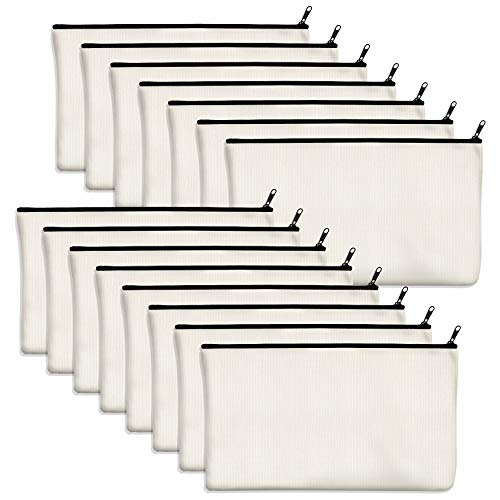
Fifteen canvas pouches with zippers may sound like a lot for one play day, yet a hunt-and-sort kit uses them quickly. Each child carries one pouch as a gathering bag during the hunt, which keeps hands free and stops found pom poms from dropping along the way. Back at the sorting mat, pouches become group homes: one for red, one for blue, one for the tiny ones, one for the figures. At the end of the day, the filled pouches zip shut and drop into one storage box, so the count-back check takes minutes rather than a long search through loose supplies.
Canvas is sturdy and pleasant to handle, and the zippers give small fingers good practice with opening and closing. One honest note matters here: these pouches are not waterproof, so keep the kit away from drink spills, damp grass, and wet paint projects, and let any pouch that gets damp dry fully before it goes back in the box. Grown-ups can label each pouch with a name or color using the pens in this kit, which helps children return their own pouch to the right spot. Few pieces in the kit work as quietly or as often as these.
Specs
– Format: pack of fifteen canvas pouches with zippers
– Use: gathering bags during the hunt and sorted storage afterward
– Note: canvas; not waterproof
Pilot G2 Pens

Pens might seem like a grown-up extra in a children’s kit, yet they hold the routine together in the background. A grown-up uses them to label pouches, write the tally in the notebook, mark rule cards for sorting games, and note which pom poms need replacing before the next play day. Older kids can join in too, writing their names on their pouches and keeping their own tally marks under adult watch. Smooth gel ink makes those small jobs quick and legible, even on canvas tags and card.
The caps deserve a clear mention: pen caps are small parts, and they stay with grown-ups. An adult should collect caps during writing time, keep uncapped pens in adult hands, and store the pens capped inside a zippered pouch between sessions. With that one rule in place, the pens are a safe and useful part of the kit. They also travel well beyond play day: the same pens handle birthday card lists, craft supply notes, and the running log of who found what, giving the kit a small but steady backbone of order.
Specs
– Format: gel pens
– Use: labels, tallies, and rule cards
– Note: for grown-ups and older kids; caps are small parts and stay with grown-ups
FAQ
Are pom poms safe for young children?
Pom poms here are plain craft supplies for play and sorting only, and they call for adult supervision throughout. Follow maker age guidance, keep the session in one watched area, and retire damaged items instead of returning them to the box. Hands get washed after play, every time.
How do we make sure every pom pom is found?
Write the count in the notebook before hiding begins, then count every pom pom back in as a group at the end. If the numbers differ, turn the search into one final round. Pouches help, because each child’s finds stay gathered rather than scattered.
What else can children sort besides pom poms?
The animal figures sort by kind or size, stickers sort by letter, and pouches sort by color or label. Mixing two sorting games in one session keeps attention longer, and the notebook tally works the same way for each game.
How should the kit be stored between play days?
Zip sorted pom poms and figures into the pouches, cap the pens, and keep the notebooks and sticker book flat in one box. Store the box dry and out of reach of very young children, since the kit holds small parts and pen caps that stay with grown-ups.
Final verdict
This kit works because each piece has a clear job: pom poms to hunt and sort, figures to widen the game, stickers to calm the finish, notebooks to hold the tally, pouches to gather and store, and pens to label it all. The routine matters as much as the supplies. Supervise throughout, count every pom pom back in, wash hands after play, and retire worn pieces promptly. Do that, and a simple bag of craft pom poms becomes a repeatable play day that children ask for again.