Key takeaways
- Five closed-hole student flutes for beginners, from the school-band standard Yamaha to budget starter kits. Compare keys, warranty, and extras.
A first flute has one job: make the early months of learning as easy as possible. That means closed-hole keys a new player only has to press, not seal with a fingertip, an offset G key that lets smaller hands sit naturally, and a mechanism that stays in adjustment while a beginner is still learning to hold the instrument. The flutes below all meet that bar, and they cover the full range of what families actually spend, from a complete starter kit to the model most band directors name first.
The five picks run from a proven school-band standard to two budget starter kits, with a mid-range option in between. Each one is a real listing with confirmed details, so match the exact model before ordering, and check with the band director first if the flute is for a school program, since some programs publish a list of approved brands.
As an Amazon Associate, we earn from qualifying purchases.
Table of Contents
- Yamaha YFL-222 Student Flute
- Gemeinhardt 2SP Student Flute
- Jean Paul FL-220 Student Flute
- Cecilio Closed Hole C Flute
- Glory Closed Hole C Flute
- How to Choose
- Frequently Asked Questions
Yamaha YFL-222 Student Flute
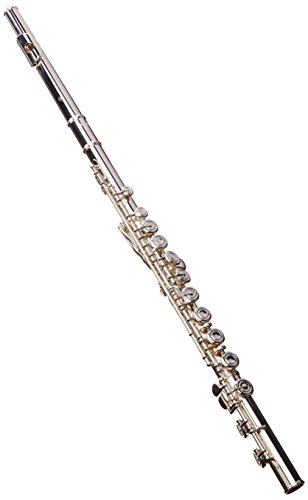
The Yamaha YFL-222 is the flute most band directors name when a family asks what to buy. It is the standard student model from the maker whose instruments fill school band rooms, and it has earned that place by holding its tuning and its adjustment through years of daily practice. If the budget stretches to one premium pick and the goal is to buy once, this is the flute to start with.
The YFL-222 is a closed-hole flute in C with an offset G key, a C footjoint, and a split E mechanism. The closed holes mean a beginner presses each key and the note speaks, with no need to seal an open ring with the center of a fingertip. The offset G sits where the left hand naturally falls, which matters for younger players and for anyone with smaller hands. The split E closes an extra key when the player fingers the high E, so that note comes out cleaner and more reliably than on a flute without it. The nickel silver body has silver-plated keys, and the CY headjoint helps new players form a sound.
One detail needs care. The Amazon listing is titled as an international version, and that version does not carry a US warranty. That does not change how the flute plays, but it does change what happens if it needs warranty service, so confirm which version the listing offers and what warranty comes with it before ordering. The listing also calls the flute intermediate in its title, which is confusing: the YFL-222 is Yamaha’s standard student flute, the model teachers recommend by name, and the word intermediate in the listing title does not make it a step-up instrument. It ships with a basic case only, so a stand and a cleaning kit are separate purchases if the player wants them from day one.
The YFL-222 suits a student who will play in a school band for several years and a family that would rather buy one flute than replace a cheaper one later. It is the heaviest investment in this roundup, and it is also the one with the strongest record of surviving middle school. A player only trying the flute for a few months may be better served by a lower-cost pick or by renting first.
Specs
| Spec | Detail |
|---|---|
| ASIN | B01DD4MIPY |
| Model | YFL222 |
| Key | C |
| Keys | Closed hole |
| G key | Offset G |
| Footjoint | C foot |
| Split E mechanism | Yes |
| Body | Nickel silver |
| Keys finish | Silver-plated |
| Headjoint | CY |
| Included | Case |
| Warranty | Not stated for the international version |
| UPC | 889025102711 |
Gemeinhardt 2SP Student Flute

The Gemeinhardt 2SP has been the default beginner flute in American band rooms for decades, and it is still the one many teachers reach for first. Gemeinhardt has made school band flutes since 1948, and the 2SP is its core student model: a silver-plated instrument with closed-hole keys, an offset G, and a C footjoint, built to survive being carried to school every day. It is the pick for families who want the longest warranty and the most serviceable flute in this roundup.
The 2SP’s strongest feature is the support behind it. The warranty runs five years to the original purchaser once the flute is registered with Gemeinhardt, which is longer than any other warranty here. Gemeinhardt runs its own repair shop, so pads, adjustments, and overhauls have a clear home, and the maker publishes its service prices. The J1 headjoint is made at Gemeinhardt’s plant in Elkhart, Indiana, and the flute comes with a hard plastic case and a cleaning rod. The silver-plated head, body, and foot give it a fuller tone than flutes that plate only the keys.
The trade is the missing split E. The 2SP does not have the mechanism that makes the third-octave E speak more easily, so that note takes more work once a player reaches it, usually a year or more into lessons. The 2SP is also slightly heavier than the Yamaha, which can tire a younger player’s left hand during longer practice sessions. A version with a curved headjoint exists under the model name 2SPCH, and it is a separate listing, so confirm the listing says 2SP with a straight headjoint if that is the flute wanted. The model number to match is 2SP, and the UPC is 845377000006.
The 2SP suits a student joining a school band program, since it appears on the approved lists of the school programs that publish them, and it suits a family that wants a flute any local repair shop will know how to service. It is less suited to a player who wants the easiest possible high E from the start.
Specs
| Spec | Detail |
|---|---|
| ASIN | B0002F5IW8 |
| Model | 2SP |
| Key | C |
| Keys | Closed hole |
| G key | Offset G |
| Footjoint | C foot |
| Split E mechanism | No |
| Body | Silver-plated nickel silver |
| Headjoint | J1, made in the US |
| Included | Hard case, cleaning rod |
| Warranty | 5 years, registered with the maker |
| UPC | 845377000006 |
Jean Paul FL-220 Student Flute
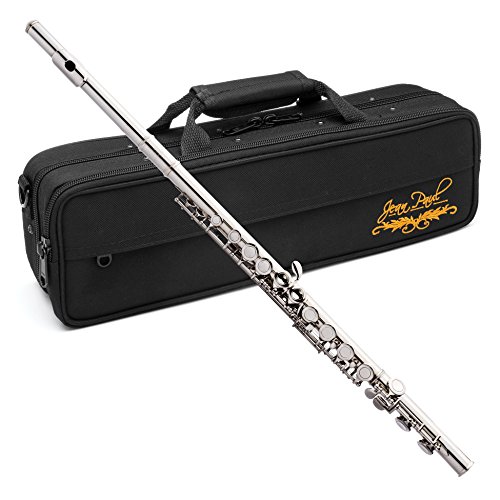
The Jean Paul FL-220 is the honest budget choice in this roundup. It is the least expensive flute here that is still a real instrument rather than a toy, and it covers the features a teacher asks for: closed holes, an offset G, a C footjoint, and a split E mechanism. For a family that needs to stay well under the cost of the Yamaha or the Gemeinhardt, the FL-220 is the flute to look at first.
The FL-220’s headline feature is the split E, which neither the Yamaha student flute nor the Gemeinhardt 2SP offers at this level of the market. The mechanism closes an extra key when the player fingers the high E, and that note speaks more cleanly as a result. The head, body, and foot are silver-plated cupronickel, the keys are closed plateau keys, and the offset G keeps the left hand comfortable. Each flute is set up and checked by certified repair technicians before shipping, which solves the single biggest problem with low-cost flutes: arriving out of adjustment. The box holds the flute, a contoured carrying case, a cleaning cloth, and a rod. Jean Paul also sells spare parts for this flute down to a two-dollar adjusting screw, and it makes a curved headjoint, the FL-U, that fits the FL-220 for a child whose arms are too short for a straight flute.
The warranty is one year, with six months on the case, which is shorter than the Gemeinhardt’s five years, and pads and corks are excluded as normal wear. One school band program, in Sabetha, Kansas, lists Jean Paul among the flute brands it asks families to avoid, while other programs accept it, so a family buying for school band should ask the director before ordering. The silver-plated finish shows fingerprints and wear faster, so check that every key seals and every note speaks in the first weeks.
The FL-220 suits an adult beginner buying for themselves, or a family that wants a genuine student flute at the lowest workable cost and is willing to check it carefully on arrival. It is less suited to a school band program that publishes an approved-brands list.
Specs
| Spec | Detail |
|---|---|
| ASIN | B006WAVPEM |
| Model | FL-220 |
| Key | C |
| Keys | Closed hole |
| G key | Offset G |
| Footjoint | C foot |
| Split E mechanism | Yes |
| Body | Silver-plated cupronickel |
| Included | Case, cleaning cloth, cleaning rod |
| Warranty | 1 year; case 6 months |
| Spare parts | Sold by the maker |
Cecilio Closed Hole C Flute

The Cecilio Closed Hole C Flute is the starter kit pick in this roundup. It is a complete package for a beginner who needs everything at once: the flute itself plus the case, the stand, the cleaning tools, the gloves, and a guide, in one box. For a family buying a first flute with no accessories at home, that completeness is the whole point.
The flute is a closed-hole C flute with 16 keys, an offset G key, and a split E mechanism, built from nickel silver. The closed holes keep the finger work simple, the offset G suits smaller hands, and the split E helps the high E speak. The kit includes a case, a stand, cleaning tools, gloves, joint grease, a tuning rod, and a guide, so a new player can start the same afternoon the box arrives. The listing ships from Amazon and is sold by KK Music Store, and the model number is 4354706928.
The Cecilio is a budget import, and that comes with honest limits. Several flute guides list Cecilio among the budget brands whose quality control varies, so the flute needs a careful check on arrival: every key should seal, every pad should sit flat, and every note should speak without extra breath. Pads and plating wear faster on instruments in this class than on the premium picks. The model number is a long numeric string rather than a short model name, so match it exactly when ordering, and confirm the listing says closed hole, since the same brand sells open-hole versions under similar names.
The Cecilio suits a beginner on a tight budget who wants the full kit in one purchase, or a player trying the flute for the first time who does not want to buy accessories separately. It is less suited to a student joining a school band program with an approved-brands list, or to a player who expects the flute to last through several years of daily band practice without service.
Specs
| Spec | Detail |
|---|---|
| ASIN | B07V5XBJZK |
| Model | 4354706928 |
| Key | C |
| Keys | Closed hole, 16 keys |
| G key | Offset G |
| Footjoint | C foot |
| Split E mechanism | Yes |
| Body | Nickel silver |
| Included | Case, stand, cleaning tools, gloves, joint grease, tuning rod, guide |
| Warranty | Not stated |
| GTIN | 00847848004186 |
Glory Closed Hole C Flute

The Glory Closed Hole C Flute is the lowest-cost complete flute in this roundup, and it earns its place the same way the Cecilio does: it is a closed-hole student flute with the starter accessories in the box, at a cost that makes trying the flute a low-risk decision. For a family that wants to test whether a child sticks with the instrument before spending more, the Glory is the cheapest way to find out with a real metal flute.
The flute is a closed-hole C flute with 16 keys, built from nickel silver, with a silver finish. The kit includes a case, a tuning rod, joint grease, a cleaning cloth, and gloves, so the basics are covered from the first day. The listing ships from Amazon and is sold by Glory Music, and the model number is GFL-01-NIA, with UPC 701851964908. The closed-hole layout is the right one for a beginner, and the C footjoint keeps the instrument at the standard length and weight for a student flute.
Several flute guides list Glory among the budget brands with inconsistent quality, so this flute needs the same arrival check as the Cecilio: press every key, listen for leaks, and play every note in the first weeks, while a return is still simple. The listing spells the material as “Nickel Siver” in one field, which is a catalog typo rather than a different material, but it is a reminder to confirm the listing details rather than assume them. A family that expects years of daily band use should weigh the other picks.
The Glory suits a first-time buyer testing the waters, or a household that needs a spare flute for practice at home. It is less suited to a school band program with an approved list, or to a student who will play every day for years and needs the longest warranty and the most serviceable instrument.
Specs
| Spec | Detail |
|---|---|
| ASIN | B00OLAJ3W6 |
| Model | GFL-01-NIA |
| Key | C |
| Keys | Closed hole, 16 keys |
| G key | Not stated |
| Footjoint | C foot |
| Split E mechanism | Not stated |
| Body | Nickel silver |
| Included | Case, tuning rod, joint grease, cleaning cloth, gloves |
| Warranty | Not stated |
| UPC | 701851964908 |
How to Choose
Start with closed holes. A beginner flute should have plateau keys, the solid cups that seal a note when pressed, rather than open holes that demand a fingertip cover the center of each ring. Open holes give an advanced player more control, but they add a hurdle a new player does not need, and every flute in this roundup is closed-hole for that reason. Next, look for an offset G key, which places the G key where the left hand rests naturally. An inline G lines the keys up in a straight row and suits larger hands, but most beginners, and most children, find the offset G more comfortable.
The split E mechanism is worth having if the choice is close. It closes an extra key when the player fingers the high E, and that note is one of the first hard notes a student meets. Two picks here have it, the Jean Paul and the Cecilio, and the Yamaha has it as well, while the Gemeinhardt does not. A C footjoint is the standard for a beginner flute, and all five picks have one. A B footjoint adds a low B below the usual bottom C and adds length and weight, which a beginner does not need.
Warranty and service matter more with flutes than with most instruments, because pads wear and mechanisms drift out of adjustment. A five-year warranty with a maker that runs its own repair shop, as the Gemeinhardt offers, is worth real money over the life of the flute. A one-year warranty, as the Jean Paul offers, is still a written promise, and a maker that sells spare parts is easier to live with than one that does not. Before buying for a school program, ask the band director whether the program publishes an approved list, since some programs name the brands they accept and a few name the ones they do not.
Finally, decide whether to rent or buy. Renting from a local music store is often the best choice for a first-year student, since the store handles service. Buying makes sense when the student is committed, when the family wants an instrument to keep, or when the total cost of renting for several years would pass the cost of the flute. A used flute from a reputable shop can also work, but have a technician inspect it before buying, since pads degrade even when a flute sits unplayed.
Frequently Asked Questions
What makes a flute good for a beginner?
Closed holes let a new player press a key and get a note without sealing an open ring, the offset G fits smaller hands, and the C foot keeps the flute at standard length and weight. A split E mechanism helps the high E speak.
Should a beginner buy a flute or rent one?
Renting suits a first-year student who may stop, since the store handles service and the flute goes back. Buying suits a committed student, since the flute stays with the player and the total cost of renting for several years often passes the cost of buying. If buying used, have a technician inspect the flute first, because pads wear out even on a flute that has sat in a case.
Do beginner flutes come with everything needed to start?
It depends on the pick. The Cecilio and the Glory kits include a case, a stand or tuning rod, cleaning tools, and gloves, so a new player can start the same day. The Yamaha ships with a basic case only, so a stand and a cleaning kit are separate purchases. The Gemeinhardt includes a hard case and a cleaning rod, and the Jean Paul includes a case, a cleaning cloth, and a rod.
How long will a beginner flute last?
A well-made student flute lasts through several years of school band with annual service, and the Yamaha and the Gemeinhardt are built for exactly that. Budget flutes last less long before pads and adjustments need attention, and a flute that arrives out of adjustment should be checked in the first weeks. Every flute needs a clean, oil, and adjust about once a year, whatever the brand.
Conclusion
The best flute for a beginner is the one that makes the first year easy and survives the second. The Yamaha YFL-222 is the standard to measure against, with the strongest record in school band rooms and the split E that helps the high E speak. The Gemeinhardt 2SP is the workhorse, with a five-year warranty and a maker that repairs its own flutes. The Jean Paul FL-220 is the honest budget choice, a real student flute with a split E at the lowest workable cost. The Cecilio and the Glory are complete starter kits at the lowest cost. Match the exact model before ordering, ask the band director first if the flute is for school, and check every key in the first weeks.