Our Short List of 3
All 3 Picks at a Glance
| Product | Specs | Action |
|---|---|---|
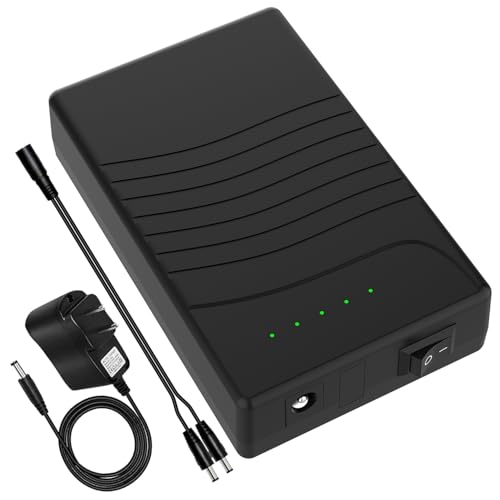 1. TalentCell YB1203000 — Best Small Pack for Light Loads | Check price on Amazon | |
 2. TalentCell YB1206000-USB — Best All-Round Pack for Most Buyers | Check price on Amazon | |
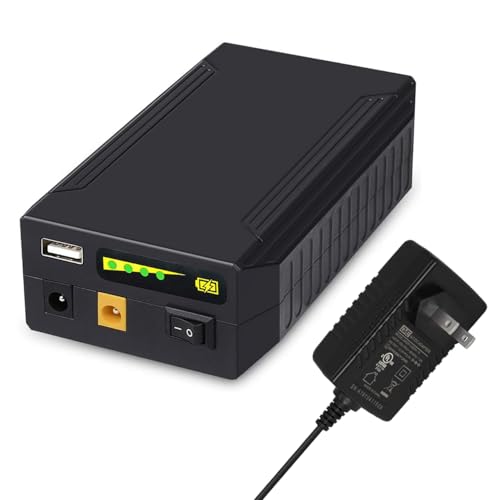 3. TalentCell YB1208300-USB — Best for Higher Current Draw | Check price on Amazon |
Key takeaways
- Compare the best 12 volt battery packs by capacity, output current and ports. Four rechargeable TalentCell packs for LED strips, CCTV, telescopes and portable gear.
As an Amazon Associate we earn from qualifying purchases.
A 12 volt battery pack is a simple product with a surprisingly easy way to buy the wrong one. Most small rechargeable 12-volt packs look alike in photos, yet they differ in the three things that decide whether your gear actually runs: usable capacity, maximum output current, and the connector on the output lead. A pack that powers an LED strip happily may shut down on a device that draws more current at startup, and a pack with the wrong barrel size will not connect at all without an adapter. This guide compares four rechargeable 12-volt packs from the same well-documented family, in four capacity steps, so the differences that matter are easy to see.
One fact about this product category needs to be stated plainly at the start, because it causes more returns than any other. These lithium-ion packs are built from cells with a nominal voltage of 11.1 volts, and their 12-volt output is not regulated to a fixed 12.0 volts. The listings for the packs below describe the output range as roughly 12.6 volts when fully charged, falling toward about 9 volts as the pack discharges. Most 12-volt LED, camera, and networking gear tolerates that range well, because it was designed for vehicle or battery power that also varies. Equipment that demands a tightly regulated 12-volt supply is a different case, and it needs a regulated supply or a pack with a regulated output, not a basic pack like these.
This guide is based on manufacturer and retailer product listings, not detailed research, and no pack here is described as personally tested. Capacity and output figures are taken from those listings.
Affiliate Disclosure: This article contains affiliate links. If you buy through a link on this page, we may earn a commission at no additional cost to you.
Quick Comparison
| Pack | Model | Capacity at 12V side | Max 12V output | Extra outputs |
|---|---|---|---|---|
| TalentCell 3000mAh | YB1203000 | 3,000mAh (11.1V nominal) | 3A | None on base model |
| TalentCell 6000mAh USB | YB1206000-USB | 6,000mAh (11.1V nominal) | 3A | USB 5V / 2A |
| TalentCell 8300mAh USB | YB1208300-USB | 8,300mAh, 99.9Wh class | 6A | 9V output, USB 5V |
| TalentCell 11000mAh USB | YB12011000-USB | 11,000mAh, 122Wh class | See listing for current limit | 9V output, USB 5V |
1. TalentCell YB1203000 — Best Small Pack for Light Loads
The YB1203000 is the smallest pack in this guide: a rechargeable lithium-ion pack rated at 3,000mAh on its 11.1-volt nominal rating, with a 12-volt DC output rated at up to 3 amps. The listing describes a weight of about 190 grams, which makes this the pack to carry when weight and bulk matter more than runtime — a small LED light panel, a single CCTV camera on a short deployment, a portable amplifier, or a light field load that only needs a few hours of power.
The kit, as listed, includes the pack, a splitter cable with one female to two male DC connectors, and a 12.6-volt wall charger. The splitter is more useful than it looks: it lets one pack feed two low-draw devices at once, as long as their combined draw stays within the 3-amp output limit. The output connector is the common DC5521 size — a 5.5mm outer barrel with a 2.1mm center pin, center positive — which matches a large share of 12-volt LED and camera gear. Confirm your device uses the same size and polarity before ordering, because DC5525 and reversed-polarity devices exist and look almost identical.
Charging is deliberately slow on this pack. The listing describes an eight-hour full charge with the included charger and presents that slow charge as a design choice for pack life. That is fine for gear you prepare the day before and poor for gear you need turned around in an hour, so plan around it. The listing also advises recharging the pack every few months in storage rather than leaving it in a low state of charge, which is standard care for lithium packs of this type.
Choose the YB1203000 if your load is light, your runtime need is short, and low weight is the priority. Move up the range if your device draws close to 3 amps, if you need USB power as well, or if you regularly run gear for a full evening or a full working day on one charge.
2. TalentCell YB1206000-USB — Best All-Round Pack for Most Buyers
The YB1206000-USB doubles the capacity of the smaller pack to 6,000mAh while keeping the same 12-volt output limit of 3 amps, and it adds a 5-volt USB output rated at up to 2 amps. That second output is what makes this the most flexible pack in the guide for mixed gear: a 12-volt camera, router, telescope mount, or LED strip on the DC output, and a phone or other USB device on the USB port, from one pack. The listing gives dimensions of about 5.1 by 1 by 3 inches, so it stays flat and easy to mount behind a panel, inside a camera case, or on the side of a portable setup.
The listing describes a full charge time of about seven hours with the included 12.6-volt charger, a splitter cable in the box, and a charge indicator on the charger that changes color when charging completes. As with the smaller pack, the 12-volt output range is listed as about 12.6 volts down to about 9 volts across discharge, and the output port is DC5521. Check both points against your device: a device with a low-voltage cutoff near the bottom of that range will stop earlier than the pack’s total capacity suggests, because the pack still holds charge it can no longer deliver at a voltage your device accepts.
This is the pack to buy when you do not have a specific reason to buy another one. It covers the most common uses — LED lighting, CCTV and IP cameras, modems and routers during outages, telescope mounts, and portable audio — with enough capacity for an evening or a modest work session, without the size and weight step up to the largest packs. Its limit is the same 3-amp ceiling as the small pack, so a device with a heavy startup surge, or several devices on a splitter, can exceed it even though the capacity is larger.
Choose the YB1206000-USB if you want one general-purpose pack for 12-volt gear plus occasional USB charging. Choose the 8300mAh model below instead if your load needs more than 3 amps, because capacity alone does not raise the current limit.
3. TalentCell YB1208300-USB — Best for Higher Current Draw
The YB1208300-USB is the step up that matters for demanding loads. Its capacity is listed at 8,300mAh in the 99.9Wh class, and — more importantly — its 12-volt output is rated at up to 6 amps, double the limit of the two smaller packs. That higher ceiling is what allows it to run loads the smaller packs cannot: brighter LED arrays, multiple cameras on one pack, fish finders, heated clothing elements rated for this supply type, and portable radios or field equipment with higher draw. It also adds a separate 9-volt output and a 5-volt USB output alongside the main 12-volt port, so one pack can feed gear of different voltages in the same setup.
Note the port detail in the listing before you buy cables: the 12-volt output uses the DC5521 size, while the 9-volt output is listed with a different barrel size. Using the wrong port is an easy mistake on a multi-output pack, and feeding a 12-volt device from the 9-volt port, or the reverse, produces exactly the kind of confusing fault that looks like a dead pack. Label your cables if you use more than one output.
The trade-off is size and weight. This pack is noticeably larger and heavier than the 6000mAh model, and it is the point in the range where a pack stops being something you tape to the back of a light panel and becomes something that sits in a case or on a table. For stationary and vehicle-based setups that is no penalty at all. For a wearable or handheld rig, weigh it honestly. A note on naming: some current listings title this model with a 9,000mAh figure while the model-level specification describes the 8,300mAh, 99.9Wh class pack under the same YB1208300-USB model number. Check the model number and the watt-hour figure on the listing you buy from, rather than relying on the title alone.
Choose the YB1208300-USB if your load draws, or surges, above 3 amps, if you need 9-volt and USB outputs as well as 12-volt, or if you want the longest runtime that still stays in a compact brick format. Choose the 11000mAh model below only if runtime, not current, is your remaining problem.
4. TalentCell YB12011000-USB — Best for Longest Runtime
ASIN: B016BJCRUO — Evidence level: candidate (Amazon US listing indexed with model YB12011000-USB; live product page could not be read directly in this check, so confirm the output current limit, availability, and kit contents on Amazon before buying.)
The YB12011000-USB is the largest pack in this guide, listed at 11,000mAh on the 12-volt side and in the 122Wh class overall, with 12-volt, 9-volt, and 5-volt USB outputs. It is aimed at the user whose problem is time rather than peak current: a camera or router that must run through a long outage, a telescope setup that must last a full night of observing, an LED lighting rig for a long event, or field equipment that cannot be swapped mid-session.
Two cautions belong with a pack of this size. First, watt-hours matter for travel. A pack in the 122Wh class exceeds the common 100Wh carry-on threshold that airlines apply to lithium batteries without airline approval, so do not assume this pack can fly in a cabin bag the way the smaller packs can; check your airline’s current rules before travelling with it. Second, a larger pack takes longer to recharge and rewards a routine: recharge it after use, do not store it fully depleted, and top it up periodically in storage, as the maker advises for this family of packs. Confirm the maximum 12-volt output current on the listing before relying on it for a high-draw load, because this guide’s reason to recommend the 8300mAh model for heavy loads is its clearly listed 6-amp rating.
In every other respect the same rules apply as for the rest of the range: DC5521 output on the 12-volt port, center positive, an output voltage that falls across discharge rather than holding at a fixed 12.0 volts, and a charger included in the kit as listed. If your device has a battery of its own and you are using a pack like this as a backup supply, test the combination at home before you depend on it in the field, including the switchover behaviour when the pack runs flat.
Choose the YB12011000-USB if runtime is the deciding factor and the pack will mostly stay in one place or travel by road. Choose the 8300mAh model if you need the clearly listed higher current output or a pack that stays under the common airline watt-hour threshold.
How to Choose a 12 Volt Battery Pack
Match the current limit to your load, not just the capacity
Capacity, in milliamp-hours or watt-hours, tells you how long a pack can run a load. The maximum output current, in amps, tells you whether it can run that load at all. Add up the rated draw of everything you plan to connect, including anything on a splitter, and leave headroom for startup surges, which are common on motors, pumps, and some lighting. A pack run at its limit is a pack that shuts down at the worst moment, because protection circuits are designed to cut output rather than overheat.
Convert capacity into realistic runtime
Divide the pack’s usable watt-hours by your device’s watts for a rough hour estimate, then discount the result. Voltage falling toward the bottom of the range, protection cutoffs, and conversion losses on USB outputs all reduce what you actually get. A device rated in amps at 12 volts is easy to convert: amps multiplied by volts gives watts. If your device only lists a charger rating, that rating is the maximum it can draw, not necessarily its running draw, so your runtime may be better than the estimate — but plan using the pessimistic number.
Check the connector three ways: size, polarity, and port
Size first: DC5521 is the most common barrel size in this category, but DC5525 and smaller sizes are widespread. Polarity second: center positive is standard for these packs, and a center-negative device connected to a center-positive pack can be damaged. Port third, on multi-output packs: confirm which physical port carries which voltage. An adapter cable can fix a size mismatch safely; it cannot fix a polarity mistake you did not notice.
Understand what unregulated output means for your device
Because these packs deliver roughly 12.6 volts down to about 9 volts, check your device’s acceptable input range in its manual. Wide-range devices, including most LED strips, cameras, routers, and vehicle accessories, are fine. Devices with a narrow input window, some medical devices, and equipment that must not be run outside its specified supply should not be powered from an unregulated pack. For a breast pump, medical, or other sensitive device mentioned in some listings, follow the device maker’s own power guidance first and treat a general-purpose pack as suitable only where that guidance allows it.
Know when a battery pack is the wrong product entirely
A small 12-volt pack is not a car battery, a jump starter, a golf cart battery, or a deep-cycle battery for a trolling motor. Those are different product types with different terminals, capacities measured in tens of amp-hours, and different charging systems. If your load is a motor that runs for hours, a vehicle system, or anything with battery clamps rather than a barrel plug, you need that other product type, and no pack in this guide is a substitute for it.
Safety and Care Notes
Charge these packs only with the charger supplied or specified for them, on a non-flammable surface, and do not leave a charging pack on bedding or carpet. Do not use a lithium pack that is swollen, punctured, or has been exposed to water, and do not modify or open the pack. Keep packs away from high humidity and heat, recharge them periodically during long storage instead of leaving them flat, and dispose of an end-of-life pack through a battery recycling route rather than household waste.
Frequently Asked Questions
Why does my 12-volt device stop working before the pack is empty?
Usually because the pack’s output voltage has fallen below the minimum your device accepts. These packs deliver a falling voltage, roughly 12.6 volts down to about 9 volts, so a device with a cutoff at, for example, 10.5 volts will stop with charge still in the pack. A larger pack helps, because it spends more of its runtime above your device’s cutoff.
Can one pack run two devices at once?
Yes, with the splitter cable included with several of these packs, as long as the combined current draw stays within the pack’s output limit and both devices accept the same voltage range. Add the two devices’ rated draws together before assuming it will work.
Are these packs allowed on a plane?
Packs at or below 100 watt-hours are generally permitted in carry-on baggage under common airline rules, which covers the three smaller packs in this guide. The largest pack, in the 122Wh class, sits above that threshold and typically needs airline approval. Rules vary by airline, so check before you travel, and always carry lithium packs in the cabin rather than checked baggage.
Verdict
Most buyers should start with the TalentCell YB1206000-USB: it doubles the small pack’s capacity, adds a USB output, and stays compact enough to mount almost anywhere. Buy the YB1203000 instead if weight is everything and the load is light. Buy the YB1208300-USB if your load needs more than 3 amps or you also need a 9-volt output, and buy the YB12011000-USB only when runtime is the whole problem and the pack will not need to fly. In every case, confirm the model number, the output current limit, and the connector size on the product page before ordering — those three checks prevent nearly every bad purchase in this category.