Key takeaways
- Compare the best portable water filters for hiking, with flow rate, weight, filter life, and ease of use to keep your drinking water safe on the trail.
A mountain stream can look clear and still carry bacteria and protozoa that ruin a hiking trip. A portable water filter turns that stream into drinking water without hauling liters from the trailhead, and the right one fits your pack, your pace, and the way you like to drink. The five filters below cover the main designs — squeeze, straw, pump, and press — so you can match the tool to your trip instead of guessing at the shelf.
We compared squeeze filters for solo hikers, a straw for the lightest possible kit, a pump for groups, and a press purifier for travel where viruses matter. Each pick lists its specs from its Amazon product page, so you can compare flow, weight, and filter life side by side before you buy.
Quick Picks
As an Amazon Associate we earn from qualifying purchases
| Product | Best for | Key spec from title |
|---|---|---|
| Sawyer MINI | Ultralight solo hikers | 0.1 micron, 2 ounces |
| LifeStraw Personal | Lightest possible kit | 0.2 micron straw, 1.6 ounces |
| Katadyn BeFree 1.0L | Fast flow on the move | 2 liters per minute, 2.3 ounces |
| GRAYL GeoPress | Virus protection while traveling | 24 ounces in 8 seconds |
| Survivor Filter PRO Extender | Groups and emergency kits | 0.01 micron pump, 500 ml per minute |
How to Choose
Match the filter type to how you drink
A squeeze filter screws onto a pouch or a standard disposable bottle, so you fill it, squeeze, and drink or pour into another bottle. A straw filter has you drink directly from the source, which is simple but means you cannot fill a bottle for later or filter water for cooking. A pump filter pulls water through a hose and pushes it into any container, which suits groups. A press purifier fills a bottle, then you press the inner cartridge down to purify a full serving in seconds. Think about whether you drink on the move, fill bottles at camp, or need water for meals, and pick the motion that fits.
Weigh flow against weight
Flow is the speed at which clean water comes out, and it shapes every water stop. A fast filter like the BeFree moves two liters a minute, so a short stop fills a bottle quickly. A slower squeeze filter takes longer, but it weighs only two ounces and disappears into a pack pocket. A pump filter moves a steady half liter a minute and handles murky water better, yet it weighs close to thirteen ounces. Decide how much time you want to spend at each source and how much weight you will carry all day, because the lightest filter is not always the fastest one.
Check filter life and field care
Filter life tells you how much water a filter can treat before its cartridge or membrane needs replacement. A squeeze filter rated for 100,000 gallons can last years of regular hiking, while a press purifier cartridge rated for 300 cycles needs a fresh cartridge after a few hundred uses. Field care matters just as much: squeeze filters need backflushing with clean water to keep flow strong, and a membrane that clogs in silty water slows down fast. Look for a design you can clean on the trail with the tools that come in the box.
Know what it removes — and what it does not
Most hiking filters use a hollow fiber membrane with a 0.1 or 0.2 micron pore size, which removes bacteria, protozoa, and microplastics from clear backcountry water. They do not remove viruses, which are smaller than the pores, and they do not remove dissolved chemicals or salt. A purifier like the GeoPress adds electroadsorption and activated carbon, so it also handles viruses and improves taste and odor. If you hike in North America, a filter is usually enough; if you travel where waterborne viruses are a real concern, a purifier is the safer pick.
The 5 Best Options
Sawyer MINI Water Filter SP128

The Sawyer MINI is the classic ultralight squeeze filter, and it earns its place by doing a lot in a two-ounce package. It screws onto the included 16-ounce pouch, a standard disposable bottle, or a hydration pack, and the drinking straw lets you sip straight from a stream when you do not want to fill anything. Its 0.1 micron hollow fiber membrane removes bacteria, protozoa, and microplastics, and the rated capacity of 100,000 gallons means one filter can cover years of trips. Backflushing with the included cleaning plunger keeps the flow strong after silty sources.
Specs
- 0.1 micron absolute hollow fiber membrane
- Weighs 2 ounces and fits in the palm of your hand
- Rated up to 100,000 gallons by the manufacturer
- Includes a 16-ounce reusable squeeze pouch, 7-inch drinking straw, and cleaning plunger
- Removes bacteria, protozoa, and microplastics
- Attaches to standard disposable water bottles and hydration packs
Best for: Solo hikers who want the lightest squeeze filter that still fills bottles.
Watch out for: The 16-ounce pouch means frequent refills for a group, and flow slows in silty water until you backflush.
ASIN: B00FA2RLX2
LifeStraw Personal Water Filter
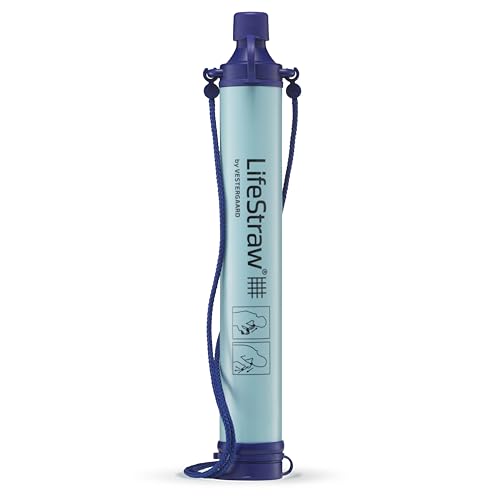
The LifeStraw Personal is the simplest filter on this list: a straw you dip into a stream and drink through, with no pouch, no pump, and no moving parts. Its 0.2 micron hollow fiber membrane removes bacteria, parasites, and microplastics, and it lasts up to 4,000 liters, which is enough drinking water for one person for years. At 1.6 ounces it is the lightest pick here, and it needs no electricity or batteries. It meets US EPA and NSF P231 drinking water standards, and it stops letting water through when it reaches the end of its life, so you know when it is done.
Specs
- 0.2 micron hollow fiber membrane
- Lasts up to 4,000 liters (1,000 gallons)
- Weighs 1.6 ounces
- Dimensions 9 x 1.2 inches
- BPA-free plastic construction
- No electricity or battery power required
- Model number LSPHF038
- 1-year warranty
Best for: Hikers who want the lightest possible filter and drink straight from the source.
Watch out for: You cannot fill a bottle or filter water for cooking, and the 9-inch length is awkward in very shallow sources.
ASIN: B006QF3TW4
Katadyn BeFree 1.0L Water Filter

The Katadyn BeFree is the fastest squeeze filter here, moving up to two liters a minute through its 0.1 micron EZ-Clean membrane. The collapsible 1.0-liter flask fills easily from a stream, folds flat when empty, and weighs only 2.3 ounces with the filter attached. Cleaning is simple: shake or swish the membrane in clean water instead of carrying a syringe, which keeps the kit light. The filter handles up to 1,000 liters before replacement, and the wide 42 mm opening makes filling from a fast stream quick. It is the pick for hikers who hate waiting at water stops.
Specs
- 0.1 micron EZ-Clean hollow fiber membrane
- Maximum flow rate 2 liters per minute
- Capacity up to 1,000 liters
- Weighs 2.3 ounces including the 1-liter soft flask
- Collapsible 1.0-liter HydraPak flask packs flat when empty
- BPA-free construction
- Model number 8018006
Best for: Trail runners and fast hikers who want the quickest fill at every source.
Watch out for: The wide mouth does not fit narrow-mouth bottles, and the membrane can clog in very dirty water.
ASIN: B075X5R67T
GRAYL GeoPress 24 oz Water Purifier Bottle
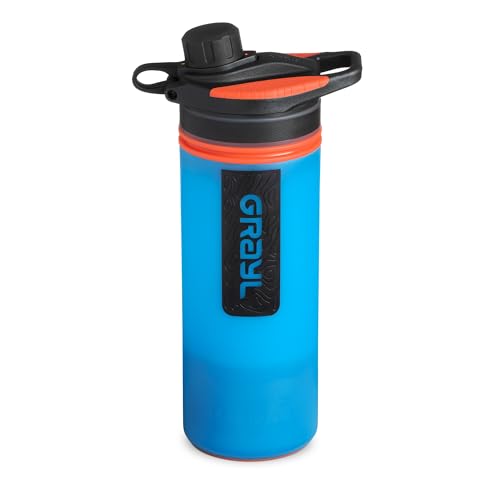
The GRAYL GeoPress is the only purifier on this list, and it is the pick when viruses matter as much as bacteria. Fill the 24-ounce outer cup from any freshwater source, press the inner cartridge down, and you have purified water in about eight seconds. Its electroadsorption and ultra-powdered activated carbon remove viruses, bacteria, and protozoa, plus chemicals, heavy metals, and microplastics, while improving taste and odor. The bottle is BPA-free, survives drops up to six feet when full, and the replaceable cartridge is rated for 300 cycles. It weighs 15.9 ounces, so it is heavier than a squeeze filter, but it is the most complete protection here.
Specs
- Capacity 24 fluid ounces (710 ml)
- Weighs 15.9 ounces
- Purifies 24 ounces in 8 seconds (5 liters per minute)
- Replaceable filter and purifier cartridge rated for 300 cycles
- Removes viruses, bacteria, and protozoa, plus chemicals, heavy metals, and microplastics
- BPA-free polypropylene bottle
- Model number 411-BAL
- 10-year warranty
Best for: Travelers and hikers who need virus protection as well as filtration.
Watch out for: At 15.9 ounces it is the heaviest pick here, and each press only makes 24 ounces, so groups need repeated presses.
ASIN: B09255PYRM
Survivor Filter PRO Extender Series

The Survivor Filter PRO Extender Series is a hand-pump filter built for groups, base camps, and emergency kits. Its three-stage system runs water through a 0.1 micron pre-filter, a carbon filter, and a 0.01 micron internal ultra filter, removing viruses, bacteria, and protozoa while reducing heavy metals and improving taste. The pump moves 500 ml a minute into any container, and the Extender kit adds a second set of replacement filters, extra hoses, a backwashing syringe, and two carrying cases. The pre-filter and ultra filter are rated up to 100,000 liters, and the carbon filter up to 2,000 liters, so the kit is made for long service.
Specs
- 0.01 micron internal ultra filter
- Flow rate 500 ml per minute
- Weighs 12.8 ounces
- Dimensions 3.2 x 2 x 6.5 inches
- Pre-filter and ultra filter rated up to 100,000 liters; carbon filter up to 2,000 liters
- Includes extra filter set, backwashing syringe, hoses, and two carrying cases
- Model number L610H
- Lifetime warranty against manufacturer defects
Best for: Groups and emergency kits that need a pump filter with spare filters included.
Watch out for: The pump is heavier and bulkier than any squeeze filter here, and the listing has shown gaps in availability, so confirm stock before buying.
ASIN: B07D2L6LPQ
Which One Fits Your Situation
Counting every ounce on a solo hike
Take the LifeStraw Personal if you drink straight from streams and want the lightest kit possible at 1.6 ounces. Take the Sawyer MINI if you also want to fill a bottle or a hydration pack, since it screws onto standard bottles and still weighs only two ounces. Both disappear into a hip belt pocket, and neither needs batteries or a pump.
Filling bottles for a group at camp
Take the Survivor Filter PRO Extender, since its pump fills any container at a steady 500 ml a minute and the extra filter set keeps the group supplied for a long trip. The Katadyn BeFree is the faster backup for one person, but its one-liter flask means repeated fills when several people need water at once.
Traveling where viruses are a concern
Take the GRAYL GeoPress, since it is the only pick here that purifies as well as filters, removing viruses along with bacteria and protozoa. The eight-second press gives you a full 24 ounces at a time for drinking and cooking, and the activated carbon also improves taste and odor in tap water abroad.
Building an emergency kit
Take the Survivor Filter PRO Extender for its 100,000-liter filter life, spare filters, and lifetime warranty, or the Sawyer MINI for a compact filter that stores for years and covers a family with one pouch. Either one pairs well with a stored water supply at home, and both work without electricity.
Common Mistakes
- Assuming every filter removes viruses — most hiking filters stop bacteria and protozoa only, so a purifier is needed where viruses are a concern.
- Waiting until flow dies before backflushing — rinse or backflush after silty sources, not after the filter has already clogged.
- Letting a hollow fiber filter freeze — a frozen membrane can crack, so keep the filter in a pocket or sleeping bag on cold nights.
- Using a straw filter to fill a bottle — a straw only works when you drink directly from the source, so bring a squeeze or pump filter for cooking water.
- Forgetting to check cartridge life before a long trip — a press purifier cartridge rated for 300 cycles needs replacing before it runs out on the trail.
Frequently Asked Questions
Do portable water filters remove viruses?
Most hiking filters do not remove viruses, because virus particles are smaller than the 0.1 or 0.2 micron pores in a hollow fiber membrane. They remove bacteria, protozoa, and microplastics, which covers the main risks in backcountry water. A purifier like the GRAYL GeoPress adds electroadsorption and activated carbon, so it also removes viruses. If you travel where waterborne viruses are a known risk, choose a purifier.
How often should I backflush a squeeze filter?
Backflush after every trip, and sooner if flow drops noticeably during a hike. Silty or cloudy water clogs a membrane faster than clear water, so a backflush at camp keeps the next day moving. Use only clean filtered water for backflushing, and follow the cleaning steps in the box. A filter that is cleaned regularly keeps its flow far longer than one that is left until it barely drips.
Can I use a water filter in freezing weather?
You can, but you must keep the filter from freezing. A hollow fiber membrane can crack when the water inside it freezes, which ruins its ability to filter safely. Carry the filter in an inside pocket during the day and sleep with it in your sleeping bag at night. If a filter has frozen solid, replace it rather than trusting it again, since the damage is invisible from the outside.
How long does a filter last before replacement?
It depends on the design. A Sawyer MINI is rated up to 100,000 gallons, and a Survivor Filter PRO pre-filter and ultra filter up to 100,000 liters, so either can last years of hiking with care. A Katadyn BeFree is rated up to 1,000 liters, and a GRAYL GeoPress cartridge for 300 cycles, so those need replacement sooner. Replace a cartridge when flow stays slow after cleaning.