We independently review everything we recommend. When you buy through our links, we may earn a commission. As an Amazon Associate we earn from qualifying purchases.
Does a Silver Oxide Battery Last Longer Than Lithium? A Plain Guide
Does silver oxide battery last longer than lithium? How the two chemistries compare in watches and small devices, with four live silver oxide picks.
Neither chemistry always wins. A silver oxide battery usually lasts longer than a lithium battery inside a quartz watch, because it holds a flat 1.55 volts until near the end of its life, and a watch needs steady voltage to keep time. A lithium coin battery usually lasts longer in storage and in very low-drain use, because it stores more energy in a similar size and loses charge more slowly on the shelf. The honest answer is that the two chemistries serve different jobs, and they are not interchangeable: silver oxide cells run at 1.55 volts and lithium coin cells run at 3 volts, so a device built for one cannot take the other. The four picks in this guide are all silver oxide button cells with live Amazon US listings, verified on the day this guide was written, and the comparison below explains where each chemistry runs longer and why.
The numbers below are general guidance for button and coin cells, not figures from practical use of the picks in this guide. A silver oxide watch cell typically runs a quartz watch for about 2 to 3 years. A lithium coin cell in a low-drain device, such as a remote or a memory backup, can run for 5 years or more, and lithium coin cells keep in storage for up to 10 years. A silver oxide cell keeps in storage for about 3 to 5 years, depending on the brand. Those ranges overlap, which is why the question has no single winner: the device, the drain, and the storage time all move the answer.
The most common confusion in this topic is the LR44. The LR44 size covers two different chemistries in the same holder: the SR44 silver oxide cell and the LR44 alkaline cell. Both fit the same device, but the silver oxide cell holds its voltage flat while the alkaline cell sags as it drains, so a watch runs longer and keeps better time on the silver oxide cell. One listing in this guide shows the same trap in reverse, and the pick section explains it.
At a Glance
Short answer: silver oxide usually runs longer in a watch; lithium usually runs longer in storage and in very low-drain use
Silver oxide voltage: 1.55 volts, flat until near the end of life
Lithium coin voltage: 3 volts, a different cell for a different device, not a drop-in substitute
Silver oxide watch life: typically about 2 to 3 years in a quartz watch
Lithium coin storage life: up to 10 years on the shelf
Silver oxide storage life: about 3 to 5 years, depending on the brand
All four picks: silver oxide button cells, 1.5 to 1.55 volts, for watches, calculators, and medical devices
Watch out for: LR44 covers both silver oxide and alkaline cells in the same size, and the two are not equal
How to Choose
Size code comes first. Button cells carry codes like 357, 303, SR44, 364, SR621SW, 377, and SR626SW. The code fixes the diameter, the height, and the chemistry. A 357 cell measures 11.6 by 5.4 mm, while a 364 cell measures 6.8 by 2.1 mm, and the two do not fit the same holder. Read the code printed on the old cell, or find it in the device manual, and match it exactly. The picks in this guide cover the 357 and 303 size and the 364 size, and the pick section names the size of each one.
Chemistry comes second, and it matters more than brand. Silver oxide cells carry SR codes and run at 1.55 volts with a flat discharge curve, which is why watch makers specify them: a quartz watch needs steady voltage to keep time, and a silver oxide cell gives it until near the end of its life. Alkaline cells carry LR codes and run at 1.5 volts with a sloping discharge curve, so a watch on an alkaline cell loses time as the cell drains. Lithium coin cells carry CR codes and run at 3 volts, so they belong in devices built for 3 volts, not in a 1.55-volt watch. All four picks in this guide are silver oxide, and this guide names the chemistry of each one from the listing.
Capacity comes third. Capacity in milliamp-hours tells you how much charge the cell holds. The Energizer 357 cell holds about 138 milliamp-hours per the Energizer data sheet. The Renata 364 cell holds about 19 milliamp-hours per its listing bullets. The two numbers look far apart because the cells are far apart in size: the 357 is a large button cell and the 364 is a slim watch cell. Compare capacity only within the same size code, never across sizes.
Pack count and storage life come fourth. A 3-pack suits a household with several watches or calculators, a single cell suits one device, and a 2-pack suits a watch that takes two cells. The Energizer picks in this guide hold power for up to 5 years in storage, and the Duracell pick is guaranteed for 3 years in storage. Buy the count that matches your devices, and keep spare cells in a cool, dry place away from metal objects that could short them.
Listing accuracy comes fifth, because button-cell listings carry more catalog errors than most products. One listing in this guide calls a silver oxide cell alkaline in one field and silver oxide in another. One listing gives three different pack counts in three different fields. One listing gives the wrong diameter for its own size code. The pick section states each conflict plainly rather than hiding it, and you should confirm the size code and the chemistry on the live product page before you buy.
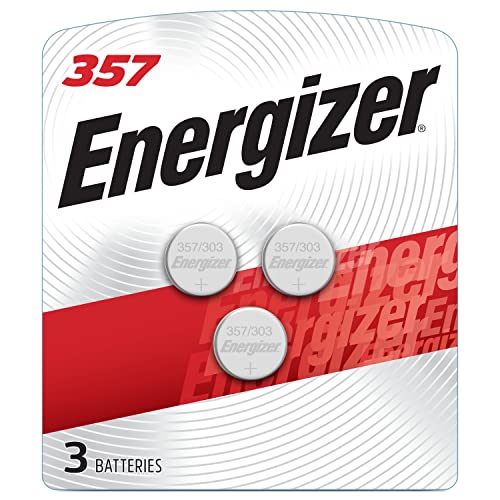
The Energizer 357/303 3-pack is the standard pick: three 1.5-volt silver oxide button cells for watches, calculators, and medical devices, with the listing stating that the cells hold power for up to 5 years in storage and use zero-mercury chemistry. The cells replace a long list of codes, including 303, 357, D303, D357, SR44SW, SR44W, and WS14, and the Energizer data sheet gives a typical capacity of about 138 milliamp-hours at 1.55 volts nominal.
One catalog error in this listing is worth noting. The detail table gives the composition as alkaline in one field while the title, the bullets, and the cell-type field all say silver oxide. This guide follows the title and the cell-type field: these are silver oxide cells. The size is the large 11.6 by 5.4 mm button cell, which fits watches, calculators, glucose monitors, and key fobs that take the 357 or 303 size. Buy this one if your device takes a 357 or 303 cell, you want a 3-pack from a major brand, and you want the longest storage claim in this guide.
The Energizer LR44 2-pack is the same 357 and 303 silver oxide cell in a smaller pack: 1.5-volt silver oxide button cells for calculators, key fobs, and medical devices, with the listing stating that the cells hold power for up to 5 years in storage and use zero-mercury chemistry. The cells replace the same codes as the 3-pack above, including 303, 357, D303, D357, SR44SW, and WS14.
This listing gives three different pack counts in three different fields, and this guide states the conflict plainly. The title says a 2-pack, the bullets say a 3-pack, and the detail table says a 6-count. This guide describes the pick as a 2-pack, following the title, and tells you to confirm the count on the live product page before you buy. Apart from the count, the cell is the same Energizer 357 and 303 silver oxide cell as the pick above, at the same 1.5 volts. Buy this one if your device takes a 357 or 303 cell and you want a smaller pack than the 3-pack above, and confirm the count on the live page first.
The Duracell 303/357/76 single is the single-cell pick: one 1.5-volt silver oxide button cell for watches, medical devices, calculators, and more, guaranteed for 3 years in storage. The listing states that the cell is equivalent to SR44, SR44W, EPX76, SR44SW, 303, 357, D303, D357, V303, V357, and SR1154 types, and the capacity field gives a figure of 165, read here as milliamp-hours, although the field labels no unit.
One catalog error in this listing is worth noting. The detail table gives reusability as rechargeable, which is wrong: these are single-use cells, and this guide states that plainly. The listing also gives an amperage field of 1.5 amps, which this guide does not use, because a button cell does not deliver that figure in normal use. The cell weighs 2.09 grams per the listing. Buy this one if you need a single 303 or 357 silver oxide cell, you want the Duracell brand, and you want a 3-year storage guarantee in writing on the listing.
The Renata 364 2-pack is the slim watch-cell pick: two 1.55-volt silver oxide cells for watches, cameras, calculators, car security alarms, keyless remotes, and computer memory backup. The bullets give a nominal capacity of 19 milliamp-hours and state superior leakage resistance with low self-discharge, and the listing names the Swiss maker Renata. The 364 is a much smaller cell than the 357: it fits slim watches that the larger button cells cannot fit.
This listing carries three catalog errors, and this guide states all three. First, the bullets give 19 milliamp-hours while the detail table gives 16 milliamp-hours, and the Renata data sheet gives 20 milliamp-hours, so this guide uses the bullet figure of 19 and flags the spread. Second, the detail table gives a diameter of 5.8 mm, which conflicts with the Renata data sheet figure of 6.8 mm for the SR621SW size, so confirm the diameter with the seller. Third, the detail table gives the IEC model as SR521, which is a different size, so ignore that field and follow the title and the 364 code. Buy this one if your watch takes a 364 cell, you want a Swiss-made silver oxide cell, and you have confirmed the size code on your old cell.
Comparison Table
Battery
Size code
Voltage
Capacity
Pack count
Storage claim
Energizer 357/303
357 / 303, SR44
1.5V (1.55V nominal)
About 138 mAh
3
Up to 5 years
Energizer LR44
357 / 303, SR44
1.5V
About 138 mAh
2 (title; see pick)
Up to 5 years
Duracell 303/357/76
303 / 357, SR44
1.5V
165 (field, unit unlabeled)
1
3 years guaranteed
Renata 364 SR621SW
364, SR621SW
1.55V
19 mAh (bullets)
2
Low self-discharge
Note: the Energizer 357 capacity of about 138 milliamp-hours comes from the Energizer data sheet. The Renata capacity reads 19 milliamp-hours in the bullets, 16 in the detail table, and 20 in the Renata data sheet. The Duracell capacity field gives 165 with no unit labeled.
Which One Fits Your Situation
For a watch, calculator, or medical device that takes a 357 or 303 cell, choose between the Energizer 3-pack, the Energizer 2-pack, and the Duracell single: the 3-pack suits a household with several devices, the 2-pack suits a smaller need with the count conflict noted above, and the single suits one device with a 3-year storage guarantee in writing. For a slim watch that takes a 364 cell, the Renata 2-pack is the only pick here, and only that size: confirm the 364 code on your old cell before you buy, because a 357 cell will not fit a 364 holder. For a device that takes a lithium coin cell, none of these picks fit, because these are 1.55-volt silver oxide cells and a lithium coin cell runs at 3 volts. Match the size code first, the chemistry second, and the pack count last.
FAQ
Does a silver oxide battery last longer than lithium?
It depends on the device. In a quartz watch, a silver oxide cell usually runs longer than a lithium cell of comparable size would, because the watch needs a flat 1.55 volts and the silver oxide cell holds that voltage until near the end of its life. In storage and in very low-drain use, a lithium coin cell usually runs longer, because it stores more energy and loses charge more slowly on the shelf. Neither chemistry always wins, and the two are not interchangeable, because they run at different voltages.
Can I use a lithium CR2032 instead of a silver oxide SR44?
No. A CR2032 lithium coin cell runs at 3 volts and measures 20 by 3.2 mm, while an SR44 silver oxide cell runs at 1.55 volts and measures 11.6 by 5.4 mm. The voltage is nearly double and the size is different, so the lithium cell will not fit the holder and would damage a device built for 1.55 volts even if it did. Match the size code and the voltage printed on the old cell.
Why do watches use silver oxide batteries?
A quartz watch needs a steady voltage to keep time, and a silver oxide cell holds 1.55 volts flat through most of its life, then drops sharply at the end. An alkaline cell of the same size sags gradually as it drains, so a watch on an alkaline cell loses time long before the cell is empty. That flat discharge curve is the reason watch makers specify silver oxide cells, and it is also the reason a silver oxide cell runs a watch longer than an alkaline cell of the same size.
How long does a silver oxide watch battery last?
Typically about 2 to 3 years in a quartz watch, depending on the watch, the drain, and the cell size. A large 357 cell in a simple analog watch can run toward the top of that range, while a slim 364 cell in a watch with extra functions can run toward the bottom. A cell that dies in months usually points to a watch fault or a cell that sat on a shelf for years before use, not to the chemistry itself.
What is the difference between SR44 and LR44?
SR44 and LR44 share the same size and fit the same holder, but SR44 is silver oxide and LR44 is alkaline. The silver oxide SR44 holds 1.55 volts flat and runs a watch longer with steadier timekeeping. The alkaline LR44 sags as it drains and suits low-drain gear like remotes and toys better than watches. Read the code on the old cell: SR means silver oxide, LR means alkaline, and the two are not equal even though they fit the same device.
Final Take
A silver oxide battery lasts longer than a lithium battery where steady voltage matters, and a lithium battery lasts longer where storage life and very low drain matter. In a quartz watch, silver oxide is the right answer, because its flat 1.55 volts keep time accurately for about 2 to 3 years. In a remote or a memory backup, lithium is the right answer, because its 3 volts and long shelf life suit that job. The two are not substitutes for each other, and neither is a substitute for an alkaline cell of the same size if steady voltage matters. Match the size code on your old cell, choose silver oxide for a watch, and buy the pack count that matches your devices: the Energizer 357 3-pack for a household, the Duracell single for one device, or the Renata 364 2-pack for a slim watch, with the listing conflicts above noted so you can confirm before you buy.
B
Beckykinkead Editorial Team
We compare specs, materials and verified owner reviews before a product earns a spot. Rankings are never paid.
Affiliate disclosure. As an Amazon Associate we earn from qualifying purchases at no extra cost to you. Prices accurate as of the date shown.
How much is a Prius hybrid battery? It turns on generation, new or reconditioned modules, pack or module set, core exchange, and warranty. See 5 Prius packs.
How many watts does a motorcycle battery have? Cranking watts and watt-hours for 12V AGM motorcycle batteries, with five live picks and the math shown.
Can Prius be driven long term without hybrid battery? The short answer, what fails first, and five verified live Prius hybrid battery modules and sets.
Find the best portable solar chargers for RVs, from foldable 100W panels to 220W bifacial kits, with wattage, controller and compatibility guidance today.
Find the best cock extenders in this clinical guide to traction devices, adjustable rods, comfort, fit, materials, safety, and what to check before buying.
Compare the best beauty cameras for flattering selfies and tutorials, from the Sony ZV-1 to the Canon G7 X Mark III and the Fujifilm Instax Mini Evo pick.
Compare non-electric greenhouse heaters that run on propane, with BTU output, coverage, ignition and safety shutoffs explained for off-grid growing spaces.
Compare gaming mice with extra programmable keys and thumb buttons, from a 20-button MMO mouse to an 11-button all-rounder, with sensors and layouts explained.
Looking for the best dual boiler espresso machines for couples? Compare four machines built for two-drink mornings, steam-while-brewing speed and routines.
Compare the best compact swim spas for outdoor renovation planning, from 12-foot trainers to 13-foot family models, and plan your pad, power, and access.

 1. Energizer 357/303 Silver Oxide Button Batteries, 3-Pack
 2. Energizer LR44 Silver Oxide Button Batteries, 2-Pack
 3. Duracell 303/357/76 Silver Oxide Button Battery, 1-Pack
 4. Renata 364 SR621SW Silver Oxide Watch Battery, 2-Pack