Key takeaways
- Compare five shooting targets for range practice, with paper silhouettes, steel gongs, spinner targets and sticky splatter designs for every caliber.
A good range session lives or dies on what you hang downrange. The right target shows every hit clearly, matches your firearm and distance, and holds up for the whole session. The wrong one leaves you squinting, walking back and forth, or swapping sheets after a few magazines. This guide compares five targets that cover the main styles: big paper bullseyes, sticky splatter rounds, a steel torso gong, a self-sealing spinner, and a precision sight-in sheet.
Each pick below serves a different job, from slow-fire group work to fast reactive drills. Paper suits zeroing and record-keeping, steel suits volume shooting and instant sound, and splatter designs suit shooters who want to read hits from the firing line. Use the quick picks table to match a target to your session, then read the detail sections before you load up.
Quick Picks
As an Amazon Associate we earn from qualifying purchases
| Product | Best for | Key spec |
|---|---|---|
| Splatterburst 18 x 24 Bullseye Splatter Target | Long-distance bullseye work | 18 x 24 inches, 10-pack |
| Birchwood Casey Shoot-N-C 6-Inch Round Target | Quick pistol drills | 60 targets, self-adhesive |
| Highwild AR500 Steel Torso Gong Target | Centerfire handgun practice | 7 x 12 inches, 1/2-inch AR500 steel |
| Champion DuraSeal Green Double Spinner Target | Reactive plinking sessions | 17 to 50 caliber, self-sealing |
| Champion Redfield Precision Sight-In Target | Scope zeroing and group work | 10-pack, 8 x 8.5 inches |
How to Choose
Match the Target to Your Firearm and Distance
Handguns at lane distances suit smaller paper and steel, while rifles at longer distances call for larger faces and bold aim points. A 6-inch round reads well at pistol distance but shrinks to a dot past 50 yards, so pair distance with size. Rimfire shooters can use almost any paper or light steel, while centerfire handguns and rifles need targets built for heavier hits. Check the caliber range on each listing before you buy, and match the target to the longest distance you plan to shoot that day.
Paper or Steel: Feedback, Upkeep, and Range Rules
Paper targets give you a permanent record of every group, which helps when you adjust a sight or compare loads. Steel gives instant sound and movement, so you know the moment a shot lands without walking downrange. Steel also lasts far longer, though it needs a safe hang angle and enough distance to keep fragments away from the line. Some indoor lanes allow paper only, so confirm the rules before you bring steel. Many shooters keep both kinds in the bag and switch by drill.
Size, Visibility, and Reading Hits at Distance
A target you cannot see is a target you cannot use. Large bullseyes and bright splatter rings help at longer distances, while small aim points sharpen close work. Fluorescent yellow and orange bursts show up well against dark backers and in flat light, and high-contrast black faces help the eye settle on center. Think about your eyesight too: shooters with reduced vision gain a lot from splatter designs that bloom around each hole. Pick the largest face that still challenges you at your usual distance.
Mounting, Backers, and What Your Range Allows
A target is only as good as its mount. Paper needs a firm backer or a clip frame so wind cannot fold it, and adhesive designs need a clean, dry surface to hold. Steel needs a rated hanger or chain and a slight forward lean so fragments deflect downward. Freestanding spinner frames should sit on level ground where they cannot tip toward the line. Before a session, check that your range permits the target type, the caliber, and the minimum distance, since rules vary widely between indoor lanes and outdoor bays.
The 5 Best Options
Splatterburst 18 x 24 Bullseye Splatter Target

This large paper sheet puts a 4-inch bullseye on an 18 by 24 inch face, so it reads well from the firing line at pistol distance and beyond. Hits burst bright fluorescent yellow around each hole, which means you can call shots and check groups without a spotting scope or a walk downrange. The paper stock is sturdy enough to hang flat on a backer, and the 10-pack covers several sessions or a full day with friends. It suits slow-fire practice, sight checks, and anyone who wants clear feedback on every string.
Specs
- 18 x 24 inch paper target with a 4-inch bullseye
- 10 targets per pack
- Hits burst bright fluorescent yellow upon impact
- Round shape, paper material
- Made in USA
Best for: Shooters who want large, easy-to-read bullseye targets for pistol and rifle lanes.
Watch out for: The big sheet needs a full-size backer or frame, and wind can fold it if the corners are left loose.
Birchwood Casey Shoot-N-C 6-Inch Round Target

These 6-inch adhesive rounds stick straight onto a backer or an old target face, so setup takes seconds and there is no tape or staples to fumble with. Each hit shows a bright halo around the hole, which makes shot placement obvious at a glance. The pack holds 60 targets plus 720 pasters, so you can cover old holes and keep a single sheet in play for a long session. The compact size suits pistol lanes, rimfire plinking, and drills where you work several aim points at once.
Specs
- 6-inch round self-adhesive targets
- 60 targets and 720 pasters per pack
- Paper material, multicolor face
- Item weight 0.6 pounds
- Part number BC-34550
- UPC 029057345506
Best for: Pistol drills and rimfire sessions where you want many aim points on one backer.
Watch out for: The adhesive backing needs a clean, dry surface, and the small face is hard to read past 50 yards.
Highwild AR500 Steel Torso Gong Target

This torso-shaped steel plate brings the ring and movement that paper cannot match. The 7 by 12 inch face is cut from half-inch AR500 alloy steel, so it stands up to repeated centerfire handgun hits and resets itself with every shot — no pasters, no sheet swaps, no walks downrange. The neon color and torso outline give a clear aim point at lane distance, and the laser-cut edges keep the shape clean. Hang it from a rated mount with a slight forward lean and it will serve for many sessions.
Specs
- 7 x 12 inch torso silhouette, 1/2-inch thick
- AR500 alloy steel, laser cut
- Neon color face
- Manufacturer part number HOST-M2212AM
- UPC 708111224260
Best for: Centerfire handgun practice where you want instant sound and movement.
Watch out for: Steel needs a rated hanger, a safe minimum distance, and a range that permits steel targets.
Champion DuraSeal Green Double Spinner Target
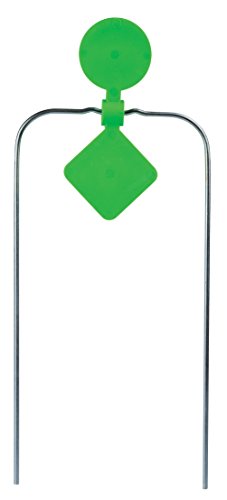
This self-sealing spinner turns a plain plinking session into a reactive game. Two green paddles spin and wobble on impact, so every hit gives instant visual feedback without a trip downrange. The DuraSeal material lets bullets pass through with little damage, which keeps the target in play for many rounds, and the whole unit weighs just 11.2 ounces, so it rides easily in a range bag. It handles 17 caliber through 50 caliber rifles and handguns, which covers rimfire plinking and most centerfire work in one unit.
Specs
- DuraSeal self-sealing material
- 16 x 8 x 1 inches, 11.2 ounces
- Handles 17 caliber through 50 caliber rifles and handguns
- Spinning targets wobble on impact to show hits
- Brand Champion Traps and Targets
Best for: Reactive plinking and group sessions where shooters want instant feedback.
Watch out for: The light frame needs level ground and a clear lane behind it, since the paddles swing freely.
Champion Redfield Precision Sight-In Target
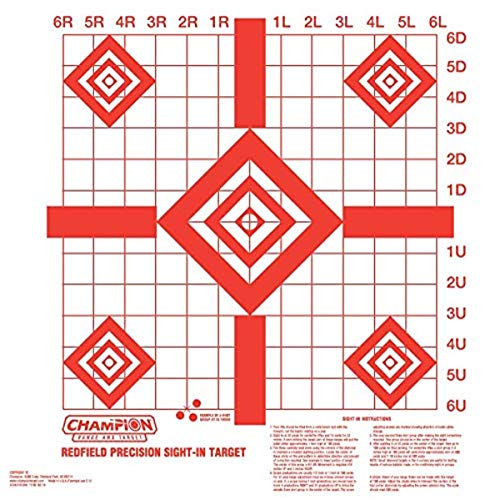
This 10-pack is built for the careful work of zeroing a scope and proving a load. Each sheet carries a Redfield-style grid with diamond aim points in the corners, so you can line up crosshairs, compare groups from different loads, and read shifts at a glance. The fluorescent paper face suits .22 through .50 caliber rifles and handguns, and the printed sight-in instructions on each sheet walk you through the process. It is the pick for shooters who log groups and chase small, repeatable clusters.
Specs
- 10 targets per pack
- Item dimensions 0.5 x 8 x 8.5 inches
- Package dimensions 8.74 x 7.95 x 0.28 inches
- Item weight 4 ounces
- Part number CHAMP47388
- Brand Champion
Best for: Zeroing scopes and comparing loads with a grid and corner diamonds.
Watch out for: The 8 by 8.5 inch face is small for long-distance work, so pair it with a larger backer.
Which One Fits Your Situation
You Shoot Mostly Handguns at an Indoor Lane
Paper rules indoors, since many lanes bar steel. The Shoot-N-C rounds give you many aim points on one backer, and the Splatterburst sheet gives a big, bright face for slow-fire groups. Bring pasters, keep your backer firm, and save the steel gong and spinner for outdoor bays that allow them. A spare backer in the car covers a torn sheet without ending the day.
You Zero Rifles and Chase Tight Groups
Begin with the Redfield sight-in sheets: the grid and corner diamonds let you track shifts load by load. Add the Splatterburst bullseye for a large, high-contrast aim point at longer distance. Log each group, change one variable at a time, and let the paper tell you what the rifle likes. A calm morning with little wind gives the truest groups.
You Want Loud, Instant Feedback Without Walking Downrange
Steel and spinners do the talking. The Highwild torso gong rings with every centerfire hit, and the DuraSeal double spinner shows each impact in motion. Both reset themselves, so your session flows without pauses. Use them outdoors with a rated mount, a safe distance, and a clear lane behind the target.
You Run Group Sessions or Family Range Days
Mix types so everyone has a job. Paper bullseyes suit new shooters learning the basics, splatter rounds keep score visible for friendly games, and the spinner adds a fun reactive round between serious strings. Pack extra sheets and pasters, since a busy line burns through paper fast, and a spare backer covers a torn sheet without a trip to the car.
Common Mistakes
- Hanging paper on a flimsy backer that folds in wind, so groups drift and sheets tear.
- Shooting steel too close or with the wrong caliber, which risks fragments and dents the plate.
- Picking a tiny aim point for long-distance work, then blaming the rifle for groups you cannot see.
- Skipping pasters and fresh sheets, so old holes blur new groups and hide real shifts.
- Ignoring lane rules on steel, caliber limits, and minimum distance before you unpack.
Frequently Asked Questions
What size target should I use at 25 yards?
A 6-inch round or an 8-inch bullseye reads well at 25 yards for most handguns, while rifles at that distance can use smaller aim points for group work. Larger faces help new shooters and low-light lanes. If you cannot read hits from the line, move to a bigger face or a splatter design before you change anything else.
Can I use steel targets with a rifle?
It depends on the steel and the distance. Half-inch AR500 plates handle many centerfire handgun loads and some rifle loads at safe distances, but always follow the maker’s caliber and distance guidance and your range rules. Rimfire on light steel is fine at lane distances. Never shoot steel that is pitted, cratered, or hung at an unsafe angle.
Do splatter targets work in low light?
Yes, and that is where they shine. The bright fluorescent burst around each hole stands out against a dark face even when the light is flat, so you can read hits without a spotting scope. They help most at pistol distance and on indoor lanes. In very dim lanes, pair a splatter face with a clip light on the backer for the clearest view.
How do I keep paper targets from tearing in wind?
Use a firm backer, clip or staple all four corners, and pick a heavier paper stock when you can. Adhesive targets hold best on a clean, dry board, and a cardboard backer behind a thin sheet stops most flapping. If the wind is strong, shorten the session plan, shoot closer lanes, and swap torn sheets before they shred.