Key takeaways
- Compare five bass amps for practice and small gigs, with wattage, speaker size, tone controls, headphone out and portability to help you play loud.
A good bass amp turns quiet home practice into real progress and gives a small gig enough low end to hold the room together. The five combos below cover that whole range, from a 25-watt modeling amp with dozens of built-in voices to a 100-watt stage-ready combo with a 15-inch speaker. Each one is a self-contained combo, so the amplifier and speaker arrive in one cabinet and you can plug in and play with no extra gear in between.
Choosing between them comes down to how loud you need to be, how much control you want over your tone, and how far you plan to carry the amp. A bedroom player who practices late at night needs a headphone output and a small cabinet, while a player who rehearses with a drummer needs more watts and a bigger speaker. The guide below walks through wattage, speaker size, tone controls, and portability, then matches each amp to the situation it handles best.
Quick Picks
As an Amazon Associate we earn from qualifying purchases
| Product | Best for | Key spec |
|---|---|---|
| Fender Rumble LT25 | Modeling and home practice | 25 watts, 50 presets |
| Fender Rumble 25 V3 | Simple analog practice | 25 watts, 8-inch speaker |
| Orange Crush Bass 25 | Warm analog tone | 25 watts, CabSim headphone output |
| Orange Crush Bass 100 | Small gigs and rehearsal | 100 watts, 15-inch speaker |
| Hartke HD75 | Detailed tone shaping | 75 watts, 7-band graphic EQ |
How to Choose
Wattage and Volume
Wattage sets the ceiling on how loud an amp can go before the tone falls apart, and bass needs far more watts than guitar to fill the same room. A 25-watt combo suits a bedroom, an apartment, or a quiet rehearsal, while a 75-watt or 100-watt combo can keep up with a drummer in a small venue. Match the watts to the loudest room you play in, not the quietest, and leave some headroom so the amp never has to run flat out. If you only practice at home, a small amp saves weight, space, and money. If you gig, buy the watts first and worry about extras later.
Speaker Size and Low End
Speaker size shapes how deep and full the low end feels. An 8-inch speaker keeps a combo light and compact, and it works well for practice and quiet jams, but it can sound thin when you push the volume up. A 12-inch speaker moves more air and gives the bass more body, which helps in a rehearsal room, while a 15-inch speaker delivers the deepest lows and the most presence on a small stage. Bigger speakers also add weight, so a 15-inch combo is harder to carry up a flight of stairs. Think about the rooms you play in most often, then pick the smallest speaker that still fills those rooms with a full, warm low end.
Tone Controls and Built-In Features
Tone controls decide how much you can shape the sound without buying extra pedals. A simple 3-band EQ covers bass, mid, and treble and suits most players, while a parametric mid control lets you sweep the middle frequencies and find the exact spot where your bass cuts through a mix. A built-in tuner saves time before every session, and an overdrive circuit adds grit for rock and heavier styles. Modeling amps go further with dozens of amp voices and effects, which suits a player who wants to explore many sounds from one box. A headphone output with speaker simulation matters if you practice late, and an aux input lets you play along with tracks from a phone or laptop.
Weight and Portability
A bass amp you cannot carry is an amp you will leave at home. Combos in this guide range from about 19 pounds to more than 50 pounds, and that gap matters when you carry gear up stairs, load a car, or walk to a rehearsal room. A molded carry handle helps, and a compact cabinet fits in a car trunk next to a gig bag. Check the dimensions as well as the weight, since a tall cabinet can be awkward even when it is light. If you gig often, a lighter amp with a handle earns its keep every time you move it. If the amp stays in one room, weight matters less and tone matters more.
The 5 Best Options
1. Fender Rumble LT25

The Rumble LT25 packs a full modeling rig into a 25-watt combo, with 50 presets built around 15 amp types, so one small box covers clean tones, gritty rock, and deep funk without extra pedals. An 8-inch speaker keeps the cabinet compact, and a USB connection lets you record direct or update the amp firmware from a computer. The control panel stays simple, with gain, bass, mid, treble, and master knobs plus preset buttons, so you can dial in a sound in seconds. It suits a beginner who wants to explore many tones, and a home player who wants one amp that does a little of everything.
Specs
- 25 watts of output power
- 8-inch speaker
- 50 presets across 15 amp types
- USB connection for recording and firmware updates
- Item model number 2270100000
- 2-year warranty
Best for: Beginners and home players who want many tones from one small combo.
Watch out for: 25 watts will not keep up with a loud drummer, so treat it as a practice amp first.
ASIN: B07N2897CX
2. Fender Rumble 25 V3

The Rumble 25 V3 keeps things analog and simple, with 25 watts driving a single 8-inch speaker and a control panel that any player can learn in one sitting. A 3-band EQ shapes the bass, mid, and treble, a mid-scoop contour switch thins out the middle for a modern slap tone, and a built-in overdrive circuit adds grit when you want it. A headphone jack makes late-night practice possible, and an aux input lets you play along with tracks from a phone. At about 21 pounds, it is easy to carry to a lesson or a quiet rehearsal, and the vintage look suits any room.
Specs
- 25 watts of output power
- 8-inch Fender Special Design speaker
- 3-band EQ with overdrive circuit
- Mid-scoop contour switch
- Headphone output and aux input
- 2-year limited warranty
Best for: Players who want a simple analog practice amp with no menus.
Watch out for: 25 watts and one 8-inch speaker limit how loud it can go in a band setting.
ASIN: B00HWINLAE
3. Orange Crush Bass 25
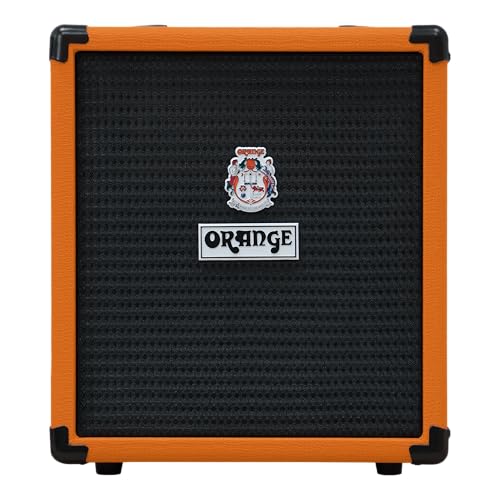
The Crush Bass 25 brings Orange warmth to a practice-size combo, with 25 watts and an 8-inch speaker in a ported cabinet that sounds bigger than its size. An active 3-band EQ with a parametric mid control lets you sweep the middle frequencies and shape the tone with real precision, and a built-in chromatic tuner keeps you in tune without a separate pedal. The CabSim-loaded headphone output mimics a speaker cabinet for silent practice, and an aux input lets you jam along with tracks. A minus 6 dB pad tames hot active basses, and the orange basketweave vinyl gives it a look that stands out in any room.
Specs
- 25 watts of output power
- 8-inch speaker in a ported cabinet
- Active 3-band EQ with parametric mid control
- Built-in chromatic tuner
- CabSim-loaded headphone output and aux input
- Item model number CRUSH-BASS-25
Best for: Players who want warm analog tone and precise mid control in a small combo.
Watch out for: One 8-inch speaker means the low end stays modest at higher volumes, so keep expectations realistic for band use.
ASIN: B01HONIONA
4. Orange Crush Bass 100
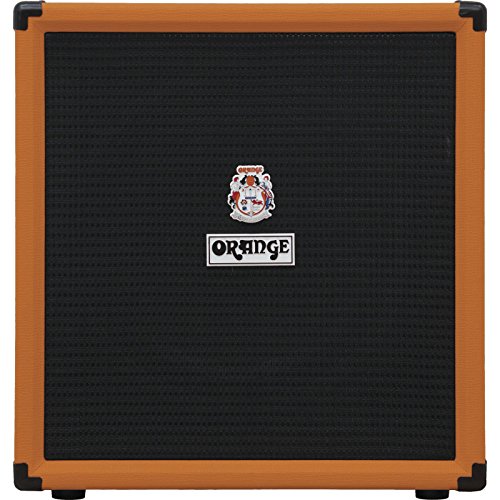
The Crush Bass 100 is the gig amp of this group, with 100 watts driving a 15-inch speaker that fills a small venue with deep, full low end. An active 3-band EQ with a parametric mid control shapes the tone, while footswitchable gain and blend controls add the bi-amp inspired grit that Orange is known for. A balanced XLR output feeds a PA system, a buffered effects loop takes your pedals, and a CabSim-loaded headphone output covers silent practice. At more than 50 pounds it is the heaviest amp here, so plan on two hands or a trolley for load-in.
Specs
- 100 watts of output power
- 15-inch speaker
- Active 3-band EQ with parametric mid control
- Footswitchable gain and blend controls
- Balanced XLR output and buffered effects loop
- CabSim-loaded headphone output and aux input
- Item model number CRUSH-BASS-100
Best for: Players who rehearse with a band and play small venues.
Watch out for: At more than 50 pounds, it is the heaviest amp in this group, so plan how you will move it.
ASIN: B01HPGFU10
5. Hartke HD75

The HD75 takes a different path to a big sound, with 75 watts driving a 12-inch HyDrive speaker that pairs a paper cone with an aluminum center for warmth and punch. A 7-band graphic EQ sits alongside the usual volume, bass, mid, and treble controls, so you can shape the tone in fine detail or leave it flat and let the speaker do the work. A 1-inch tweeter adds high-frequency clarity, and an effects loop makes room for your pedals. The perforated metal grille and molded strap handle suit a player who moves gear often, and the combo is sized for rehearsal rooms and small venues alike.
Specs
- 75 watts of output power
- 12-inch HyDrive speaker with paper and aluminum driver
- 1-inch tweeter
- 7-band graphic EQ
- Top-mounted Volume, Bass, Mid, and Treble controls
- 1/4-inch headphone output and 1/8-inch stereo aux input
- Molded strap carry handle
Best for: Players who want detailed tone shaping and a clear, punchy sound for rehearsal and small gigs.
Watch out for: At about 48 pounds it is heavier than the 25-watt combos, so carry it with both hands on stairs.
ASIN: B00I35ZBSA
Which One Fits Your Situation
You Practice at Home Late at Night
Late-night practice calls for a headphone output and a small cabinet. The Rumble LT25 and the Crush Bass 25 both give you a headphone jack with speaker simulation, so the tone stays full even when the room stays quiet. The Rumble 25 V3 works too, with a plain headphone jack and an aux input for backing tracks. Keep the wattage low, keep the cabinet small, and spend your attention on tone controls instead of volume.
You Rehearse With a Band
Rehearsal with a drummer needs watts and speaker size. The Crush Bass 100 leads here, with 100 watts and a 15-inch speaker that hold their own against drums and guitar. The HD75 follows, with 75 watts and a 12-inch HyDrive speaker that stays clear when the room gets loud. A 25-watt combo will get buried in a full band, so save those for home. Bring the bigger amp, and let the PA handle the rest if the room is large.
You Play Small Gigs and Need to Travel Light
Small gigs reward an amp that is loud enough and light enough to carry in one trip. The HD75 balances both, with 75 watts in a cabinet you can lift with a molded strap handle. The Crush Bass 100 is louder, but at more than 50 pounds it needs two hands and a car with room to spare. Match the amp to the gig, not the other way around.
You Are Learning Bass and Want One Amp That Grows With You
A first amp should be simple, forgiving, and fun to play through. The Rumble LT25 leads here, because its 50 presets let a new player hear many styles without buying pedals. The Rumble 25 V3 is the simpler choice, with a plain analog panel that teaches you what each knob does. The Crush Bass 25 adds a tuner and a parametric mid, which suit a learner who wants to shape tone early.
Common Mistakes
- Buying the smallest amp for a band rehearsal, then finding it cannot keep up with a drummer.
- Ignoring speaker size and judging an amp by watts alone.
- Skipping the headphone output when you practice late at night.
- Carrying a 50-pound combo to every gig when a lighter amp would do the job.
- Choosing a modeling amp for its presets, then never learning what the basic tone controls do.
Frequently Asked Questions
How many watts do I need for bass practice at home?
25 watts is enough for home practice, since a small room needs little volume to sound full. A 25-watt combo with an 8-inch speaker keeps the low end clear at bedroom volume, and a headphone output covers late-night sessions. Move up to 75 or 100 watts only when you rehearse with a drummer or play small venues, where the extra power keeps the tone full instead of thin.
Can a 25-watt bass amp handle a small gig?
A 25-watt bass amp can handle a very quiet gig, such as an acoustic set or a coffeehouse. On its own, though, 25 watts will not keep up with a drummer or a loud guitar. For a small venue with a full band, a 75-watt or 100-watt combo is the safer choice, since it holds the low end together without running flat out.
What does a parametric mid control do?
A parametric mid control lets you pick the middle frequency you want to boost or cut, then adjust how much you change it. On the Orange Crush amps, the mid band sweeps from 300Hz to 2.7kHz, so you can target the low mids where the bass sits against a kick drum or the upper mids where string attack lives.
Do I need a headphone output on a bass amp?
A headphone output matters if you practice when other people are home, since it lets you hear the full tone without filling the room. Amps with a CabSim-loaded headphone output sound more like a real speaker cabinet through headphones, which makes long practice sessions more pleasant.