We independently review everything we recommend. When you buy through our links, we may earn a commission. As an Amazon Associate we earn from qualifying purchases.
4 Best Broadheads for High Speed Crossbows (November 2026)
Four broadheads built for high-speed crossbows compared: hybrid, mechanical and three-blade picks with grain, cut width and blade retention notes.
Four broadheads built for high-speed crossbows compared: hybrid, mechanical and three-blade picks with grain, cut width and blade retention notes.
A broadhead that behaves from a mid-speed bow can turn erratic when a flagship crossbow launches it past 430 feet per second: blades can creep open in flight, wide fixed blades can steer the bolt off line, and thin parts meet bone with far more force. The real decision is matching blade retention, flight profile and grain weight to the speed your bow actually produces, then confirming the head flies with your own bolts before the season opens.
This guide is for crossbow hunters running fast modern bows who want a head built for that launch. The four picks come from Amazon listings for crossbow-specific broadheads: one hybrid with fixed and expandable blades, two rear-deploying two-blade mechanicals with different retention systems, and one three-blade expandable. Each listing names its grain weight, cut width and retention method, which is what the comparison below is built on.
Quick Picks
As an Amazon Associate we earn from qualifying purchases.
Product
Best for
Key spec from title
Muzzy Trocar HBX Hybrid, 100 Grain
Fixed-blade certainty with a wider cut
1 in fixed blade plus 1 5/8 in expandable blades
Rage Hypodermic Crossbow Broadhead, 100g
Wide two-blade cut with collar retention
2 in cut with Shock Collar blade retention
G5 Megameat Crossbow Broadhead, 100 Grain
Three-blade wound channel
2 in cut from three expandable blades
Rage Hypodermic Crossbow NC, 100 Grain
No collars to buy or fit
2 in cut with No Collar blade lock
How to Choose
Blade Retention Matched to Launch Speed
Retention is the first filter on a fast bow. A violent launch can pull mechanical blades open before the bolt leaves the rail, which ruins flight and wastes the shot. Shock collars, no-collar blade locks and shrink bands all solve the same problem with different upkeep: collars and bands are consumables you replace, while a built-in lock removes that chore. Check the guidance printed with the head, because some makers split their retention parts at a speed threshold and expect the stronger option on bows past it. When a listing names crossbow use and states its retention method, that is the signal the head was built for this job.
Flight Profile and Steering
Fixed blades catch air, and at high speed that air can steer a bolt the way a fletching does, pulling shots away from where your field points land. Low-profile mechanicals stay narrow in flight and usually group closer to practice points, which is why most crossbow-specific heads fold their blades away. Compact fixed and hybrid heads reduce the effect with short ferrules and small fixed blades. No listing can promise your groups, though: bolt spine, fletching and insert weight all change the result. Shoot the exact head, or its matched practice version, from your own bow at hunting distance before trusting it.
Grain Weight and Total Bolt Weight
Most crossbow broadheads come in 100 and 125 grain, and the choice changes more than the number on the box. A heavier head raises front-of-center balance and total bolt weight, which can calm flight and add momentum, while a lighter head keeps trajectory flatter. Your crossbow maker sets a minimum total bolt weight, and dropping under it stresses limbs and voids coverage on many models. Pick one grain weight, build every bolt around it, and sight in with that exact setup. Switching weights mid-season moves your point of impact more than most hunters expect.
Cut Width Against Energy at the Target
A wide cut is only useful if the bolt still has the energy to push it through. Two-inch and wider heads open a large wound channel on broadside deer, yet they ask more of the bow on quartering angles and heavy bone. Your bow’s speed at the muzzle is not its speed at forty yards, and energy falls with distance. Hunters taking longer or angled shots often do better with a narrower cut or a hybrid that keeps a fixed blade working even if the expandable blades meet resistance. Match the cut to the shots you honestly take.
The HBX suits hunters who distrust pure mechanicals but still want more cut than a plain fixed head gives. Its two fixed blades are always open, so the head cuts on contact even if the expandable pair meets heavy resistance, while the two mechanical blades add width once inside. The chisel-style Trocar tip and steel ferrule are built for the hard first impact a fast bolt delivers. For a hunter whose shots may angle into a shoulder, that fixed-blade backup is the reason to pick this head over a wider mechanical.
Rage Hypodermic Crossbow Broadhead, 100g
Runner-Up
Rage Hypodermic Crossbow Broadhead, 100g
Best for: Broadside deer shots where a wide two-blade cut matters most.
This is the wide-cut mechanical for hunters who accept a small consumable chore in exchange for a full two-inch cut. The Shock Collar holds the rear-deploying blades shut through storage and the launch, then releases on impact so the swept-back blades open behind the hybrid tip. The one-piece stainless ferrule suits the impact loads of fast bows better than lighter builds. If your shots are mostly broadside deer inside forty yards and you want the largest wound channel in this group, this head fits, provided you keep spare collars in the pack and fit a fresh one for each hunt.
G5 Megameat Crossbow Broadhead, 100 Grain
G5 Megameat Crossbow Broadhead, 100 Grain
Best for: Hunters who prefer a three-blade cut and shoot bows with energy to spare.
Variant covered by this ASIN: 100 grain crossbow version, 3-pack
The Megameat is the three-blade option in this group, built in a crossbow version with a larger ferrule base that matches crossbow bolt diameter. Three expandable blades open a two-inch cut, and three edges tend to leave a wound channel that stays open better than a single slit from a two-blade head. The chisel tip and stainless build handle the first contact with hide and rib. Choose it if your bow produces energy to spare and your hunting is whitetail-sized game at moderate range, where the extra blade does its work without asking for extreme penetration depth.
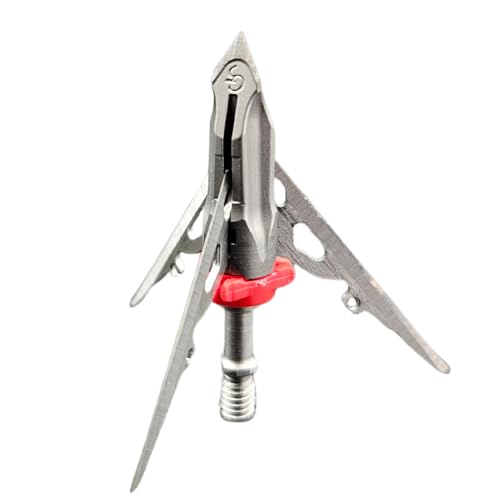
Rage Hypodermic Crossbow NC, 100 Grain
Rage Hypodermic Crossbow NC, 100 Grain
Best for: Hunters who want a wide mechanical cut without replacement collars.
Variant covered by this ASIN: 100 grain, 3-pack, silver finish
Blades: 2, rear-deploying mechanical, .035 in thick swept-back blades
The NC version keeps the same hybrid tip and two-inch cut as the collar model above but locks its blades with a built-in mechanism instead of a shock collar, so there is nothing to buy, fit or lose in the dark. The machined stainless ferrule and thick swept-back blades suit fast launches, and the silver finish is easy to spot in a quiver. Pick it if you liked the collar head’s cut but disliked managing consumables, or if you hunt far from a shop and want the simpler system. It is the low-upkeep way to run a wide mechanical on a quick bow.
Which One Fits Your Situation
Your Bow Shoots Past 430 Feet Per Second
Retention and profile matter more than raw cut width at the top of the speed range. The two Rage heads were built around fast crossbow launches, with a collar or a built-in lock holding the blades through the shot. Fit the retention the maker directs for your speed, then prove the setup on a target, because a head that opens early at this pace will not group with your field points.
You Hunt Whitetail Inside Forty Yards
All four heads carry enough cut for broadside deer at moderate range, so choose on upkeep. The Hypodermic Crossbow NC removes collar chores, the collar version asks for a fresh collar per hunt, and the Megameat adds a third blade to the wound channel. The HBX is the pick when your stand also produces angled shots and you want fixed blades working from first contact.
You Take Quartering Shots on Larger Game
Angled hits on elk-sized animals punish wide mechanicals that meet bone early. The HBX hybrid is the safer fit here: its fixed blades cut from the surface and keep working if the expandable pair slows down. Keep the shot closer than your broadside limit, and favour the heavier grain option your setup allows so the bolt carries more momentum into the far side.
You Want the Simplest Practice Routine
A head you can practise with is a head you can trust. The collar and no-collar mechanicals fly narrow like field points, which shortens sight-in time, while the hybrid’s fixed blades may group a little differently and deserve more target sessions. Whichever you choose, dedicate one head from the pack to practice only, and hunt with the remaining fresh ones.
Common Mistakes
Shooting a head made for vertical bows from a fast crossbow; crossbow versions use stronger retention and ferrules sized for bolts.
Sight-in with field points only, then hunting with a broadhead that groups somewhere else.
Mixing 100 and 125 grain heads in the same quiver after sighting in with one weight.
Putting a mechanical back in the quiver after a shot without checking blades and retention parts.
Choosing the widest cut on the shelf for a bow or shot distance that cannot push it through.
Frequently Asked Questions
Can I shoot a regular broadhead from a high-speed crossbow?
Some fixed heads handle it, but the risk sits with mechanicals: a launch far harder than a vertical bow’s can open blades in flight or bend parts made for lower speeds. Crossbow versions add stronger retention and bolt-sized ferrules. Whatever you shoot, confirm on a target that the head groups with your field points at hunting distance.
Why do crossbow broadheads use collars, bands or locks?
The launch of a fast crossbow hits the head much harder than a drawn bow does, and that jolt can pull folded blades open before the bolt settles into flight. Collars, bands and built-in locks hold the blades shut through the shot, then release on target contact. Each system trades upkeep differently: collars and bands get replaced, locks are built in.
Should I pick 100 or 125 grain for a fast crossbow?
Both work when the total bolt weight stays above the minimum your crossbow maker sets. The 125 grain head adds front weight and momentum, which many hunters prefer for larger game or longer shots, while 100 grain keeps trajectory flatter. Pick one, build every bolt to it, and sight in again if you ever switch.
How do I check that a broadhead flies true from my bow?
Shoot the actual hunting head, or a practice version of the same model, at a broadhead-rated target from your hunting distances. Compare its group with your field points using the same bolts you will hunt with. If the groups split, try the other grain weight or a lower-profile head before changing anything else on the bow.
B
Beckykinkead Editorial Team
We compare specs, materials and verified owner reviews before a product earns a spot. Rankings are never paid.
Affiliate disclosure. As an Amazon Associate we earn from qualifying purchases at no extra cost to you. Prices accurate as of the date shown.
Best collapsible tea kettle: five folding silicone kettles compared for capacity, voltage, boil time and folded size for travel, dorms and small kitchens.
Best degreaser for tubs: five sprays and foams that cut soap scum, body oils and mineral film on tubs, tile and shower walls, in bleach and non-bleach types.
Best rocking massage recliners: five swivel rocker recliners with massage and heat compared, from manual gliders to dual-motor power models with wide seats.
Best large hopper pellet stove inserts: the one verified insert on Amazon US, with a 47-pound hopper, plus fireplace and venting checks before you order.
Best battery telescopic hedge trimmer: four cordless pole trimmers compared for reach, blade length, cut capacity and battery platform for tall hedges.
Looking for the best studio monitors for keyboards? Compare 5 powered pairs and singles with TRS, XLR and RCA inputs for pianos, synths and workstations.


 Rage Hypodermic Crossbow NC, 100 Grain