We independently review everything we recommend. When you buy through our links, we may earn a commission. As an Amazon Associate we earn from qualifying purchases.
4 Best Rear-Deploying Broadheads for Bows (November 2026)
Four rear-deploying mechanical broadheads compared on cutting diameter, blade retention and ferrule build, with the specs that matter for compound bows.
Four rear-deploying mechanical broadheads compared on cutting diameter, blade retention and ferrule build, with the specs that matter for compound bows.
Picking a rear-deploying broadhead comes down to two linked decisions: how wide a cut your bow can push through hide and rib, and how the blades are held shut until the shot lands. A head that opens in the quiver, or one whose two-inch cut stalls on a quartering hit, turns a good arrow into a long tracking job. Retention style, ferrule build and blade angle matter as much as the headline cutting diameter.
This roundup is for compound bow hunters chasing deer and similar game, for lower-poundage shooters who still want a mechanical head, and for anyone replacing a front-deploying model after a lost animal. Every pick below is a true rear-deploying design, and each one was chosen from the name and specifications on its Amazon listing: grain weight, blade count, cutting diameter and the retention system the maker states.
Quick Picks
As an Amazon Associate we earn from qualifying purchases.
Product
Best for
Key spec from title
Rage Hypodermic NC
Hunters who want no collars to replace
2-inch cut, SlipCam rear deployment
NAP Killzone Trophy Tip
A proven two-inch head on a spring clip
2-inch cut, Trophy Tip
G5 Megameat
A three-blade wound channel
2-inch cut, 3 blades
NAP Killzone RX 2.3
The widest cut in this group
2.3-inch cut, Trophy Tip
How to Choose
Match the Cut to Your Bow’s Energy
A rear-deploying head opens after the tip and ferrule have entered, so the blades meet less resistance at the hide than an over-the-top design. That helps penetration, but a wide cut still spends energy fast once all blades are working. A two-inch head on a short-draw bow in the low fifty-pound range can stop short on a shoulder hit, while the same head flies through ribs from a seventy-pound setup. Be honest about your draw weight, draw length and arrow mass, and step down in cutting diameter if your setup sits at the lighter end.
Know How the Blades Are Held Shut
Rear-deploying blades ride along the ferrule in flight, and each brand keeps them there differently. Rage uses either a polymer Shock Collar or the finger-like tabs of its No Collar system, NAP relies on a spring clip inside the Killzone ferrule, and G5 snaps its blades into a SnapLock collar. The practical difference shows up in your quiver and your pack: collars and clips can be consumable parts that need checking and occasional replacement, while tab systems remove that chore but ask you to confirm the tabs are seated before every shot.
Compare Tip Style and Ferrule Build
The tip decides how the head behaves in the first inch of the hit. A cut-on-contact tip starts cutting immediately and suits lower-energy bows, a chisel-style trophy tip is built to punch through bone without bending, and hybrid needle tips split the difference with a sharp point ahead of the cutting edges. Ferrule material matters behind the tip: machined stainless steel and titanium ferrules survive hard hits that can bend aluminum, and a slim ferrule profile also steers less in flight, which helps a mechanical group with your field points.
Check Grain Weight and What the Pack Holds
Most rear-deploying heads come in 100 and 125 grain, and the right choice is simply the weight your arrows are already tuned around, since changing point weight shifts impact and can upset a tune that was grouping well. Then read the pack contents on the listing before you buy. Some packs hold three heads and nothing else, while others add a practice head that flies like the hunting head, which saves your real blades for the season. Replacement blades and collars are sold separately for nearly every model here, so factor in a kit if you plan to rebuild heads after a shot.
The 4 Best Options
Rage Hypodermic NC 100 Grain
Top Pick
Rage Hypodermic NC 100 Grain
Best for: Compound hunters who want a two-inch cut with no collars or bands to manage.
Weight: 100 grain
Blades: 2 stainless steel, .035 inch thick, swept-back
Cutting diameter: 2 inches
Ferrule: machined stainless steel with hybrid hypodermic tip
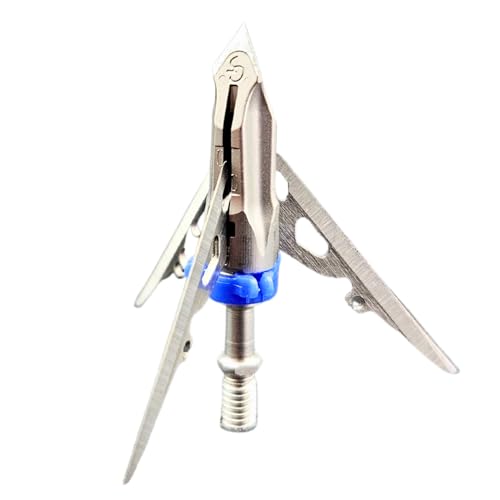
The Rage Hypodermic NC is the head that removed the most common rear-deploy complaint: the sacrificial collar. Its blades pivot on the SlipCam at the back of a machined stainless ferrule and are held shut by small finger-like tabs, so there is no collar to crack on impact and nothing to replace between shots. The hybrid tip starts the hole, the swept-back blades slide open to the full two-inch cut behind it, and the slim in-flight profile is why this design groups with field points for so many compound setups.
NAP Killzone Trophy Tip 100 Grain
Runner-Up
NAP Killzone Trophy Tip 100 Grain
Best for: Deer hunters who want a known two-inch rear-deploying head with simple upkeep.
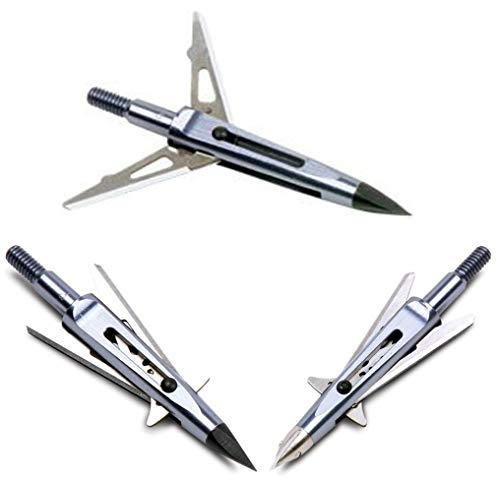
The NAP Killzone Trophy Tip has been the straightforward answer in this category for years: two blades, a two-inch cut, and a spring clip inside the ferrule instead of bands or collars. The blades sit against the ferrule in flight, then swing open from the rear once the trophy tip has entered, which keeps the entry hole honest and the energy budget predictable. It is a plain, proven layout for deer-sized game, and the cut-on-contact sibling in the same line suits anyone who prefers a tip that starts cutting on contact.
G5 Megameat 100 Grain
G5 Megameat 100 Grain
Best for: Hunters who want a three-blade wound channel from a rear-deploying design.
Most rear-deploying heads stop at two blades; the G5 Megameat runs three, and all three slide rearward on impact to open a two-inch cut. The extra edge gives the wound channel a three-sided shape that bleeds freely, and the stainless build with a chisel tip is aimed at hunters who expect to meet rib or shoulder on the way through. A SnapLock collar keeps the blades seated in flight, and both blades and collars can be replaced with the maker’s kit instead of retiring the whole head after a hard hit.
NAP Killzone RX 2.3 Trophy Tip 100 Grain
The NAP Killzone RX 2.3 is the widest head in this group, stretching the Killzone layout to a 2.3-inch cut while keeping the same rear-deploying, two-blade layout and spring-clip thinking that made the original easy to live with. That extra width is aimed squarely at deer and similar game on broadside and lightly quartering shots, where a big entry and exit hole shortens the tracking job. Treat it as a head for strong setups: the wide blades ask more of the bow once they open, and lighter rigs will give up penetration to feed them.
Specs
Weight: 100 grain
Blades: 2
Cutting diameter: 2.3 inches
Tip: Trophy Tip
Model: NAP-KZ-100-23TT
Pack: 3 broadheads
Best for: High-energy compound setups hunting deer where the widest cut is the priority.
Watch out for: The 2.3-inch cut is the most demanding here on penetration, so it is a poor match for short draws or low poundage.
ASIN: B0DV799RXH
Which One Fits Your Situation
Whitetail From a Treestand, Shots Inside 30 Yards
Any of the two-inch heads here will do this job, but the Killzone Trophy Tip is the calm choice: a proven spring-clip layout, a tip that tolerates a rib on entry, and no collar ritual before the climb. If your shots sometimes stretch past thirty yards in open timber, the Hypodermic NC’s slim ferrule and field-point manners make the hold easier to trust.
A Lower-Poundage Bow That Still Needs a Mechanical
Stay at the smaller end of this group and favor entry efficiency over width. The Killzone layout in its cut-on-contact form starts cutting at the hide, and the Hypodermic NC +P sibling was built around a steeper blade angle for exactly this case; within these four listings, the standard two-inch Killzone is the sensible ceiling. Skip the 2.3-inch RX until your draw weight and arrow mass grow into it.
Elk and Mule Deer Where the Shot May Angle
Penetration and ferrule strength move ahead of raw cut width here. The Megameat’s stainless build and chisel tip are made for the rib-and-shoulder reality of bigger animals, and its three blades still open a full two-inch channel once inside. The Hypodermic NC is the other sensible pick, with a machined steel ferrule and swept-back blades that keep driving after the tip is through.
You Are Tired of Bands, Collars and Pre-Shot Checks
Two of these heads remove the consumable ritual almost entirely. The Hypodermic NC holds its blades with finger tabs at the pivot, so there is nothing to crack, stretch or replace, and the Killzone’s spring clip lives inside the ferrule where brush cannot strip it. Either way, build a ten-second habit: glance at the head on the arrow before the shot and confirm every blade is seated.
Common Mistakes
Choosing the widest cut in the rack for a bow that cannot push it through a shoulder, then blaming the head for a shallow hit.
Mixing grain weights between practice and hunting arrows, which moves the impact point and can spoil an otherwise sound tune.
Trusting a collar, clip or tab that was damaged on the last shot; retention parts are consumables on most of these designs.
Assuming the standard and crossbow versions of the same model are interchangeable, when the listings sell them as separate variants.
Skipping a practice head and dulling hunting blades on a foam target the week before the season opens.
Frequently Asked Questions
What does rear-deploying actually mean?
It describes where the blades sit and how they open. On a rear-deploying head the blades fold back along the ferrule in flight, pinned near the rear of the head, and swing open only after the tip has entered. Because the ferrule punches the first hole, the blades meet softer resistance than an over-the-top design that opens at the surface.
Do rear-deploying broadheads fly like field points?
Usually close, because the closed profile is slim and the blades add little drag in flight. Close is not identical, though: a mechanical can still plane on a bow that is slightly out of tune, and crosswinds catch the ferrule differently. Shoot the practice head or one hunting head at your longest hunting distance before the season and confirm the group matches your field points.
How much bow do you need for a two-inch cut?
There is no single number printed on these listings, and the honest answer depends on draw length and arrow weight as much as peak poundage. As a working guide, full-size two-inch heads suit adult compound setups in the sixty to seventy pound range with mid-weight arrows, while shorter draws and lower poundage are better matched to narrower cuts or cut-on-contact tips.
Can you reuse a rear-deploying head after a shot?
Often the ferrule survives and the head can be rebuilt, but treat every blade that has been through an animal or into the dirt as finished. Inspect the ferrule for bends by spinning the head on the arrow, fit fresh blades and a new collar or clip where the design uses one, and retire any head that wobbles.
B
Beckykinkead Editorial Team
We compare specs, materials and verified owner reviews before a product earns a spot. Rankings are never paid.
Affiliate disclosure. As an Amazon Associate we earn from qualifying purchases at no extra cost to you. Prices accurate as of the date shown.
Best Foaming Wheel Cleaner 2: five foaming wheel cleaners compared by foam cling, color-change action, finish safety, and size to help you pick the right one.
Best 3 leaf trailer springs roundup: five 3-leaf springs from Trailer Supplies, Dorman, Sturdy Built and FWN, compared by length, capacity and end style.
The best veggies for kabobs on the grill, grouped by cooking time, with cut sizes, marinade basics and skewer layouts that keep every piece evenly done.
Best oil for F150 3 5 EcoBoost: five 5W-30 oils verified live on Amazon US, with spec notes, label checks and the 6-quart fill for the 3.5L twin-turbo.
Best drilled and slotted rotors 2: five front and rear brake kits verified live on Amazon US, with fitment, rotor sizes, pad compounds and warranty notes.
Best ATV chain lube 2: five chain lubes and waxes verified live on Amazon US, with O-ring fit, wet and dry coverage, and fling notes for sealed chains.
Best 5 inch exhaust heat shield: five shields compared — 5-inch round stainless shields, universal Walker and Patriot chrome shields, and an adhesive heat mat.