Our Short List of 3
All 4 Picks at a Glance
| Product | Specs | Action |
|---|---|---|
 Mysa Smart Thermostat V2 for Electric Baseboard Heaters | Check price on Amazon | |
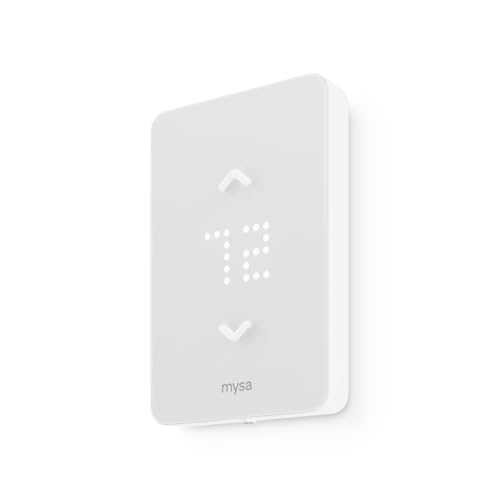 Mysa Smart Thermostat LITE for Electric Baseboard Heaters | Check price on Amazon | |
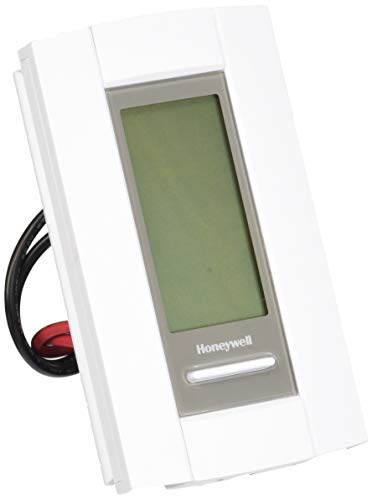 Honeywell Home TL8230A1003 7-Day Programmable Thermostat | Check price on Amazon | |
 Honeywell Home RLV4305A1000 5-2 Day Programmable Thermostat | Check price on Amazon |
Key takeaways
- Best thermostat for electric baseboard heaters: line-voltage Mysa and Honeywell picks compared on voltage, load limits, wiring, schedules and smart features.
Introduction
Finding the best thermostat for electric baseboard heaters starts with one fact that surprises many homeowners: the familiar low-voltage thermostat on the wall by the furnace will not work here. Electric baseboards run on line voltage, which means the thermostat switches the heater’s own power directly, at 120 or 240 volts, instead of sending a small control signal to a central furnace. Buy the wrong type and the thermostat either will not power on at all or, worse, becomes a safety hazard. That is why this guide looks only at line-voltage models built for electric heat.
Electric baseboard heating is common in bedrooms, additions, cabins, and older homes without ductwork, and a good thermostat is what turns a blunt heating element into a comfortable, efficient room. The right model holds a steady temperature instead of swinging hot and cold and trims wasted energy with a schedule, and, in the smart models, lets you adjust the heat from your phone before you get home.
This article compares four line-voltage thermostats from Mysa and Honeywell, covering a premium smart model, a simpler smart model, a fully programmable non-smart model, and a weekday-weekend programmable model. For each one, you will find the key specifications, who it suits best, and its strengths and limitations.
At a Glance
| Product | Best For | Key Spec |
|---|---|---|
| Mysa Smart Thermostat V2 | Full smart control with energy insights | 120/240 V, up to 3,800 W at 240 V, Wi-Fi, touchscreen |
| Mysa Smart Thermostat LITE | Smart schedules on a simpler budget | 120/240 V, up to 3,800 W at 240 V, Wi-Fi, app control |
| Honeywell Home TL8230A1003 | 7-day programming without Wi-Fi | 240/208 V, up to 3,600 W at 240 V, double pole |
| Honeywell Home RLV4305A1000 | Simple weekday and weekend schedules | 240 V, up to 3,500 W at 240 V, 5-2 day programming |
How to Choose a Thermostat for Electric Baseboard Heaters
Match the voltage first. Check the circuit breaker and the heater’s rating plate before anything else. Most electric baseboards in North America run on 240 volts, but some smaller units run on 120 volts. A thermostat rated only for 240 volts cannot be used on a 120-volt heater, and a 120-volt-only model cannot handle a 240-volt circuit. Models that cover both voltages, such as the two Mysa thermostats in this guide, remove that worry, while the Honeywell models here are built for 240-volt systems.
Add up the load and respect the limit. Every line-voltage thermostat has a maximum load in watts or amps, and the heater or heaters on that circuit must stay under it. Add the wattage of every heater the thermostat will control, then compare the total with the thermostat’s rating. The models in this guide range from 3,500 to 3,800 watts at 240 volts, which covers one or two typical baseboards per zone, but a long run of heaters in a large room can exceed a single thermostat.
Count the wires in the box. Line-voltage thermostats are wired differently from low-voltage ones, and the wire count decides which models will fit. A two-wire box suits simpler models such as the Honeywell RLV4305A1000, while the Mysa V2 needs four wires, including a neutral or a second live wire, to power its display and Wi-Fi radio. If your box has only two wires, a model that needs four cannot be installed without new wiring.
Decide how much control you want. A basic programmable model gives you setback schedules that lower the temperature while you sleep or are away, which is where most of the energy savings come from. A 7-day model lets every day have its own schedule, while a 5-2 day model uses one schedule for weekdays and another for weekends. Smart models add remote control, geofencing, voice control, and energy reports, but they also need a stable Wi-Fi network and an app account. If you dislike apps or have unreliable Wi-Fi, a non-smart programmable thermostat is the calmer choice.
Check the pole configuration and the off position. A double-pole thermostat breaks both legs of the circuit and provides a true off, while a single-pole model leaves one leg connected even when switched off. Double-pole models such as the Honeywell TL8230A1003 give a definite positive off, which matters in rooms that sit unused for weeks. Also note the minimum temperature setting: a model that only goes down to 41 or 50 degrees Fahrenheit is fine for freeze protection, but it is not a full off.
Plan for safe installation. Line-voltage work carries real risk, and the manufacturers of these thermostats state that installation should be carried out by a certified electrician. Always switch the circuit off at the breaker, verify with a tester that the wires are dead, and follow local electrical codes. Special connectors are needed for aluminum wiring, and the thermostat’s vents must stay clear so it can sense room temperature accurately.
Mysa Smart Thermostat V2 for Electric Baseboard Heaters
The Mysa V2 is the flagship smart thermostat in this guide, built specifically for high-voltage electric heating. It handles 120 or 240 volts, with a maximum load of 3,800 watts at 240 volts or 1,900 watts at 120 volts, and a 16-amp capacity. The touchscreen display shows the temperature and adapts its brightness to the room, and a built-in humidity sensor adds temperature and humidity alerts. It connects over 2.4 GHz Wi-Fi and works with Apple HomeKit, Amazon Alexa, and Google Home, so it fits into most smart-home setups without a separate hub.
What sets the V2 apart from its LITE sibling is energy monitoring. The app produces consumption reports that show how much electricity each zone uses, which makes it easier to see whether a setback schedule is actually saving energy. Scheduling, geofencing, and adaptive display brightness are included, and there is no subscription fee for the core features. Mysa lists a 5-year limited warranty with North American support.
The main limitation is wiring. The V2 requires four wires, including a neutral or a second live wire, so it cannot replace a two-wire mechanical thermostat without new wiring. It also has a documented minimum heater load of 250 watts, so very short heater sections may not qualify. Buyers who want a premium smart thermostat and have compatible wiring will get the most from this model, while anyone with a two-wire box should look at a simpler option first.
Pros:
– Full smart-home support with HomeKit, Alexa, and Google Home
– Energy consumption reports in the app with no subscription for core features
– Touchscreen display with adaptive brightness and a humidity sensor
– Wide 120 to 240 volt range with a 3,800-watt maximum at 240 volts
Cons:
– Requires four wires, so it does not fit two-wire installations
– Needs a 250-watt minimum heater load
– Depends on a stable Wi-Fi connection for remote features
Mysa Smart Thermostat LITE for Electric Baseboard Heaters
The Mysa LITE brings the same line-voltage smart control as the V2 at a simpler level, and it is the pick for buyers who want app schedules and remote control without paying for energy monitoring hardware. It is rated for 120 or 240 volts, with the same 3,800-watt maximum at 240 volts and 1,900 watts at 120 volts, and it controls electric baseboards, fan-forced heaters, convectors, and wall heaters. Like the V2, it connects over Wi-Fi and works with Apple HomeKit, Amazon Alexa, and Google Home, with scheduling and geofencing handled through the Mysa app at no subscription cost.
The LITE uses a dot-matrix LED display with up and down touch controls rather than the V2 touchscreen, and it omits the V2 energy-monitoring hardware and humidity sensor.
The LITE shares the V2 family wiring requirements, so buyers should confirm the wire count in the box before ordering, and it is not a fit for low-voltage furnace or heat-pump systems under any circumstances. It suits bedrooms, home offices, and rental units where remote control and schedules matter more than detailed energy reports, and where the budget does not stretch to the premium model.
Pros:
– Same 120 to 240 volt range and 3,800-watt capacity as the V2
– App scheduling, geofencing, and voice control with no subscription for core features
– Works with HomeKit, Alexa, and Google Home
– Simpler display and lower feature set keep operation straightforward
Cons:
– No energy consumption reports or humidity sensor
– Dot-matrix display is less refined than the V2 touchscreen
– Still needs compatible high-voltage wiring and is not for low-voltage systems
Honeywell Home TL8230A1003 7-Day Programmable Thermostat
The Honeywell TL8230A1003, sold under the LineVoltPRO name, is the non-smart programmable pick in this guide, and it is the right choice for anyone who wants a detailed schedule without Wi-Fi, an app, or an account. It is a 7-day programmable thermostat, so each day of the week can follow its own schedule, with four periods per day and three preset temperatures: Comfort at 70 degrees Fahrenheit, Economy at 62 degrees, and Vacation at 50 degrees. The preset schedules can be kept as they are or changed to fit the household routine.
On the electrical side, this is a serious line-voltage device. It runs on 240 or 208 volts, handles up to 15 amps, which is 3,600 watts at 240 volts or 3,120 watts at 208 volts, and uses a double-pole, four-wire switch that breaks both legs of the circuit for a positive off. Its electronic temperature control holds within plus or minus 1 degree Fahrenheit, and a 15-minute heating cycle keeps the room temperature steady. The large backlit display is easy to read, the unit is soundproofed to reduce the clicking noise common with older thermostats, and an Early Start feature brings the room to the scheduled temperature by the scheduled time.
The limits are clear. There is no Wi-Fi, no remote control, and no voice control, so schedule changes must be made at the wall. It works only on 240 or 208 volt circuits, so it cannot serve a 120-volt heater, and it is rated for resistive loads only. Honeywell also states that installation must be carried out by a certified electrician. For a household that wants reliable scheduling with nothing connected to the internet, this is the most capable non-smart option in this guide.
Pros:
– Full 7-day programming with four periods per day and preset schedules
– Double-pole switch provides a true positive off
– Precise control within plus or minus 1 degree Fahrenheit with Early Start
– Large backlit display, quiet operation, and no batteries needed
Cons:
– No Wi-Fi, app, or remote control
– Works only on 240 or 208 volt circuits, not 120 volt
– Resistive loads only, and professional installation is required
Honeywell Home RLV4305A1000 5-2 Day Programmable Thermostat
The Honeywell RLV4305A1000 is the simplest programmable model in this guide, and it suits buyers who want weekday and weekend schedules without learning a 7-day menu or managing an app. Its 5-2 day programming uses one schedule for Monday to Friday and a different one for Saturday and Sunday, which matches how most households actually live. It is designed for electric baseboards, convectors, and fan-forced heaters, and it is a line-voltage control, so it must never be wired to a low-voltage furnace system.
The specifications are straightforward. The thermostat is listed for 240-volt heating, with a maximum load of 3,500 watts at 240 volts and 14.6 amps resistive, and it wires with two wires, non-polarized, which makes it a direct fit for many older two-wire baseboard boxes. Its display shows the set temperature clearly, and the programming is deliberately simple: set the weekday wake, leave, return, and sleep times, then do the same for the weekend.
The trade-offs follow from that simplicity. A 5-2 schedule cannot give Tuesday a different routine from Thursday, so households with irregular days may prefer the 7-day TL8230A1003. There is no remote control or voice control, and the 240-volt-only rating means it cannot serve a 120-volt heater. For a bedroom, guest room, or office with a steady weekly routine and a two-wire box, however, this is the easiest upgrade from an old mechanical dial, and its lower feature count is a benefit rather than a drawback.
Pros:
– Simple 5-2 day programming that matches a regular weekly routine
– Two-wire installation fits many older baseboard boxes
– No Wi-Fi, app, or account to manage
– Clear display and straightforward controls
Cons:
– Cannot set a different schedule for individual weekdays
– No remote or voice control
– Rated for 240-volt heating only, so it does not suit 120-volt heaters
Which One Fits You
Choose the Mysa V2 if you want the full smart package: remote control, voice control, geofencing, and energy reports that show what each zone costs to run. It is the best fit for a primary living space or a home where several baseboard zones are managed together, provided the wiring box has the four conductors it needs. Choose the Mysa LITE if you want the same smart scheduling and voice control but do not need energy reports or a humidity sensor; it covers the same voltage range and load, and it is the more straightforward smart buy.
Choose the Honeywell TL8230A1003 if you want detailed scheduling with no connection to the internet. Its 7-day programming, double-pole switch, and precise temperature control make it the strongest non-smart option here, and it suits bedrooms and living rooms where the schedule rarely changes. Choose the Honeywell RLV4305A1000 if your routine is regular, your wiring box has two wires, and you want the simplest possible upgrade from a mechanical dial.
Frequently Asked Questions
Can I use a regular smart thermostat, such as one made for a furnace, with electric baseboard heaters?
No. Standard smart thermostats are low-voltage devices made for furnaces and heat pumps, and they cannot switch line voltage. Electric baseboards need a line-voltage thermostat such as the four models in this guide, which is built to handle the heater’s full current directly.
How do I know whether my baseboard heater is 120 or 240 volts?
Check the heater’s rating plate and the circuit breaker that feeds it. A 240-volt circuit usually has a double-pole breaker, while a 120-volt circuit has a single-pole breaker. If the markings are unclear, ask a qualified electrician to confirm before buying.
What happens if the total heater wattage exceeds the thermostat rating?
The thermostat can overheat, fail early, or become a fire risk, so the total load must stay under the rated maximum. Add the wattage of every heater on the circuit and compare it with the thermostat’s limit. If the total is too high, split the heaters across two thermostats or choose a higher-rated model.
Do smart baseboard thermostats need a neutral wire?
It depends on the model. The Mysa V2 needs four wires, including a neutral or a second live wire, to power its display and Wi-Fi radio. Simpler models such as the Honeywell RLV4305A1000 wire with two wires. Always count the conductors in the box with the power off before ordering.
Can I install a line-voltage thermostat myself?
The work involves mains voltage, so it carries real risk. The manufacturers state that installation should be carried out by a certified electrician, and local electrical codes apply. If you do proceed yourself, switch the circuit off at the breaker, verify the wires are dead with a tester, and follow the included instructions exactly.
Why does my baseboard heater click or swing between hot and cold?
Older mechanical thermostats often have wide temperature swings and audible clicking as their contacts open and close. Electronic models with short heating cycles and tight temperature accuracy, such as the Honeywell TL8230A1003, hold a steadier temperature and operate more quietly.
Conclusion
The best thermostat for electric baseboard heaters is a line-voltage model matched to your voltage, your total heater load, and the wires in the box. The Mysa V2 leads for smart control with energy insights, the Mysa LITE covers smart scheduling more simply, the Honeywell TL8230A1003 offers the most flexible programming without Wi-Fi, and the Honeywell RLV4305A1000 is the easiest upgrade for a regular routine and a two-wire box. Confirm those three electrical checks first, then choose the level of control that fits how you live, and the baseboards will heat the room steadily instead of fighting you.
Disclosure: As an Amazon Associate, we earn from qualifying purchases.