We independently review everything we recommend. When you buy through our links, we may earn a commission. As an Amazon Associate we earn from qualifying purchases.
5 Best Snowboard Helmets for Safe Rides (November 2026)
Compare five snowboard helmets for safety and warmth, with fit, ventilation, impact protection and comfort to help you ride protected in cold weather.
Compare five snowboard helmets for safety and warmth, with fit, ventilation, impact protection and comfort to help you ride protected in cold weather.
A good snowboard helmet does more than guard against a hard fall. It keeps your head warm on cold lift rides, moves air when you work hard on a hike, and sits comfortably with your goggles all day. The right fit matters as much as the shell: a helmet that slides around or pinches at the forehead will distract you on every run, while one that fits well fades into the background and lets you focus on riding.
This guide compares five snowboard helmets that cover a wide range of needs, from a warm budget pick with a MIPS liner to a premium Smith lid with adjustable airflow. Each one is a current model sold on Amazon, and each brings a different balance of warmth, ventilation, weight, and fit. Use the quick picks below to narrow the field, then read the fit and ventilation notes before you choose.
Quick Picks
As an Amazon Associate we earn from qualifying purchases
Product
Best for
Key spec
Smith Descend MIPS
Comfort on long resort days
16 adjustable vents
OutdoorMaster ELK MIPS
Lightweight ventilated riding
8 vents with dial fit
OutdoorMaster Kelvin II MIPS
Warmth on cold days
14 vents with MIPS liner
Giro Ratio
Adjustable airflow on a budget
Thermostat Control venting
Smith Method MIPS
Lightweight all-mountain riding
8 fixed vents with AirEvac
How to Choose
Fit Comes First
Measure around your head just above your eyebrows and ears, keeping the tape level, then match the number to the maker’s size chart. Sizes run from small to extra large, and each brand shapes its shell a little differently, so a medium in one line can feel tight in another. The helmet should sit level, cover your forehead, and stay put when you shake your head gently. A dial at the back lets you fine-tune the fit with gloves on, while a self-adjusting liner molds to your head shape without any knobs. Try it on with the goggles and beanie you plan to wear, and give the ear pads a check for warmth and comfort before you commit.
Ventilation and Warmth
Vents control how much cold air reaches your head, and the best helmets let you change that flow while you ride. Adjustable vents close down on frigid lift rides and open up when you hike or ride hard in spring sun. Fixed vents are simpler and often lighter, but they cannot be sealed, so they suit riders who run warm or ride in milder weather. Warmth comes from the liner and ear pads as much as from closed vents: a fleece or plush lining and full ear coverage keep heat in on cold mornings. If you ride mostly in deep winter, favor warmth and a dial fit; if you ride spring slush, favor vents you can open wide.
Impact Protection and Certification
Every helmet here uses an EPS foam core to absorb impact energy, and most add a MIPS liner that lets the shell rotate a little during an angled fall, which helps reduce twisting forces on the brain. Koroyd is a honeycomb material Smith uses in some models to add energy absorption with extra airflow. Look for a certification mark inside the liner: ASTM F2040 is the North American snow helmet standard, and CE EN 1077 is the European one. A helmet that names one or both standards has passed independent impact checks. Remember that a helmet is built to absorb one serious impact, so replace it after a hard crash even if the shell looks fine.
Goggle and Audio Compatibility
Your helmet and goggles work as a pair, so check that the goggle frame sits flush against the helmet rim with no gap at the forehead. A gap lets cold wind in and fogs the lens from below. AirEvac and Stack Vent systems channel warm air from your goggles out through the helmet vents, which keeps the lens clear on cold days. A goggle strap retainer at the back holds the strap in place when you lift your goggles. If you like music on the mountain, look for ear pads that accept audio chips or a built-in audio system, and make sure the controls are easy to reach with gloves on.
The 5 Best Options
Smith Descend MIPS
Top Pick
Smith Descend MIPS
Best for: Riders who want premium Smith protection with adjustable airflow.
In-mold construction with MIPS and zonal Koroyd coverage
The Descend pairs MIPS with zonal Koroyd coverage in a light in-mold shell, giving you two layers of impact management in a helmet that stays comfortable through a long resort day. Sixteen vents with front and rear adjustment let you dial airflow up on a hike and seal it down on a cold lift ride, while AirEvac channels air from your Smith goggles to keep the lens clear. The dial fit system and removable Snapfit SL2 ear pads round out a package that favors comfort and warmth without adding bulk. It is a strong choice for riders who want premium Smith protection at a mid-range weight.
OutdoorMaster ELK MIPS
Runner-Up
OutdoorMaster ELK MIPS
Best for: Riders who want a light MIPS helmet with simple ventilation.
MIPS rotational protection
Reinforced polycarbonate shell with in-mold EPS core
The ELK is a light, well-vented MIPS helmet built around a reinforced polycarbonate shell and an in-mold EPS core. Eight vents move air steadily, and the detachable lining and ear pads let you tune warmth and wash the interior between outings. A dial at the back fine-tunes the fit, a soft chin band stays comfortable against the skin, and a goggle strap retainer keeps your strap in place. It is a good match for riders who want MIPS protection and easy ventilation in a low-profile shell that pairs well with most goggles.
OutdoorMaster Kelvin II MIPS
OutdoorMaster Kelvin II MIPS
Best for: Riders who want a warm MIPS helmet for cold days at a low outlay.
The Kelvin II MIPS is one of the warmest picks in this guide, with a soft detachable lining, full ear coverage, and a MIPS liner inside a reinforced ABS shell. Fourteen vents move air well, though they are fixed rather than adjustable, so it favors cold days over spring slush. The detachable lining and ear pads make it easy to clean, and the adjustment dial plus a clear size chart take the guesswork out of sizing. It is a solid choice for riders who ride a few days a year and want MIPS warmth without a premium outlay.
Giro Ratio
Giro Ratio
Best for: Riders who want adjustable vents and a tough shell on a modest budget.
The Ratio is a hard-shell helmet with adjustable Thermostat Control venting and a Stack Vent that works with your goggles to fight fog. Ten vents open and close with a simple control, and the In Form fit system with vertical tuning dials in a secure fit while leaving room for a beanie on cold days. Removable ear covers and a goggle attachment add flexibility, and audio compatibility lets you add aftermarket sound. It is a practical choice for riders who want adjustable airflow and a durable shell without paying for a premium badge.
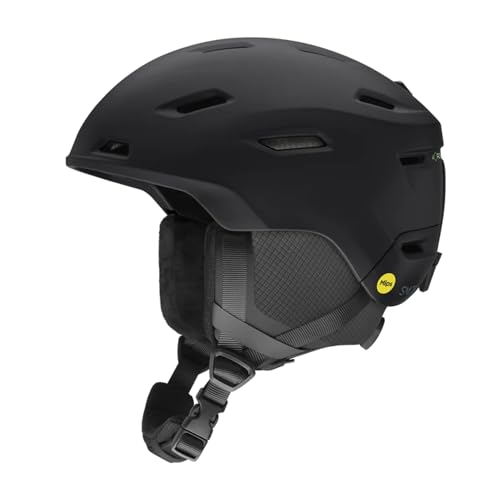
Smith Method MIPS
Smith Method MIPS
Best for: Riders who want a light, simple MIPS helmet for all-mountain days.
In-mold construction with MIPS and zonal Koroyd coverage
The Method MIPS is one of the lightest helmets in this guide at 450 grams in size medium, pairing MIPS with zonal Koroyd coverage in a light in-mold shell. Eight fixed vents with AirEvac keep air moving and your goggles clear, while the self-adjusting lifestyle fit system flexes to match your head shape without a dial to fiddle with. Removable Snapfit SL2 ear pads add warmth and accept audio chips, and the helmet is beanie compatible for the coldest days. It is a strong choice for riders who value low weight and clean, simple protection.
Which One Fits Your Situation
You Ride Mostly in Deep Winter
If your season runs through the coldest months, favor warmth and a dial fit. The Kelvin II MIPS pairs a MIPS liner with a soft detachable lining and full ear coverage, while the Descend adds sixteen adjustable vents you can seal on a frigid lift ride. Measure your head with a beanie on, and pick a helmet that leaves no gap between the rim and your goggles.
You Run Warm or Ride Spring Slush
If you overheat easily or ride mostly in spring, ventilation matters more than insulation. The Descend and the Ratio both let you open vents wide on a hike and close them on a cold chair, while the Method MIPS moves air through eight fixed vents with AirEvac. Skip the warmest liners, and look for removable ear pads you can pull out when the sun comes out.
You Want the Lightest Lid You Can Find
If weight is your main concern, the Method MIPS is the pick, at 450 grams in size medium with MIPS and Koroyd in a light in-mold shell. The ELK is another light option with a polycarbonate shell and eight vents. Avoid hard-shell helmets if you count every gram, and check the listed weight for your size, since a large shell weighs more than a small one.
You Are New to Snowboarding
If this is your first helmet, keep it simple: pick a certified MIPS helmet that fits well and pairs with your goggles. The Kelvin II MIPS covers warmth and MIPS at a low outlay, while the Method MIPS adds light weight and a trusted brand name. Measure your head, check the size chart, and replace the helmet after any hard crash, even if the shell looks fine.
Common Mistakes
Buying the wrong size: measure your head above the eyebrows and ears, and check the maker’s chart instead of guessing from hat size.
Picking a helmet that leaves a gap between the rim and your goggles, which lets cold wind in and fogs the lens.
Choosing a helmet for looks alone and skipping the certification mark inside the liner.
Riding with a helmet that has already absorbed a hard crash, since the foam is built to absorb one serious impact.
Forgetting to check that the ear pads and liner are removable, which makes cleaning and audio upgrades much easier.
Frequently Asked Questions
How do I measure my head for a snowboard helmet?
Wrap a soft tape around your head just above your eyebrows and ears, keeping it level, then match the number to the maker’s size chart. Sizes differ between brands, so a medium in one line can feel tight in another. The helmet should sit level, cover your forehead, and stay put when you shake your head gently.
Do I need MIPS in a snowboard helmet?
MIPS is a low-friction liner that lets the shell rotate a little during an angled fall, which helps reduce twisting forces on the brain. It is a useful upgrade if your budget stretches, and most helmets in this guide include it. A certified helmet without MIPS still protects well, so fit and certification matter more than any single feature.
Can I wear a beanie under my snowboard helmet?
Yes, if the fit allows it. Thin beanies work under most helmets, and the Method MIPS is built to be beanie compatible. A thick beanie can push the helmet up and open a gap at the forehead, so try the combination on before you ride. If the fit feels tight with a beanie, move up a size or choose a helmet with a dial fit system.
When should I replace my snowboard helmet?
Replace it after any hard crash, even if the shell looks fine, because the foam core is built to absorb one serious impact and may be compromised inside. Also replace it if the liner is worn out, the fit has loosened, or the shell is cracked. Most riders replace a helmet every three to five seasons of regular use, or sooner if it has taken a hard hit.
A
admin
We compare specs, materials and verified owner reviews before a product earns a spot. Rankings are never paid.
Affiliate disclosure. As an Amazon Associate we earn from qualifying purchases at no extra cost to you. Prices accurate as of the date shown.
Compare five shuffleboard sets for game nights, with table size, playfield quality, pucks, scoring and durability to help you play smooth games at home.
Compare five shaker bottles for protein and workouts, with mixing power, leak protection, capacity and cleaning to help you mix smooth shakes anywhere.



 Giro Ratio
 Smith Method MIPS