Key takeaways
- Compare five longbows for traditional archery, with draw weight, length, limb build and grip to help you pick a bow that shoots smooth and true.
A longbow rewards clean form more than any other bow shape. With no cams, no let-off, and no sight window full of hardware, the bow does exactly what your draw and release tell it to do. That honesty is why traditional archers love the shape — and why picking the right one matters so much. Length, draw weight, and limb build decide whether a bow feels smooth and forgiving or stiff and punishing.
The five bows below cover the full spread of traditional archery, from a short 54-inch one-piece bow for tight cover to a 68-inch one-piece bow built for steady club-range shooting. Two break down for travel, two arrive as full kits, and all five use wood and fiberglass limbs in the classic longbow shape. Use the guide below to match length and draw weight to your body and your shooting, then pick the bow that fits the way you shoot.
Quick Picks
As an Amazon Associate we earn from qualifying purchases
| Product | Best for | Key spec |
|---|---|---|
| SinoArt Topbows Sparrow 54-Inch Longbow | New archers and light draws | 54-inch one-piece, 20–35 lbs |
| PMZ Archery 65-Inch Wooden Takedown Longbow | Travel and long-draw shooters | 65-inch takedown, 20–60 lbs |
| Sanlida Royal X8 68-Inch Longbow | A complete kit in one box | 68-inch one-piece kit, 30–60 lbs |
| GLURAK Black Hunter 60-Inch Takedown Longbow | Limb swaps and all-round use | 60-inch takedown, 25–60 lbs |
| SAS Pioneer 68-Inch Wood Longbow | Steady club-range shooting | 68-inch one-piece, 35–55 lbs |
How to Choose
Bow Length and Your Draw Length
Bow length and draw length work as a pair. A longer bow spreads the draw over more limb, so the pull feels smoother and the bow forgives small release errors. A 68-inch bow suits archers with draws of 29 inches and more, while a 60-inch bow fits most average draws. A 54-inch bow feels quick and handy in tight cover but stacks sooner, so it asks more of your form. Measure your draw length before you shop: arms out, fingertip to fingertip, divided by 2.5. Match the result to the bow lengths in this guide and you will hold a bow that works with your body instead of against it.
Draw Weight You Can Hold All Session
Draw weight decides how long you can shoot well. A bow that is too heavy pulls your shoulder out of line, shortens your hold, and teaches bad habits that take months to undo. Begin with a weight you can draw smoothly and hold steady for a slow count of five. Most adults learning form do well between 20 and 35 lbs, then move up in 5-lb steps as strength and technique grow. Hunting calls for more weight, and local rules often set a minimum, so check the rules where you hunt before you buy. A lighter bow you shoot well always beats a heavy bow you fight.
One-Piece or Takedown
A one-piece longbow is the simplest bow you can own. Nothing bolts on, nothing loosens, and nothing needs alignment before a session — string it and shoot. The trade is size: a 68-inch one-piece bow needs a full-length case and a car that fits it. A takedown bow splits into a riser and two limbs, so it packs into a short case and travels easily. Takedown limbs also let you change draw weight by swapping limbs instead of buying a whole new bow. The cost is upkeep: check the limb bolts before every session and keep the mating surfaces clean. Pick one-piece for simplicity and takedown for travel and growth.
Limbs, Riser, and String
Limbs set the character of a longbow. Wood and fiberglass laminations give a classic smooth draw, while a bamboo core adds snap and speed. The riser is the part you hold, so look for rounded edges and a grip that fills your hand without forcing your wrist into an odd angle. A Dacron string suits most traditional bows and forgives small brace-height errors. Fast Flight strings shoot flatter but demand reinforced limb tips, so only use one when the maker says the bow accepts it. Check the brace height the maker lists and set the string to match it — the right brace height quiets the bow and keeps the shot consistent.
The 5 Best Options
SinoArt Topbows Sparrow 54-Inch Longbow

The Sparrow is the shortest bow in this guide, and that short length is its whole point. At 54 inches it moves through brush and blinds, and it suits archers with shorter draws who find a 68-inch bow unwieldy. The 20 to 35 lb draw range keeps the pull light enough to learn clean form, and the one-piece build means no hardware to check before a session. The laminated ebony riser feels solid in the hand, while fiberglass and maple limbs give a lively cast. It is a focused bow for lighter draws, not a do-everything bow.
Specs
- 54-inch bow, 52 inches strung, 50-inch string
- 20 to 35 lb draw weight
- 7.5-inch brace height
- Laminated ebony riser
- Fiberglass and maple limbs
- Dacron string
- Right-hand orientation
Best for: New archers and lighter-draw shooters who want a short, light one-piece bow.
Watch out for: The 20 to 35 lb range tops out low for hunting, and the bow comes right-hand only.
PMZ Archery 65-Inch Wooden Takedown Longbow
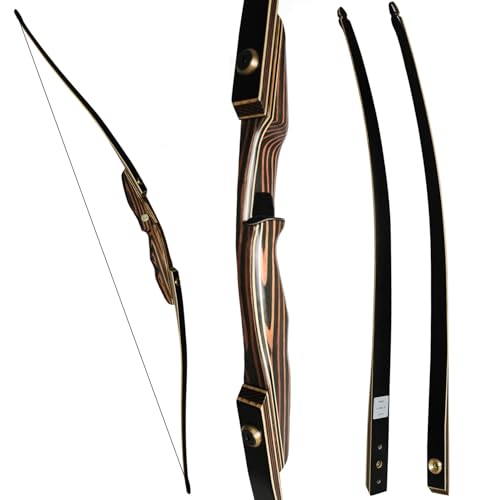
The PMZ is the longest takedown bow here, and it shows in the draw. At 65 inches it pulls smoother than the 60-inch bows, which helps longer draws hold steady at full draw. The takedown build splits in three, so the bow fits a short case and travels without the awkward length of a one-piece bow. Draw weights run from 20 to 60 lbs, so one riser can carry a shooter from light practice limbs to hunting weight. The brown-red wood and fiberglass limbs give the bow a classic look. It suits archers who want length and travel in one bow.
Specs
- 65-inch bow, 60-inch string
- 20 to 60 lb draw weight
- 6.7-inch brace height
- Fiberglass and wood limbs
- Brown-red finish
- Right-hand orientation
- About 1.5 lb in weight
Best for: Archers who want a long takedown bow that packs down for travel.
Watch out for: The 65-inch length still needs a long case, and limb bolts need a check before each session.
Sanlida Royal X8 68-Inch Longbow
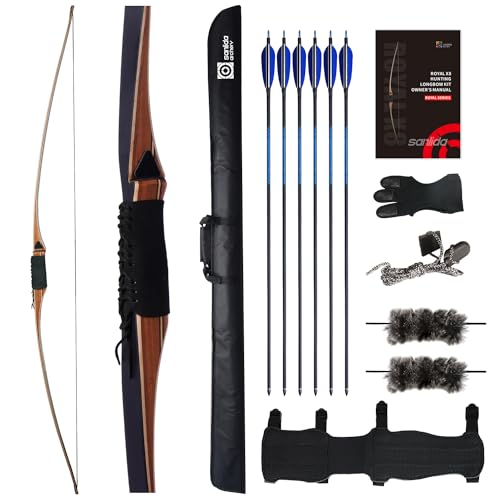
The Royal X8 arrives as a full kit, which makes it the easiest bow here to take from box to range. The box holds the bow, a string, a stringer, an arrow rest, and a bow bag, so a new archer needs nothing else to begin. At 68 inches it is a long, calm bow that suits taller archers and anyone who wants a smooth, forgiving draw. Draw weights cover 30 to 60 lbs, so the same bow can serve light practice and heavier hunting draws. It is a complete package for archers who want to begin with everything in hand.
Specs
- 68-inch one-piece longbow
- 30 to 60 lb draw weight
- 7 to 8 inch brace height
- Wood build with black finish
- Kit includes bow bag, bow string, stringer, and arrow rest
- Right-hand orientation
Best for: Archers who want a complete kit in one box.
Watch out for: The 68-inch one-piece frame needs a full-length case for transport.
GLURAK Black Hunter 60-Inch Takedown Longbow
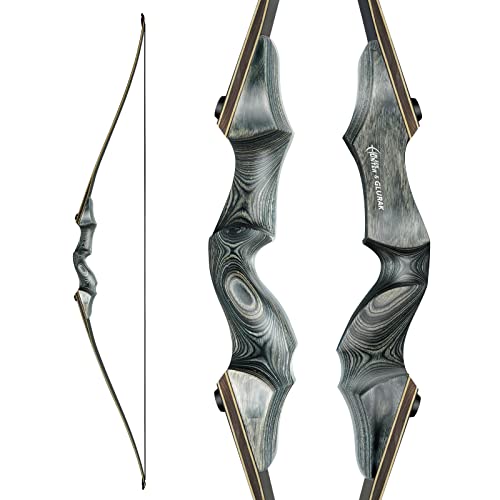
The Black Hunter is the most proven takedown longbow, and its strength is flexibility. The riser takes limbs from 25 to 60 lbs, so one bow can grow with a shooter from light practice to hunting weight by swapping limbs. The 60-inch length sits mid-range: long enough for a smooth draw, short enough to carry through timber. Fiberglass, wood, and bamboo limbs give a lively cast, and the takedown build packs into a short case. The maker advises removing the string after each use to protect the limbs. It suits archers who want one bow that adapts as they improve.
Specs
- 60-inch takedown longbow
- 25 to 60 lb draw weight
- 28-inch draw length
- 7.0-inch brace height
- Fiberglass, wood, and bamboo limbs
- Black, brown, grey, and white color options
- Right-hand and left-hand options
Best for: Archers who want a proven takedown bow with limb-swap flexibility.
Watch out for: Take the string off after each use to protect the limbs, and check limb bolts before shooting.
SAS Pioneer 68-Inch Wood Longbow
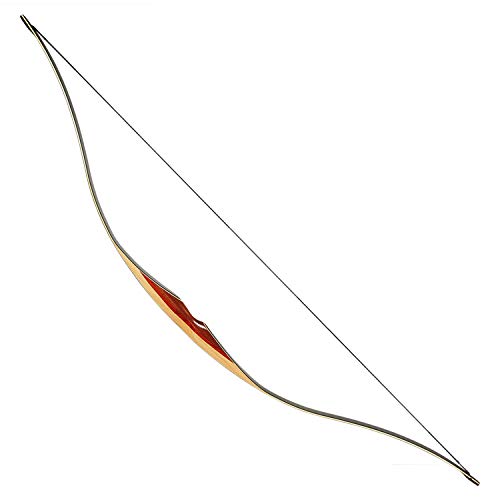
The Pioneer is a long, steady one-piece bow for the club range. At 68 inches it spreads the draw over long limbs, so the pull feels smooth and the bow forgives small release errors. The Makore wood riser and maple fiberglass limbs give it a traditional look, and the included hair arrow rest protects the shelf from wear. There is no hardware to check and no assembly beyond stringing, which suits archers who want to shoot rather than tinker. The bow comes right-hand only, so left-handed archers need a different pick. It suits archers who want a calm, classic bow for long sessions.
Specs
- 68-inch one-piece longbow
- 35 to 55 lb draw weight
- Makore wood riser
- Maple and fiberglass limbs
- Hair arrow rest included
- Right-hand orientation
- 1-year manufacturer warranty
Best for: Club-range shooters who want a long, steady one-piece bow.
Watch out for: Right-hand only, and the 68-inch one-piece length is awkward to carry and store.
Which One Fits Your Situation
Learning Form at the Club Range
A long, calm bow helps a new archer learn clean form. The 68-inch bows in this guide spread the draw and forgive small release errors, so a beginner can focus on anchor and follow-through instead of fighting the bow. Pick a light draw weight and a one-piece build. The Pioneer and Royal X8 both fit this role, with the Royal X8 adding a full kit.
Hunting From a Blind or Stand
Tight cover calls for a short bow. A 54-inch or 60-inch bow moves through brush and blind fabric without catching, and it draws cleanly in a seated position. The Sparrow is the shortest bow here, while the Black Hunter adds takedown packing and limb swaps for changing conditions. Keep the draw weight where you can hold it steady at full draw, and favor a quiet bow.
Traveling to Shoots and Ranges
A takedown bow is the easy answer for travel. The PMZ and the Black Hunter both split into a riser and two limbs, so they fit a short case and leave room in the car for the rest of your kit. Pack the limbs with the string and stringer, and check the bolts before your first session. A one-piece bow can travel too, but it needs a full-length case.
Your First Bow on a Tight Budget
A first bow should be simple, light, and easy to learn on. The Sparrow pairs a short one-piece build with a light draw range, so a new archer can focus on form without fighting weight or hardware. The Black Hunter adds limb swaps, so one riser can grow from light practice to hunting weight. Spend the savings on arrows and a stringer — the parts that shape every shot.
Common Mistakes
- Picking a draw weight you cannot hold steady at full draw — form falls apart and bad habits follow.
- Stringing the bow by hand instead of using a stringer, which twists the limbs and can damage them.
- Dry-firing the bow, even once — the shock can crack limbs and void the warranty.
- Leaving the bow strung in a hot car or in direct sunlight, which warps limbs over time.
- Matching arrows to the wrong draw weight — arrows that are too stiff or too weak fly wide and group poorly.
Frequently Asked Questions
What draw weight should a beginner choose?
Begin with 20 to 30 lbs if you are new to archery. That range lets you learn anchor, release, and follow-through without fighting the bow. Hold the weight at full draw for a slow count of five — if you shake or collapse, go lighter. Move up in 5-lb steps only when the current weight feels easy.
How long should my longbow be?
Match the bow to your draw length. A 68-inch bow suits draws of 29 inches and more, a 60-inch bow fits most average draws, and a 54-inch bow suits shorter draws and tight cover. Longer bows draw smoother and forgive more, while shorter bows move easier. Measure your draw length first, then pick the shortest bow that draws smooth for you.
Can I hunt with a longbow?
Yes, with the right draw weight and plenty of practice. Most hunters use 40 lbs and more for deer-sized game, and local rules often set a minimum weight, so check the rules where you hunt. Practice at the distances you will shoot, use broadheads matched to your arrows, and only take shots you can make cleanly. A longbow rewards patience and careful shooting.
Do I need a stringer?
Yes. A stringer is the only safe way to string and unstring a longbow. It bends the limbs evenly, so the string seats without twisting the limbs out of line. Stringing by hand or by stepping through the bow puts uneven force on one limb and can warp or crack it. A stringer fits in a pocket and protects every bow you own.