Key takeaways
- Compare the best clarinet reeds for clear tone and easy response, from soft beginner boxes to harder cuts that give advanced players warm, steady sound.
A clarinet reed is a thin strip of cane, or a synthetic copy of one, that vibrates against the mouthpiece to make sound. The reed decides how easily a note speaks, how clear the tone sounds in the low register, and how much air each phrase needs. A reed that is too hard squeaks, sounds muffled, and tires the player. A reed that is too soft sounds thin and dies fast. The right reed can make a student clarinet sound like a much better instrument, and it is the cheapest upgrade a player can buy.
This guide compares five Bb clarinet reeds chosen for clear tone and easy response, from soft cane boxes that speak with little air to a harder V12 box for advanced players and a synthetic reed that lasts for months. Each pick is a distinct cut or material, so you can match the reed to your mouthpiece, your strength, and the sound you want in the practice room and on stage.
As an Amazon Associate, we earn from qualifying purchases.
Quick Answer
For clear tone with easy response, the Rico by D’Addario RCA1025 in strength 2.5 is the best box, with an easy response and a clear sound. Choose the D’Addario Royal RCB1025 for a filed cut with more clarity, the Vandoren Traditional CR102 in strength 2, the Vandoren V12 CR1935 in strength 3.5, and the Légère Classic BB3.00 for a synthetic reed that lasts for months.
The 5 Best Clarinet Reeds for Clear Tone and Easy Response
Rico by D’Addario RCA1025

The Rico by D’Addario RCA1025 is the reed to buy first if clear tone and easy response matter most. It is a box of ten Bb clarinet reeds in strength 2.5, with an unfiled cut and a thinner vamp that vibrates easily, so a player can get a full sound out of the instrument without fighting the reed. It is a best seller in clarinet reeds, and teachers around the world recommend it for students.
Rico reeds are made from flexible cane and shaped with a traditional blank and profile that suits most student mouthpieces. Each reed is individually sealed, so the box stays fresh while you work through it one reed at a time. A box of ten lasts two to four weeks of daily practice if you rotate reeds, which is the right habit to learn early: a reed that rests between sessions lasts longer than one played every day.
The trade-off is consistency. Natural cane varies from reed to reed, so a box of ten will have a few reeds that play beautifully, a few that are average, and one or two that never speak well. That is normal for cane reeds at this level, and it is why teachers tell students to rotate several reeds rather than playing one until it dies.
Specs
- Bb clarinet; strength 2.5; box of 10; unfiled cut; thinner vamp; individually sealed; model RCA1025; ASIN B0002F59W2.
D’Addario Royal RCB1025
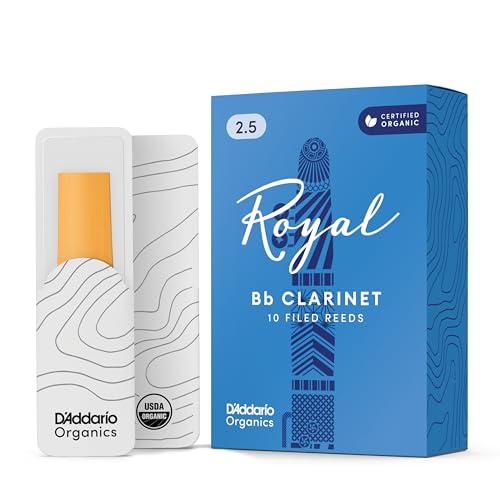
The D’Addario Royal RCB1025 is the step up from the Rico above, and the pick for a player who wants a clearer tone without moving to a harder reed. It is also a box of ten Bb clarinet reeds in strength 2.5, but the Royal cut is filed, with a stronger spine and a traditional French file cut that gives more clarity in the low register and makes soft attacks easier.
The filed cut is the main difference to understand. An unfiled reed, like the Rico, has a thicker heel and a simpler profile, which makes it easy to play. A filed reed has part of the bark removed from the heel, which changes how the reed vibrates and gives a more focused sound. The Royal is still a student reed, so it does not demand a professional embouchure, but it rewards a player who has a few months of practice behind them.
If the Rico feels too soft or too bright, the Royal is the next box to try. If the Royal feels too resistant, go back to the Rico or drop to strength 2. Either way, the filed cut teaches you what clarity sounds like.
Specs
- Bb clarinet; strength 2.5; box of 10; filed cut; stronger spine; French file; model RCB1025; ASIN B0002FONKQ.
Vandoren Traditional CR102

The Vandoren Traditional CR102 is the softest Vandoren in this guide, and the pick for a player whose teacher recommends Vandoren. It is a box of ten Bb clarinet reeds in strength 2, which is softer than the 2.5 boxes above, so it speaks with less air pressure and forgives an embouchure that is still developing. Vandoren Traditional reeds, often called blue box reeds, are the reference sound for classical playing.
The Traditional cut is known for its response across all registers, from a soft pianissimo attack in the high notes to a full sound in the low register. Each reed is sealed in a Flow Pack to keep it fresh until you open it, and the cane is sorted carefully, so the variation between reeds in a box is smaller than with budget reeds.
Strength 2 is a genuine strength, not a compromise. Many players move up to 2.5 after a few months, and that is fine, but a reed that is too hard will sound muffled and squeak more than a reed that is too soft. If your teacher says Vandoren, the CR102 is the box to buy first.
Specs
- Bb clarinet; strength 2; box of 10; Traditional cut; Flow Pack sealed; model CR102; ASIN B0002D09YC.
Vandoren V12 CR1935

The Vandoren V12 CR1935 is the advanced pick in this guide, and the one to choose when strength 2.5 no longer gives enough resistance. It is a box of ten Bb clarinet reeds in strength 3.5, cut from larger diameter cane with a thicker heel and a longer palette. The thicker tip and heel give a deep, rich sound with more body to the attack, and the reed lasts longer than a softer box.
The V12 cut is built for players who already have a steady embouchure and want a warmer, more powerful tone for band, orchestra, or solo work. The thicker cane vibrates with more energy, so the sound carries further and stays clear at higher volumes. It also means the reed needs more air and more control, so a player who is still learning the basics will find it tiring.
Do not buy the V12 as a first box. It is the reed to move to after a few months on strength 2.5 or 3, when your teacher agrees you are ready for more resistance. Bought at the right time, it is the box that makes an advancing player sound like a section leader.
Specs
- Bb clarinet; strength 3.5; box of 10; V12 cut; thicker heel; longer palette; model CR1935; ASIN B00MO1XHBW.
Légère Classic BB3.00

The Légère Classic BB3.00 is the synthetic pick in this guide, and the one to choose if you are tired of cane reeds that warp, chip, or die in the middle of a rehearsal. It is a single synthetic reed for Bb clarinet in strength 3.00, made from a proprietary synthetic material that produces a rich, rounded tone close to natural cane while lasting for months instead of weeks.
The Classic cut has a thicker tip than other Légère clarinet reeds, which gives a darker sound suited to a traditional or classical setup. The reed needs no soaking and no break-in, and it sounds the same on the first day as it does on the thirtieth. Humidity, heat, and dry air do not change how it plays, so it is the reed to pack for outdoor gigs and marching band.
The trade-off is the strength. At 3.00, this reed is harder than the 2 and 2.5 cane reeds above, so it suits a player who has already built some embouchure strength, or a player whose teacher has checked the fit. It is also a single reed rather than a box of ten, so the cost per reed is higher, but one Légère can outlast several boxes of cane reeds.
Specs
- Bb clarinet; strength 3.00; single synthetic reed; Classic cut; thicker tip; no soaking needed; model BB3.00; ASIN B000XZWS4I.
How to Choose a Clarinet Reed
Check the instrument first. All five picks in this guide are for Bb clarinet, which is the standard student clarinet. Eb clarinet reeds and bass clarinet reeds are different sizes and will not fit a Bb mouthpiece, so read the box before you buy.
Next, choose the strength. Strength 2 and 2.5 suit most players who are still building embouchure, since they vibrate easily and forgive a developing embouchure. Strength 3 suits a player who has played for several months and wants more resistance and a fuller tone. Strength 3.5 suits an advanced player with a steady embouchure. Strength numbers vary between brands and cuts, so a Vandoren 2.5 feels different from a Rico 2.5, and your teacher should confirm the strength for your mouthpiece.
Then choose the cut and the material. An unfiled cut, like the Rico, is the easiest to play. A filed cut, like the Royal, gives more clarity. A Traditional cut, like the Vandoren, is the reference sound for classical playing. A V12 cut gives a deeper, richer tone for advanced players. Cane reeds are cheaper per reed but vary and wear out, while synthetic reeds cost more per reed but last months and sound the same every day.
What These Clarinet Reeds Are Not
These reeds are not a shortcut around practice, and they are not a fix for a mouthpiece that does not fit. They are also not saxophone reeds, and they are not Eb or bass clarinet reeds. A reed can only sound as good as the player behind it, so the best box is the one that matches your strength today, not the one a professional uses.
Who Should Skip These Clarinet Reeds
Players whose teacher specified a different strength or brand should follow the teacher, not this guide. A reed that does not match your mouthpiece will fight you, and a teacher who has heard you play knows what you need better than any roundup.
Saxophone players should skip this guide entirely, since saxophone reeds are a different size and shape and will not fit a clarinet mouthpiece. The same applies to Eb and bass clarinet players: these picks are Bb only.
Players who already have a reed that works should not switch mid-semester without a reason. Anyone who has not yet bought a clarinet should buy the instrument first, since the mouthpiece that comes with it determines which reed strength fits best.
Frequently Asked Questions
What strength reed should I use?
Most players do well on strength 2 or 2.5, which vibrates easily and forgives a developing embouchure. Your teacher should confirm the strength for your mouthpiece, since the right number depends on the tip opening as well as your experience.
How long does a clarinet reed last?
A cane reed lasts two to four weeks of daily practice if you rotate several reeds and store them flat in a reed case. A synthetic reed can last for months. Replace a reed when it sounds thin, squeaks often, or has a chipped tip.
Cane or synthetic reeds: which is better?
Cane reeds are cheaper and give the traditional sound most teachers expect, but they vary and wear out. Synthetic reeds cost more per reed but last longer and sound consistent. Try cane first, then try one synthetic reed to compare.
How many reeds do I need per month?
A player who practices daily and rotates reeds will use around ten cane reeds a month, which is one box. A synthetic reed lasts much longer, so one reed can cover a whole term. Keep at least three good reeds in your case at all times.
Final Verdict
The Rico by D’Addario RCA1025 in strength 2.5 is the best first box for clear tone with easy response, with an unfiled cut and a thinner vamp that speaks easily. The D’Addario Royal RCB1025 adds a filed cut for more clarity, the Vandoren Traditional CR102 is the softest Vandoren of the five, the Vandoren V12 CR1935 gives advanced players a deep, rich tone at strength 3.5, and the Légère Classic BB3.00 is the synthetic reed that lasts for months. Match the strength to your mouthpiece, rotate your reeds, and replace them before they go soft.
Product and ASIN Reference
| Product | ASIN |
|---|---|
| Rico by D’Addario RCA1025 | B0002F59W2 |
| D’Addario Royal RCB1025 | B0002FONKQ |
| Vandoren Traditional CR102 | B0002D09YC |
| Vandoren V12 CR1935 | B00MO1XHBW |
| Légère Classic BB3.00 | B000XZWS4I |