We independently review everything we recommend. When you buy through our links, we may earn a commission. As an Amazon Associate we earn from qualifying purchases.
Best Indoor Electric Composters for a Cleaner Kitchen
The best indoor electric composters for apartments and kitchens, from compact countertop recyclers to larger microbial units that turn scraps into compost.
The best indoor electric composters for apartments and kitchens, from compact countertop recyclers to larger microbial units that turn scraps into compost.
Kitchen scraps add up fast. Vegetable peelings, coffee grounds, eggshells, and leftovers fill the trash bin, attract fruit flies, and start to smell long before trash day. An indoor electric composter offers a different routine: drop scraps into a countertop machine, press a button, and let heat, grinding, or microbes turn them into a dry, soil-like material for the garden or potted plants.
These machines are built for kitchens, apartments, and small homes where a backyard pile is not an option. Most sit on a countertop, run quietly, and use carbon filters to keep odors in check. Some dry and grind scraps into a lightweight byproduct in a few hours, while others use microorganisms to break food down into genuine compost over the course of a day.
Choosing the right one comes down to how much food waste your household produces, how much space you can spare, and what you want to do with the finished material. This guide compares five indoor electric composters, explains how each one works, and helps you match a machine to your cooking habits, your counter space, and your garden plans.
As an Amazon Associate, we earn from qualifying purchases.
Quick Answer
For most kitchens, a compact dehydrating recycler such as the Vitamix FoodCycler FC-50 is the easiest starting point, while larger households that want genuine compost should look at the microbial Reencle Prime. Smaller budgets are well served by the Kismile and NutriChef models.
How to Choose
Start with capacity. Countertop recyclers usually hold between two and four liters per cycle, which suits one or two people who cook at home a few times a week. Larger microbial units hold far more and accept fresh scraps throughout the day, which makes them a better fit for families or anyone who cooks daily. A machine that is too small forces constant cycles, while an oversized unit wastes counter space.
Next, understand the processing method. Dehydrating recyclers dry and grind scraps with heat and a rotating mechanism, finishing a batch in several hours. The output is a dry, lightweight material that stores well in a sealed container. It is not finished compost, so mix it into soil or an outdoor pile rather than using it alone as potting mix. Microbial composters work differently: they keep a living culture of microorganisms inside the chamber, and those microbes digest food continuously. The result is closer to real compost, but the machine needs its starter culture topped up from time to time.
Odor control matters more than most buyers expect. Every machine on this list uses filtration, usually replaceable carbon filters, plus a sealed lid. Filters are a recurring cost and chore, so check how often the maker recommends changing them and whether replacements are easy to find. A machine with a good seal and fresh filters should produce little to no smell, but stale filters or an overloaded chamber can change that quickly.
Noise is the next thing to weigh. Most hum or whir while they work, and many are designed to run overnight. If your kitchen opens onto a living room, look for models described as quiet. A low, steady sound is far easier to live with than a high-pitched whine.
Size and placement deserve a careful look before you buy. Measure your counter depth and the height under your upper cabinets, because some units are tall enough to block a cabinet door. The lid needs room to open fully, and the machine needs airflow around it. If counter space is tight, a slim floor-standing unit beside the counter may work better than a wide countertop model.
Also consider what the machine accepts. Most handle fruit and vegetable scraps, bread, grains, eggshells, and coffee grounds, and many take small amounts of meat, fish, and dairy, which backyard piles cannot handle. Bones, pits, and large amounts of oil or liquid are usually off limits, and fibrous material such as corn husks can tangle the grinding mechanism. Check the maker’s accepted-items list first.
Finally, think about the output. If you have a garden, planters, or houseplants, the finished material is a genuine asset. If you have no plants at all, check whether your city accepts the dried output in a green bin or whether the maker runs a mail-back program. A composter only saves waste if the output has somewhere useful to go.
The Vitamix FoodCycler FC-50 is the most established name in this category, and it earns that position with a simple idea executed well. It is a compact countertop recycler that dries and grinds food scraps into a dry, soil-like material in a single cycle. The unit is small enough to live on a countertop without dominating the kitchen.
Operation is straightforward. Scraps go into a removable bucket, the lid closes, and a single button starts the cycle. Inside, the machine moves through grinding, drying, and cooling phases, with indicator lights showing which stage is running. The bucket lifts out for emptying and is dishwasher safe for easy cleanup. Carbon filters in the lid help keep odors contained while the machine runs.
The two-liter bucket suits singles, couples, and small households. It handles vegetable peelings, fruit rinds, bread, grains, eggshells, and coffee grounds, plus small amounts of meat and dairy. Each cycle reduces a full bucket to a small amount of dry material, so the bin needs emptying far less often than a standard scrap pail.
One practical strength is how little attention the FC-50 demands. There is no starter culture to maintain, no liquid to drain, and no app to manage. You load it, run it, and empty the dry output into a storage container or straight into the garden.
The Reencle Prime takes a different approach from the dehydrating recyclers. Instead of drying scraps with heat, it uses a living culture of microorganisms to digest food waste continuously, producing genuine compost rather than a dried byproduct. That difference makes it the strongest choice in this guide for households that actually garden.
With a 14-liter chamber, the Prime holds far more than a countertop recycler. It accepts up to about two pounds of food waste per day, and because the process is continuous, you can add fresh scraps at any time instead of waiting for a cycle to finish. It takes fruit and vegetable scraps, grains, bread, eggshells, coffee grounds, and small amounts of meat and dairy. The microbes break it down into a dark, soil-like compost for garden beds or potted plants.
The unit runs quietly, uses multi-layer filtration to control odor, and has a sensor-activated lid so you can drop scraps in with one hand. A starter kit is included, and the microbial culture needs periodic topping up with fresh starter material. That ongoing maintenance is the main trade-off against the simpler dehydrating models.
Households of two to four people will get the most from the Prime. Its larger capacity means fewer trips to empty it, and the continuous process fits a daily cooking routine. It is bigger than the countertop recyclers here, so measure your space and place it where the lid can open freely.
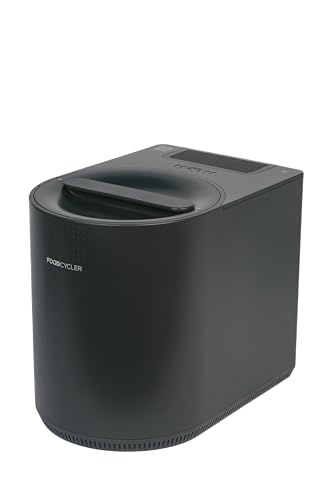
The FoodCycler Eco 3 is a compact countertop recycler from the same family as the FC-50, built for kitchens that need a small footprint and simple operation. Its 3.5-liter bucket is larger than the FC-50, so it handles bigger batches while still fitting a standard countertop.
Like other dehydrating recyclers, the Eco 3 dries and grinds food waste into a dry, lightweight material. Load the bucket, close the lid, and let the machine work through its cycle. Carbon filtration keeps odors contained, and the compact shape fits easily near a prep area where scraps are generated.
The larger bucket is the main reason to choose the Eco 3 over smaller recyclers. Households that cook most days will run fewer cycles, and the extra capacity helps after big cooking sessions or weekend meal prep. The bucket lifts out for emptying, and the finished material stores in a sealed container until you have enough for the garden.
This is a good middle-ground pick. It needs less attention than a microbial system, holds more than the smallest countertop models, and suits renters and apartment dwellers who want a tidy, low-maintenance way to keep food waste out of the trash.
The Kismile Electric Composter is a budget-friendly countertop recycler that packs a surprising amount of function into a compact body. It offers a 3.5-liter capacity with a four-liter maximum fill, three operating modes, an intelligent LED display, and an auto-cleaning function.
The three modes let you match the cycle to the load: a quick cycle for a small batch of light scraps, a longer one for denser material such as eggshells and bread. The LED display shows whether the machine is running, cooling, or finished without opening the lid. Two carbon filters keep odors inside the unit while it processes food waste.
Auto-cleaning is a practical feature. Instead of scrubbing the bucket after every sticky batch, the machine rinses itself, keeping the chamber fresh and shortening the time between cycles. The bucket lifts out when you need to empty the dried output or give it a deeper clean.
The Kismile suits singles, couples, and small families who want a capable recycler without a large footprint. It is a sensible first electric composter, especially in a rental or a kitchen where counter space is shared with other appliances.
The NutriChef Electric Kitchen Composter is the simplest machine in this guide, and that is exactly its appeal. It is a three-quart countertop recycler with one-button operation, a removable bucket, and an auto-clean function. There are no modes to learn and no starter culture to feed.
Load the bucket with scraps, press the button, and the machine dries and grinds the contents into a dry material for the garden or for storage. The compact white body takes up little counter space, and the low-noise motor will not disrupt conversation in an open-plan living space. A sealed lid and carbon filter keep the kitchen smelling normal while a cycle runs.
The three-quart capacity suits one or two people who cook a few times a week. It fits apartments and small kitchens where a larger machine would crowd the counter, and it works well for anyone who finds multi-mode appliances fussy or wants composting to be a single-button habit.
Emptying the bucket is easy, and the auto-clean function keeps the interior fresh between uses. If you are curious about electric composting but do not want a large or complex machine, this is a low-friction place to start.
Who Should Skip It
An indoor electric composter is not right for every household. If you rarely cook at home and generate only a handful of scraps each week, a machine like this will sit idle most of the time, and a simple countertop scrap pail emptied into a municipal green bin may serve you better. The value of these machines comes from regular use, so occasional cooks should think carefully before buying one.
People with no garden, no houseplants, and no green-bin service should also pause. If you have no use for dried food waste or finished compost, the machine only moves the problem from the trash can to a storage container. Check your local disposal rules and confirm you have a plan for the finished material.
Very large households may find even the biggest unit here too small. A family cooking three full meals a day can generate more scraps than one machine can process. In that case, an outdoor compost system or a municipal collection service may handle the volume better.
Finally, weigh the ongoing maintenance. Carbon filters need replacing on a regular schedule, and microbial units need fresh starter material. These small recurring chores add up, and a machine with stale filters or a neglected culture will not perform as it should. If you want a zero-maintenance solution, a plain scrap bin is the honest alternative.
FAQ
Do indoor electric composters smell?
A well-maintained unit should produce little to no odor. Carbon filters and sealed lids trap smells while the machine runs, and drying removes the moisture behind most kitchen-bin odors. Smell usually appears only with overdue filters, an overloaded chamber, or wet scraps left sitting. Keep filters fresh, avoid overfilling, and run cycles regularly.
What can you put in an electric composter?
Most models accept fruit and vegetable scraps, bread, grains, eggshells, coffee grounds, and small amounts of meat, fish, and dairy, a wider range than a backyard pile, which cannot safely handle meat or dairy. Bones, fruit pits, corn husks, and large amounts of oil or liquid are usually off limits because they can damage the grinding mechanism. Check the maker’s accepted-items list before adding something unusual.
Is the output real compost?
It depends on the machine. Microbial composters such as the Reencle Prime produce genuine compost, because living microorganisms digest the food into a soil-like material. Dehydrating recyclers produce a dry byproduct instead: the scraps are dried and ground but not broken down by microbes. Mix that byproduct into soil or an outdoor pile so microbes can finish the job first.
How much counter space does an electric composter need?
Countertop models need about the same footprint as a small kitchen appliance, plus clearance above the lid so it can open fully. Measure the height under your upper cabinets before buying, and leave airflow around the sides. Larger units need a clear spot beside a counter instead. If counters are crowded, consider a slim model or one that can live on a utility shelf near an outlet.
Final Verdict
The best indoor electric composter depends on how you cook, how much space you have, and what you will do with the finished material. The Vitamix FoodCycler FC-50 is the easiest recommendation for most kitchens: compact, simple to run, and proven in daily use. Households that garden and generate more waste should step up to the Reencle Prime, whose microbial process produces genuine compost in a larger chamber.
The FoodCycler Eco 3 and the Kismile cover the middle ground well, with larger buckets and useful features in countertop-friendly sizes. The NutriChef is the simplest and most compact option, ideal for singles, couples, and apartments where one-button operation matters more than extra capacity.
Whichever model you choose, success comes from routine: keep the machine near your prep area, run it regularly, replace filters on schedule, and have a plan for the output. Do that, and an indoor electric composter turns a daily chore into a satisfying habit.
Product and ASIN Reference
Product
ASIN
Vitamix FoodCycler FC-50
B08BQYXVNT
Reencle Prime Electric Composter
B0CVNNKPRP
FoodCycler Eco 3
B0D611M6PY
Kismile Electric Composter
B0FHWFDCR5
NutriChef Electric Kitchen Composter
B0F79Y7BB4
A
admin
We compare specs, materials and verified owner reviews before a product earns a spot. Rankings are never paid.
Affiliate disclosure. As an Amazon Associate we earn from qualifying purchases at no extra cost to you. Prices accurate as of the date shown.
Compare the best night vision goggles for camping and wildlife — digital infrared binoculars and a head-mounted unit for dark trails and animal watching.
Compare five flashlights for home and outdoor use, from a pocket EDC to a 2,800-lumen tactical light, and match output, beam, and battery to your needs.

 Vitamix FoodCycler FC-50
 Reencle Prime Electric Composter
 FoodCycler Eco 3
 Kismile Electric Composter
 NutriChef Electric Kitchen Composter