We independently review everything we recommend. When you buy through our links, we may earn a commission. As an Amazon Associate we earn from qualifying purchases.
5 Best Horse Riding Helmets for Safe Rides (November 2026)
Compare five horse riding helmets for safe rides, with fit, ventilation, safety standards and comfort to help you ride protected without distraction.
Compare five horse riding helmets for safe rides, with fit, ventilation, safety standards and comfort to help you ride protected without distraction.
A riding helmet is the single most important piece of gear you put on before you mount up. A fall can happen at any gait, on any day, to a rider of any level, and the helmet is what stands between your head and the ground. Fit, certification, and ventilation decide whether a helmet protects you well and whether you will actually wear it every ride. A helmet that pinches, overheats, or slides around does no one any good, so the right choice balances safety with comfort you can live with for hours.
The five helmets below cover the main ways riders buy: a full-coverage schooling helmet, a cool vented lesson helmet, a MIPS-equipped upgrade, a high-airflow trail helmet, and a western-styled option with bold graphics. Each one is ASTM and SEI certified and sold on Amazon, and each one suits a different kind of riding. Measure your head, check the size chart for the model you like, and pick the helmet that matches how and where you ride.
Quick Picks
As an Amazon Associate we earn from qualifying purchases
Product
Best for
Key spec from title
Troxel Spirit
Full coverage on a schooling budget
Low-profile full-coverage shell with adjustable strap
Ovation Deluxe Schooler
Cool, vented schooling
Lightweight low-profile shell with high-flow vents
Troxel Spirit with MIPS
Rotational-impact protection
MIPS liner inside a full-coverage shell
Tipperary Sportage Hybrid
Maximum airflow in heat
Large brim with top and rear vents
Troxel Rebel Performance Helmet
Western style with bold graphics
Low-profile western shell with SureFit Pro dial
How to Choose
Certification Comes First
Every helmet in this guide carries ASTM and SEI certification, and that label is the first thing to check on any riding helmet you consider. Certification means the helmet passed laboratory impact checks for the equestrian standard, and most lesson barns and show organizers require it. Look for the ASTM and SEI marks on the inside label, and buy new rather than secondhand, since a helmet that has already taken a fall may have hidden damage. A certified helmet that fits well beats a fancier uncertified one every time, so treat the label as a hard requirement and move on to fit only after it checks out.
Fit and Head Shape
A riding helmet should sit level on your head, about a finger width above your eyebrows, with the shell touching evenly all the way around and no pressure point at the front or back. Measure around your head just above the eyebrows with a soft tape, then match the number to the size chart for the exact model you want, since sizing varies between brands. Round heads and long oval heads need different shell shapes, so if one model presses on your forehead, try another brand before sizing up. The chin strap should be snug enough that the helmet stays put when you shake your head.
Ventilation and Weight
Ventilation matters more than most riders expect, because a hot helmet gets left in the tack room. Mesh-covered vents, air channels, and a light shell keep air moving on warm days, while a heavier helmet can feel like a burden by the end of a long lesson. The helmets here range from light schooling shells to fuller-coverage designs, and the trade-off is real: more coverage usually means more weight and less airflow. If you ride in heat, put vents near the top of your list. If you ride in cold weather, a fuller shell with a removable liner may suit you better.
Visor, Liner, and Everyday Care
Small details decide how a helmet feels day after day. A flexible visor shades your eyes without blocking your view, and a breakaway visor folds away in a fall instead of catching. A removable, washable liner keeps the helmet fresh through sweaty summer lessons, and a dial-fit system lets you fine-tune the fit after the helmet is on. Check how the harness fastens and whether the buckle sits clear of your jaw. After each ride, wipe the shell clean, let the liner air out, and store the helmet away from heat and direct sun.
The 5 Best Options
Troxel Spirit
Top Pick
Troxel Spirit
Best for: Riders who want full coverage and an adjustable fit at a schooling-friendly level.
The Troxel Spirit is the classic schooling helmet, and it earns its place with a deep, full-coverage shell that wraps further down the back of the head than a low-profile-only design. The low-profile shape keeps it from looking bulky, while the adjustable strap and DialFit system let you fine-tune the fit after the helmet is in place. A removable FlipFold headliner adapts the interior to your head shape, and the flexible visor shades your eyes on sunny days. It is the helmet lesson barns reach for again and again, because it fits a wide range of heads and holds up to daily use.
Ovation Deluxe Schooler
Runner-Up
Ovation Deluxe Schooler
Best for: Schooling and lessons in warm weather, where airflow and light weight matter most.
The Ovation Deluxe Schooler is the helmet to reach for when lessons run long and the arena is warm. Its lightweight, low-profile shell carries high-flow vents that move air through the helmet, and the easy-care rubberized finish wipes clean after dusty rides. An adjustment dial at the back fine-tunes the fit, and the removable, washable liner keeps things fresh between washes. A breakaway visor folds away in a fall instead of catching, which is a thoughtful safety detail. It is a straightforward schooling helmet that does the basics well, and the wide size range covers younger riders through adults.
Troxel Spirit with MIPS
Troxel Spirit with MIPS
Best for: Riders who want MIPS protection in a familiar full-coverage shell.
The Troxel Spirit with MIPS takes the standard Spirit shell and adds a MIPS liner, a low-friction layer designed to reduce rotational forces on the brain during an angled impact. Everything else stays familiar: the same deep full-coverage shell, the same DialFit adjustment, the same FlexVisor, and the same removable headliner. The MIPS version suits riders who want the extra layer of protection without changing the fit and feel they already know. It is a sensible upgrade for anyone moving from schooling into jumping or cross-country, where falls can come at odd angles and extra protection earns its keep.
Tipperary Sportage Hybrid
Tipperary Sportage Hybrid
Best for: Trail riders and warm-weather schooling, where airflow matters most.
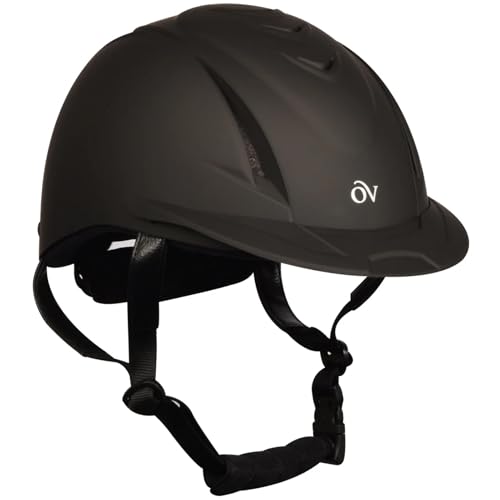
The Tipperary Sportage Hybrid is the airflow champion of this group, built for riders who overheat in a closed shell. Large front vents, top and rear vents, and a mesh-covered vent system move air through the helmet on hot days, while the large brim keeps sun out of your eyes. The contoured shell and comfort foam cradle the head, and extra padding is included so you can tune the fit. A magnetic Fidlock clip on the chin strap opens and closes with one hand, even with gloves on. The removable, washable liner and the included storage bag round out a helmet that suits trail rides and warm-weather schooling alike.
Troxel Rebel Performance Helmet
Troxel Rebel Performance Helmet
Best for: Western and trail riders who want bold graphics with certified protection.
The Troxel Rebel Performance Helmet brings western style to a serious schooling helmet, with bold graphics and a matte finish that stand out in the arena and on the trail. Under the looks, it is a proper riding helmet: a low-profile shell, a SureFit Pro dial for fine-tuning, a FlipFold headliner, and mesh-covered cluster vents that keep air moving. The Duratec finish resists scuffs, and the helmet carries ASTM and SEI certification for children and adults. It suits riders who want a helmet with personality that still does the safety job, and the wide size range from small through extra-large covers most heads.
Which One Fits Your Situation
Schooling Lessons Several Days a Week
If you ride in lessons most days, pick the Ovation Deluxe Schooler or the Troxel Spirit. The Ovation keeps you cool through back-to-back lessons, and its washable liner handles daily sweat. The Spirit gives you deeper coverage and a dial fit that adapts as you share the helmet between family members. Either one stands up to barn life, and both are easy to clean after dusty arena work.
Trail Rides in Warm Weather
For long trail rides under the sun, the Tipperary Sportage Hybrid is the natural pick. Its vents and large brim keep you cooler than any other helmet here, and the one-hand magnetic clip is handy when you are mounted and gloved. The Troxel Rebel also works well on the trail, with its vented shell and western styling to match the setting.
Moving Up to Jumping or Cross-Country
When your riding moves from flatwork into jumping, the Troxel Spirit with MIPS is the right step up. The MIPS liner adds protection against the angled impacts that jumping falls can bring, while the familiar Spirit fit means no adjustment period. Keep your old schooling helmet as a spare for hacking out, and use the MIPS helmet for schooling over fences and cross-country days.
A First Helmet for a New Rider
New riders should keep it simple: the Troxel Spirit or the Ovation Deluxe Schooler. Both are affordable, certified, and widely stocked, so finding your size is easy. Measure your head, order the matching size, and have an instructor check the fit on your first lesson. A helmet that fits from day one builds the habit of wearing one every ride.
Common Mistakes
Buying a helmet without measuring your head first, then guessing between two sizes instead of checking the size chart for that exact model.
Choosing a helmet by looks alone and skipping the ASTM and SEI certification label on the inside.
Wearing a helmet that has already taken a fall, since hidden damage can weaken the shell even when the outside looks fine.
Sizing up to fix a pressure point at the forehead, when a different shell shape would fit better.
Leaving the chin strap loose, which lets the helmet shift or come off in a fall.
Frequently Asked Questions
How do I measure my head for a riding helmet?
Wrap a soft tape around your head just above your eyebrows and ears, keeping it level all the way around, and note the number in inches or centimeters. Match that number to the size chart for the exact helmet model you want, since sizing varies between brands. If you fall between two sizes, try the smaller one first, since liners settle slightly with wear.
How often should a riding helmet be replaced?
Replace a helmet right away after any fall where your head hits the ground, even if the shell looks undamaged. Without a fall, most makers suggest replacing a helmet after about five years of regular use, since the materials age and the liner compresses. A helmet that has been dropped hard onto a concrete floor should also be replaced.
Can one helmet work for English and western riding?
Yes, a certified equestrian helmet protects you the same way in either discipline, and the helmets in this guide suit both. Western riders often prefer a low-profile shell with bold graphics, while English riders lean toward smooth, plain shells for the show ring. Fit and certification matter far more than discipline, so pick the helmet that fits your head and your riding.
What does MIPS do in a riding helmet?
MIPS is a low-friction liner inside the helmet that lets the shell move slightly relative to your head during an angled impact. That small movement is designed to reduce rotational forces on the brain, which are common in falls where the head hits the ground at an angle. It adds protection without changing how the helmet fits or feels on your head.
A
admin
We compare specs, materials and verified owner reviews before a product earns a spot. Rankings are never paid.
Affiliate disclosure. As an Amazon Associate we earn from qualifying purchases at no extra cost to you. Prices accurate as of the date shown.
Compare five shuffleboard sets for game nights, with table size, playfield quality, pucks, scoring and durability to help you play smooth games at home.
Compare five shaker bottles for protein and workouts, with mixing power, leak protection, capacity and cleaning to help you mix smooth shakes anywhere.
'Compare five wrist braces for support and recovery, with stability, fit, comfort and adjustability to help you protect your wrist without losing grip.'



 Tipperary Sportage Hybrid
 Troxel Rebel Performance Helmet