We independently review everything we recommend. When you buy through our links, we may earn a commission. As an Amazon Associate we earn from qualifying purchases.
5 Best Kayak Anchors for Steady Fishing (November 2026)
Compare five kayak anchors for steady fishing, with weight, grip, line control and portability to help you hold position without drifting away.
Compare five kayak anchors for steady fishing, with weight, grip, line control and portability to help you hold position without drifting away.
A kayak that will not sit still turns a good fishing spot into a slow chase. Wind pushes the hull off a weed edge, current swings the bow away from a drop-off, and every paddle stroke back into place sends ripples across the water you wanted to fish. A small anchor built for kayaks solves that problem without adding the bulk of a boat anchor, and the right kit keeps you over the fish while your hands stay on the rod.
The five options below cover the full range of kayak anchoring: a trolley kit that moves the anchor point along the hull, and four folding grapnel kits in the 3 to 3.5 lb range that pack down small. Each one suits a different kind of water and a different style of fishing, so match the anchor to the places you paddle most, not to the heaviest weight on the list.
Quick Picks
As an Amazon Associate we earn from qualifying purchases
Product
Best for
Key spec
YakAttack LeverLoc Anchor Trolley Kit
Anchor trolley kit for line control
35 ft reflective paracord
Pelican Compact Anchor Kit 3 lb
Calm lakes and slow rivers
3 lb folding anchor, 20 ft rope
Best Marine and Outdoors Kayak Anchor 3.5 lb
Rocky bottoms and deeper water
3.5 lb grapnel, 40 ft rope
ISURE MARINE Kayak Anchor Kit 3.5 lb
Compact carry and quick setup
3.5 lb grapnel, 29.5 ft rope
Perception Kayaks Anchor 3 lb
Recreational kayaks on rivers
3 lb grapnel, 30 ft line
How to Choose
Anchor weight and holding grip
A kayak anchor works by weight and grip, not by bulk. A 3 lb grapnel suits calm lakes and slow rivers, where the flukes can bite into mud or sand without much pull from the water. A 3.5 lb anchor adds holding grip for wind, current, and rocky bottoms, and it stays put when a hooked fish pulls the hull sideways. Heavier is not always better, though: an anchor that is too heavy for the kayak adds drag on the paddle out and makes retrieval a chore. Match the weight to the water you fish most, and let the fluke design do the holding.
Rope length and line control
Rope length sets how deep you can anchor and how much scope the anchor gets to bite. A 20 ft line suits ponds and shallow lakes, while a 30 to 40 ft line covers deeper pools, river holes, and tidal water. Short rope in deep water pulls the anchor up at a steep angle, which is the most common reason a grapnel drags. Line control matters as much as length: a trolley lets you move the anchor point from bow to stern, so the kayak faces the current or the wind instead of swinging broadside. Keep the line coiled and free of knots, and clip a float to the end so a dropped line stays within reach.
Folding design and storage
A folding grapnel earns its place on a kayak because it packs down small and opens wide on the bottom. Four flukes that fold flat slip into a padded bag, and the bag keeps the points from scratching the hull or tearing a dry bag. Look for a locking collar or a sliding sleeve that holds the flukes open under load, since a fluke that folds back on the bottom loses its grip. Check the folded size against your hatch or tank well before you buy, and store the anchor with the rope coiled beside it so deployment takes seconds when the wind picks up.
Bottom type and water conditions
The bottom under your kayak decides which anchor design holds best. Mud and sand suit a folding grapnel, whose flukes dig in and grip as the line pulls tight. Rocky bottoms call for a heavier grapnel with a breakaway rig, so a snag lets the anchor pull free backwards instead of trapping the kayak. Weed and brush defeat most grapnels, and a brush gripper or a stake suits those spots better. Wind and current add load too: a sheltered cove needs far less holding grip than an open lake on a breezy afternoon, so read the water before you drop the anchor.
The 5 Best Options
YakAttack LeverLoc Anchor Trolley Kit
Top Pick
YakAttack LeverLoc Anchor Trolley Kit
Best for: Anglers who want to set the hull angle and hold it while fishing.
35 ft of USA-made 550 paracord with a highly reflective tracer
Stealth Pulleys for smooth, quiet line movement
PadHooks keep the trolley line along the kayak side
LeverLoc flip-lock clamp for one-handed line control
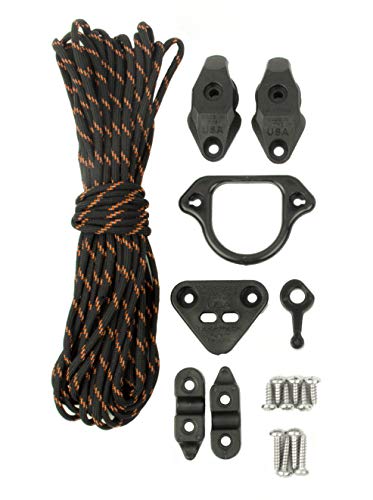
The YakAttack LeverLoc is not an anchor at all, and that is exactly why it leads this list. It is an anchor trolley kit that mounts along the side of a kayak and lets you slide the anchor line from bow to stern, so the hull sits at the angle you choose instead of swinging around a fixed point. The flip-lock clamp holds the line with one hand, the pulleys run quiet, and the reflective paracord stays visible in low light. Pair it with any folding grapnel below and you gain control that no anchor alone can offer.
Pelican Compact Anchor Kit 3 lb
Runner-Up
Pelican Compact Anchor Kit 3 lb
Best for: Calm water and light wind where a light anchor holds well.
The Pelican Compact Anchor Kit suits anglers who fish calm lakes, ponds, and slow rivers, where a light anchor is enough to hold a kayak in place. The 3 lb folding anchor drops quickly, the four flukes bite into mud and sand, and the 20 ft rope gives enough scope for the shallow water most kayak anglers fish. The whole kit folds into a storage bag that slips under a seat or into a hatch, so it stays out of the way until the wind picks up. It is the lightest full kit here, and the easiest to carry to the launch.
Best Marine and Outdoors Kayak Anchor 3.5 lb
Best Marine and Outdoors Kayak Anchor 3.5 lb
Best for: Rocky bottoms, deeper water, and anglers who anchor in current.
The Best Marine and Outdoors kit is the workhorse of this group, built around a 3.5 lb galvanized iron grapnel that suits rocky bottoms and stronger current. Four flukes fold flat for storage and open wide on the bottom, and the 40 ft marine-grade rope gives scope in deeper pools and tidal water. A buoy ball and stainless steel hook come in the kit, along with a nylon storage bag, so the anchor is ready to fish from the moment it arrives. The one-year guarantee adds peace of mind for anglers who anchor often.
ISURE MARINE Kayak Anchor Kit 3.5 lb
ISURE MARINE Kayak Anchor Kit 3.5 lb
Best for: Day trips where a compact kit and a mid-length rope are enough.
The ISURE MARINE kit packs a full 3.5 lb grapnel setup into a compact bundle that weighs little and stows small. The four-fluke anchor folds to a slim shape, the 29.5 ft rope covers the depths most kayak anglers fish, and a spring hook and storage bag round out the kit. It suits paddlers who want a complete anchor system without carrying a long rope they will not use, and the padded bag keeps the flukes from scratching the hull in transit. For day trips on lakes and slow rivers, it covers the basics well.
Perception Kayaks Anchor 3 lb
Perception Kayaks Anchor 3 lb
Best for: Recreational kayaks on rivers and lakes where a mid-weight grapnel is enough.
3 lb galvanized anchor with folding and locking four-fluke design
The Perception Kayaks Anchor is a straightforward 3 lb grapnel built for recreational kayaks, with a galvanized four-fluke design that locks open on the bottom and folds flat for the trip home. The 30 ft line suits river depths and deeper holes, and the storage bag keeps the anchor and line together in a hatch. It fits sit-inside and sit-on-top kayaks alike, and it pairs with the Perception Anchor Trolley Kit for anglers who want to shift the anchor point along the hull. Few anchors in this weight class feel this simple to use.
Which One Fits Your Situation
Fishing calm lakes and ponds
Calm water asks little of an anchor, so a light kit is the smart pick. The 3 lb Pelican kit holds well in mud and sand, packs small, and costs little in paddle effort on the way out. A short rope is no drawback here, since the water is shallow and the wind is light. Save the heavier kits for bigger water and keep the light one ready for dawn sessions on the pond.
Fishing rivers and moving water
Moving water pulls the hull downstream and swings the bow, so rope length and grip matter more than weight alone. The Perception anchor with its 30 ft line suits river holes, while the Best Marine kit with 40 ft of rope covers deeper pools. Set the anchor upstream, let the line take the load, and keep a knife within reach in case the anchor snags on a rock.
Fishing windy open water
Wind turns a light anchor into a dragging anchor, so this is the place for the heaviest grapnel in the group. The 3.5 lb Best Marine or ISURE kits hold better when gusts push the hull, and a longer rope gives the flukes a shallow angle to bite. Anchor from the bow, keep the line short enough to stay clear of the paddle, and re-check your position every few minutes as the wind shifts.
Rigging for hands-free position control
Anglers who cast all day want the kayak to sit at one angle without constant paddle work. The YakAttack LeverLoc trolley kit moves the anchor point along the hull, so the bow can face the wind, the current, or the bank you are fishing. Pair it with any grapnel in this list, lock the line with the flip clamp, and the kayak holds its angle while both hands stay on the rod.
Common Mistakes
Choosing an anchor that is too light for the wind and current on your home water.
Using a rope that is too short for the depth, which pulls the anchor up at a steep angle and lets it drag.
Dropping the anchor without a float on the line, so a snag means losing the whole kit.
Storing a folding anchor loose in the hull, where the flukes can scratch the kayak or snag gear.
Forgetting that a trolley kit is not an anchor: the LeverLoc controls the line, and a grapnel still does the holding.
Frequently Asked Questions
How heavy should a kayak anchor be?
Most kayak anglers use a 3 to 3.5 lb folding grapnel. A 3 lb anchor suits calm lakes and slow rivers, while a 3.5 lb anchor holds better in wind, current, and rocky bottoms. Go heavier only for big water or strong tidal flow, since extra weight adds drag on the paddle out and makes retrieval harder.
Can I use a kayak anchor in a river?
Yes, with care. A folding grapnel holds in river eddies and slack water, but fast current can drag a light anchor and push the kayak sideways. Anchor in an eddy or behind a break, keep the line short enough to stay clear of snags, and always carry a knife so you can cut free if the anchor wedges on a rock.
Do I need an anchor trolley as well as an anchor?
No, but a trolley changes how the kayak sits. An anchor alone holds the kayak at a fixed point, and the hull swings with the wind. A trolley lets you slide the anchor line to the bow or stern, so the kayak faces the direction you choose. Anglers who cast from one spot all day gain the most from the extra control.
How do I free a snagged kayak anchor?
Pull the line from a different angle first, since a change in direction often frees a fluke. If the anchor stays stuck, paddle past it and pull from the far side so the flukes fold back. As a last step, tie the line to a weak link or a breakaway rig before you fish rocky water, so the anchor pulls free backwards instead of trapping the kayak.
A
admin
We compare specs, materials and verified owner reviews before a product earns a spot. Rankings are never paid.
Affiliate disclosure. As an Amazon Associate we earn from qualifying purchases at no extra cost to you. Prices accurate as of the date shown.
Compare five shuffleboard sets for game nights, with table size, playfield quality, pucks, scoring and durability to help you play smooth games at home.
Compare five shaker bottles for protein and workouts, with mixing power, leak protection, capacity and cleaning to help you mix smooth shakes anywhere.
'Compare five wrist braces for support and recovery, with stability, fit, comfort and adjustability to help you protect your wrist without losing grip.'



 ISURE MARINE Kayak Anchor Kit 3.5 lb
 Perception Kayaks Anchor 3 lb